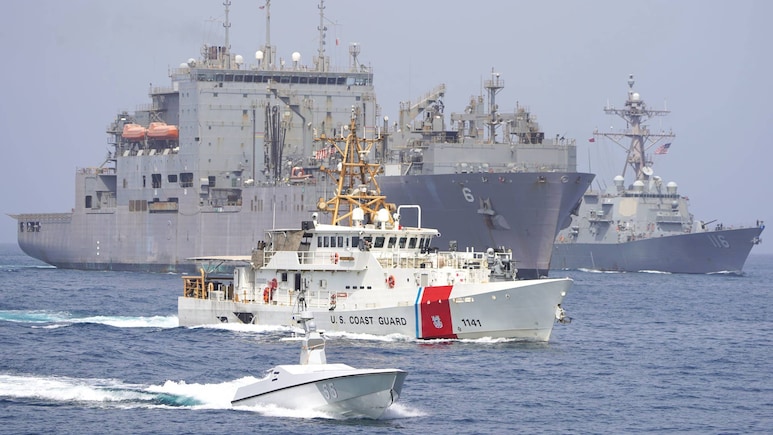
Three Iran-linked tankers transited the Strait of Hormuz on Tuesday on the first full day of the US blockade of Iranian ports, shipping data from LSEG, MarineTraffic and Kpler showed, as the enforcement operation faced an immediate test of its scope and reach at the world's most critical energy chokepoint.
The Chinese Rich Starry became the first vessel to make it through the strait and exit the Gulf since the blockade began. The tanker and its owner, Shanghai Xuanrun Shipping Co Ltd, were sanctioned by the United States for dealing with Iran.
ALSO READ: Made Lot Of Progress, Ball In Iran's Court: JD Vance
Also Read | Layoffs Are Rising In Tech, But These Skills Are Helping People Unlock Better Pay
Rich Starry is a medium-range tanker carrying about 250,000 barrels of methanol, which it loaded at its last port of call, the UAE's Hamriyah port, the data showed.
A second US-sanctioned tanker, Murlikishan, also headed into the strait on Tuesday, LSEG data showed. The empty tanker is expected to load fuel oil in Iraq on April 16, Kpler data showed.
A third vessel, the Elpis — registered in Comoros and sanctioned by the United States in 2025 for its involvement in the sale, purchase and transportation of Iranian petroleum as part of Iran's shadow fleet — also passed through the strait, according to Kpler data.
The transits underscored a crucial distinction that separated Trump's sweeping public announcement from the narrower operational order that followed.
US Central Command said it would not impede freedom of navigation for vessels transiting the Strait of Hormuz to and from non-Iranian ports — meaning sanctioned ships calling at non-Iranian ports remained technically free to pass through the chokepoint.
But, the pattern had already emerged on Monday, the blockade's opening day. Two Iranian-linked tankers exited the Gulf on Monday as other vessels began avoiding the strait. The Auroura was laden with Iranian oil products while the New Future was carrying diesel loaded from the UAE's Hamriyah port. Both are medium-range tankers carrying about 330,000 barrels of oil.
A Botswana-registered tanker, Ostria, turned back while attempting to transit the strait just 41 minutes after Trump's deadline, changing its intended destination from Oman to the UAE after turning around.
ALSO READ: India Exempt From Hormuz Toll, No Vessel Charged, Says Iranian Envoy
The wider maritime picture remained severely disrupted. Some 187 laden tankers carrying 172 million barrels of crude oil and refined products were trapped inside the Gulf as of last Tuesday, according to Kpler. Iran exported 1.84 million barrels per day of crude in March and had shipped 1.71 million bpd so far in April, against a full-year average of 1.68 million bpd in 2025.
Around 670 commodity vessels were sending signals from west of the strait on Sunday, having apparently been stuck there since the end of February, according to data from maritime companies collated by Bloomberg. Of those, 329 were oil or gas tankers.
Essential Business Intelligence, Sharp Market Insights, Practical Personal Finance Advice, Daily Fuel, Gold and Silver Prices and Latest Stories — On NDTV Profit.