- The Supreme Court struck down tariffs imposed under the IEEPA in a 6-3 ruling.
- Justice Kavanaugh dissented, stating tariffs are lawful under IEEPA's text and history.
- Kavanaugh highlighted issues of refunding billions to importers could be complicated.
As the Supreme Court on Friday struck down sweeping tariffs imposed by US President Donald Trump, one of the dissenting judges pointed out the serious consequences of the verdict in the near term, and said that the decision is not likely to greatly restrict Presidential tariff authority going forward.
In a 6-3 vote, the judges found that the International Emergency Economic Powers Act (IEEPA) does not authorise the imposition of duties.
Justices Clarence Thomas, Samuel A. Alito Jr. and Brett Kavanaugh dissented in the court's decision.
In a dissenting note, Kavanaugh said that the overarching theme of the Court's opinion is that tariffs are not a clear means to “regulate...importation" and that Congress was therefore required to use the word 'tariff', 'duty,' or the like in IEEPA in 1977 if it wanted to authorise tariffs on foreign imports.
ALSO READ: Trump's First Reaction As Supreme Court Strikes Down Sweeping Tariffs — 'Disgrace'
Tthe tariffs at issue here may or may not be wise policy, but as a matter of text, history, and precedent, they are clearly lawful, wrote Kavanaugh.
Pointing out two key issues, the judge noted that one of the issues will be refunds.
"Refunds of billions of dollars would have significant consequences for the US Treasury. The Court says nothing today about whether, and if so how, the Government should go about returning the billions of dollars that it has collected from importers. But that process is likely to be a “mess”.
Kavanaugh said that the second issue is the decision's effect on the current trade deals.
"Because IEEPA tariffs have helped facilitate trade deals worth trillions of dollars—including with foreign nations from China to the United Kingdom to Japan, the Court's decision could generate uncertainty regarding various trade agreements. That process, too, could be difficult."
Also Read | Layoffs Are Rising In Tech, But These Skills Are Helping People Unlock Better Pay
ALSO READ: Trump Tariffs: Gift Nifty Futures Rejoice SC's Ruling Against Levies, Jump 300 Points
She pointed out that there is a long tradition of Presidents imposing tariffs as a means of regulating importation and commerce.
The dictionary definitions and ordinary usage establish that tariffs are a means of regulating importation.
"All of that and much more, in my view, overwhelmingly establish that IEEPA clearly authorizes the President to impose tariffs. That said, with respect to tariffs in particular, the Court's decision might not prevent Presidents from imposing most, if not all, of these same sorts of tariffs under other statutory authorities.
Kavanaugh pointed out that Section 301 of the Trade Act of 1974 authorizes the President, through a subordinate officer, to 'impose duties' if he determines that 'an act, policy, or practice of a foreign country' is 'unjustifiable and burdens or restricts United States commerce.
He also noted that Section 338 of the Tariff Act of 1930 permits the President to impose tariffs when he finds that “any foreign country places any burden or disadvantage upon the commerce of the United States.”
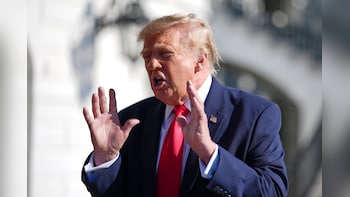
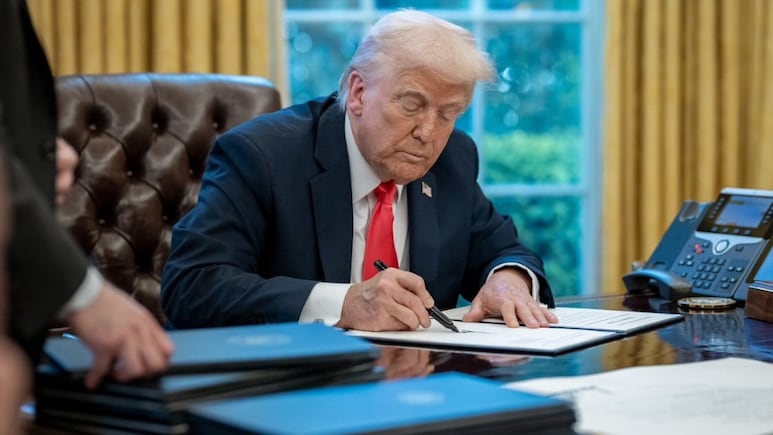
Meanwhile, US President Donald Trump has called the majority decision 'a disgrace' and said that he has a back-up plan in mind.
Essential Business Intelligence, Sharp Market Insights, Practical Personal Finance Advice, Daily Fuel, Gold and Silver Prices and Latest Stories — On NDTV Profit.