(Bloomberg) -- Israel's economy may shrink 11% on an annualized basis in the last three months of the year, JPMorgan Chase & Co. said, as the country's war with Hamas escalates.
The bank's initial projections about the economic impact of the conflict, which erupted on Oct. 7 when Hamas militants rampaged through southern Israel, were “too optimistic,” analysts, including Nicolaie Alexandru-Chidesciuc, wrote in note dated Oct. 27.
It was published roughly 24 hours before Israel began a widely-expected ground invasion of Gaza, which Hamas rules, and Prime Minister Benjamin Netanyahu warned of a “long and difficult” campaign.
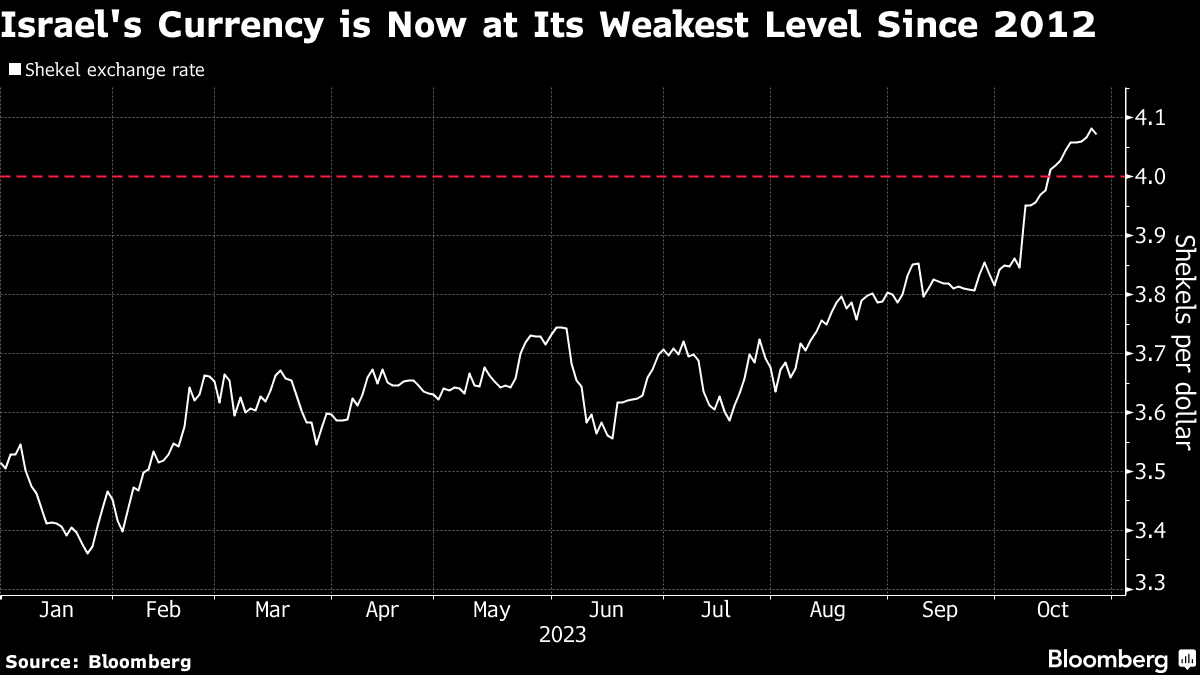
The lender's estimates are among the most pessimistic from Wall Street analysts so far. Investors, though, have already sold Israeli assets heavily. The main stock index in Tel Aviv is down 11% in local-currency terms since Oct. 7, while the shekel has slumped to its weakest since 2012.
JPMorgan still sees Israel's gross domestic product growing 2.5% this year and 2% in 2024. The estimate of the 11% drop between October and December is for seasonally-adjusted growth compared with the third quarter.
Risks “might still skewed to the downside,” the analysts said. They added that “gauging the impact of the war on Israel's economy remains difficult both due to still very high uncertainty about the scale and duration of the conflict and the lack of high-frequency data at hand.”
Israel's recent conflicts — including one with Hamas in 2014 that lasted around seven weeks and included a ground assault on the territory, and a 2006 war with Lebanon-based Hezbollah — “barely affected activity,” they said. But “the current war has had a much larger impact on domestic security and confidence.”
The death toll is already much higher than those examples. Hamas, designated a terrorist organization by the US and others, killed around 1,400 Israelis with its incursion this month, the government said. Israel's retaliatory strikes on Gaza have killed thousands of Palestinians, according to authorities in the territory.
Netanyahu's government has called up roughly 350,000 reservists — the most in Israel's history — since the war started. That amounts to more than 5% of the country's labor force.
Israel's central bank held its main interest rate at 4.75% on Oct. 23. The decision not to ease monetary policy was designed to help the shekel, which rose for the first time in 13 days on Friday, ending its longest losing streak since 1984.
More stories like this are available on bloomberg.com
©2023 Bloomberg L.P.
Essential Business Intelligence, Continuous LIVE TV, Sharp Market Insights, Practical Personal Finance Advice and Latest Stories — On NDTV Profit.