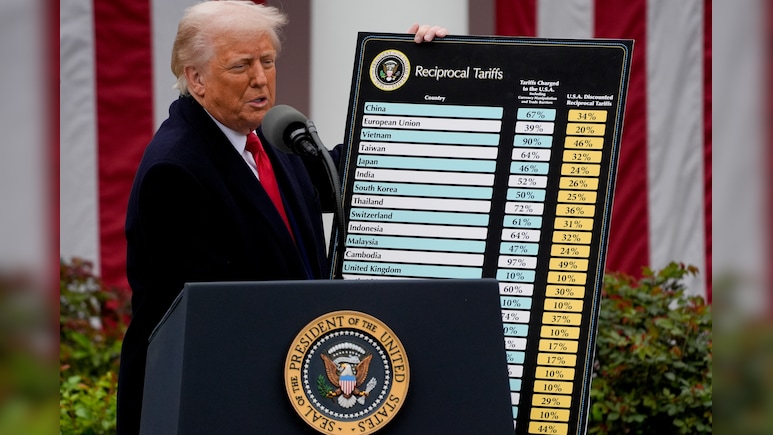
A year since President Donald Trump tripped up global financial markets with his so-called Liberation Day tariffs, the investment playbook his move inspired has been firmly put on the shelf.
That's because the Iran war — now in its second month — has unleashed an unprecedented oil shock, forcing a swift unwinding of popular, crowded trades that had come to define markets in the months since last April.
Global stocks, which had rallied on the back of the artificial intelligence boom and falling interest rates, have lost about $14 trillion in value since the conflict began, as risk appetite evaporated. Bonds have swung sharply as traders have been forced to reprice the rate outlook amid rising inflation risks. And emerging markets, which had lured funds with attractive valuations and solid growth prospects, are seeing a rush for exits due to their heavy reliance on oil imports.
Also Read | Layoffs Are Rising In Tech, But These Skills Are Helping People Unlock Better Pay
Oil has surged as the war rocks the Middle East, with the Strait of Hormuz — through which about a fifth of the world's oil normally flows — closed to all but a handful of vessels. Prices may surge to $150 or $200 a barrel if the near-closure of the waterway persists over the next six to eight weeks, according to energy-market consultancy FGE NexantECA.
On Tuesday, the US and Iran signaled openness for a resolution, prompting investors to re-assess the outlook for the war. Trump said the US plans to leave Iran within two to three weeks. But even if the conflict ended within that timeframe, it would take time for normal flows to resume through the Strait of Hormuz, especially as Trump added he would leave it to other nations to resolve issues with the critical waterway.
ALSO READ: Iran War Could Be Over Within Three Weeks, Says Trump
“Liberation Day was an America-made policy shock, while the Iran war is arguably an exogenous geopolitical shock,” said Christy Tan, a Singapore-based investment strategist at the Franklin Templeton Institute. “The conflict in Iran will push prices higher via the energy complex meaningfully as long as the war persists and may eventually be a bigger negative growth hit.”
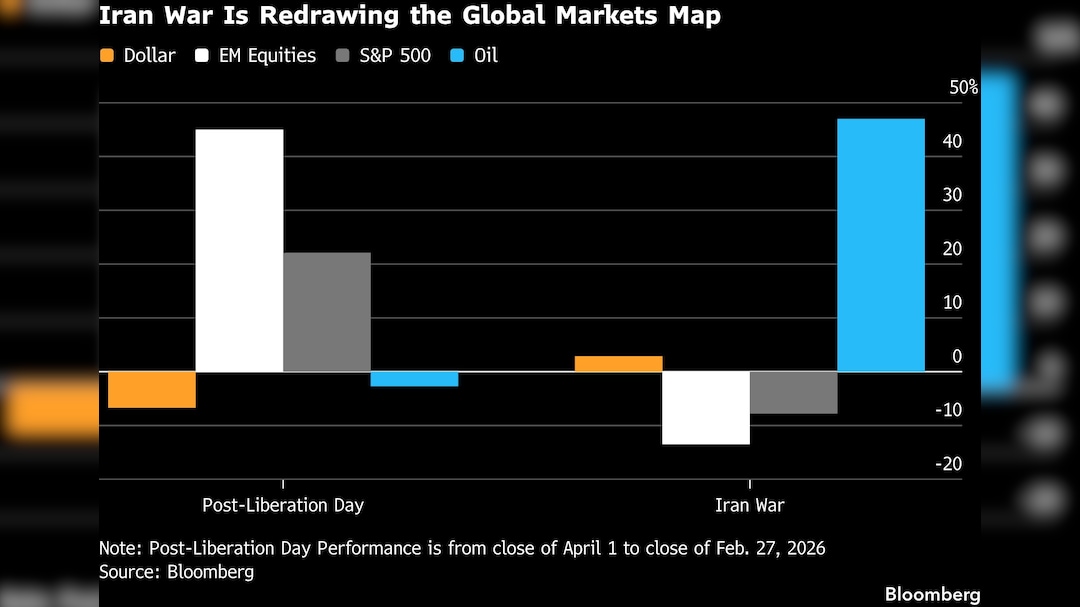
As investors weigh the impact of the oil crisis, the dollar likely provides the clearest read on how these energy dynamics are unfolding. The Bloomberg Dollar Spot Index jumped 2.4% last month, its best gain since July, benefiting from the US' status as the world's top oil producer and the greenback's haven appeal during times of global stress.
The dollar appreciated against all major currencies in March, prompting central banks around the world to intervene in markets, underscoring the breadth of the disruption caused by the war.
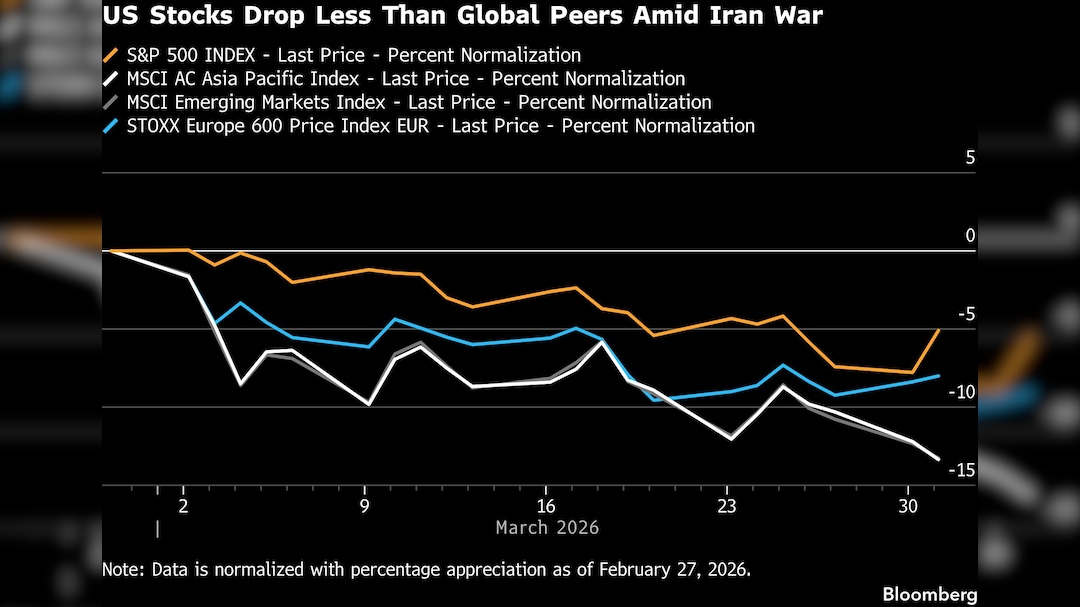
Meanwhile, US equities have also fared slightly better than peers. The S&P 500 Index slid 5.1% in March, a smaller decline than benchmarks in Asia and Europe, as stocks tied to the energy sector rallied. MSCI Inc.'s index of global stocks tumbled more than 7%.
“Proximity to the conflict, and economic and equity sensitivity to rates and energy (oil and gas) prices are clearly more of an issue for EU and Asian markets,” said Mark Richards, head of dynamic multi asset at BNP Paribas Asset Management.
The current moves in US assets stand in stark contrast to those seen around this time last year. Back then, Trump's sweeping global tariffs had fueled a monthslong selloff in the dollar gauge — including a 4% plunge in April — and spurred investors to diversify into assets in Japan, Europe and emerging markets. The index finished 2025 with a loss of 8.1%, its biggest since 2017.
The S&P 500 Index had tumbled more than 10% in the two sessions following April 2, 2025 — which Trump had dubbed “Liberation Day” to reflect the date at which tariffs went into effect. A week later, it soared 9.5%, capping its biggest single-day surge since 2008, as Trump said he'd pause tariffs on dozens of countries for 90 days.
While the US equity benchmark ended 2025 with a gain of about 16% — marking its third straight annual advance — its increase trailed a rally of almost 21% in the global equities gauge.
A number of money managers said they see the underperformance of US assets returning once the energy crunch eases.
“The US is seen as a relative winner of these events, or at least not a big loser, thanks notably to its energy-exporter status,” said Vincent Mortier, Paris-based chief investment officer at Amundi SA — Europe's largest asset manager with €2.38 trillion in assets.
A resolution to the ongoing energy crisis “will be found in the next few weeks, maybe a few months,” and the move to diversify away from US assets “will not fade away,” he said. “The dollar is still on a long-term path of weakening for fundamental reasons, while US equities are still very expensive.”
Jeffrey Blazek, co-chief investment officer of multi-asset at Neuberger Berman Group in New York, said “a peace deal would likely trigger a selloff of the dollar against most major currencies and outperformance of non-US equity markets relative to US equities.”
Meanwhile, the surge in oil prices has proved particularly painful for emerging markets — turning the tide against the asset class that for months was among the biggest beneficiaries of the capital flight away from the US. Considered a proxy for risk, EMs have suffered due to a strong reliance on energy imports.
Down 13% last month, a gauge of developing-nation stocks had its worst showing in six years. A measure of EM currencies lost nearly 3%.
The reversal of last year's “Sell America” dynamic has left emerging-market investors navigating a more complex mix of elevated oil prices and geopolitical risk, said Jeff Grills, head of US cross-asset and emerging-markets debt at Aegon Asset Management. “My big worry is that this spirals into something more onerous,” he said, warning that a move in crude toward $150 a barrel could trigger a broad growth slowdown.
ALSO READ: Trump's Big Hint On Iran War: 'Not Going To Be There Much Longer, Hormuz Will Reopen Automatically'
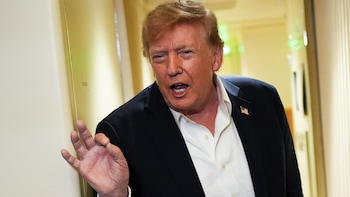
Trump's latest comments have raised the odds of a familiar scenario emerging — where traders have come to expect that he would reverse course if the market fallout became too severe, just as he did with last year's tariff threats.
“If petroleum products start to flow through the Strait of Hormuz soon, before reaching a point of chronic shortages, markets will climb a wall of worry,” said Ian Samson, a portfolio manager at Fidelity International. “Conversely, if the conflict continues in its present form for weeks and months, there will be few places to hide other than US dollar cash.”
Essential Business Intelligence, Sharp Market Insights, Practical Personal Finance Advice, Daily Fuel, Gold and Silver Prices and Latest Stories — On NDTV Profit.