Pakistan's bid to project its new defence alliance with Saudi Arabia and Turkey through a military-themed anthem has drawn widespread online backlash, with critics questioning the campaign's timing, tone and campaign.
According to reports, Pakistan's military's media wing, Inter-Services Public Relations (ISPR), released a nearly seven-minute patriotic anthem, “ONE SHIELD – Pakistan • Saudi Arabia • Türkiye”, on August 7, days after the three countries signed the Mecca Joint Defence Agreement.
The anthem, also described as “The Great Alliance of Islam” and “We Are All One”, features Pakistani JF-17 fighter jets, Turkish drones, Saudi aircraft and naval vessels.
Also Read | Layoffs Are Rising In Tech, But These Skills Are Helping People Unlock Better Pay
ALSO READ | Saudi, Turkey, Pakistan Join Hands Amid Gulf Turmoil: All About The New Sunni Muslims Front
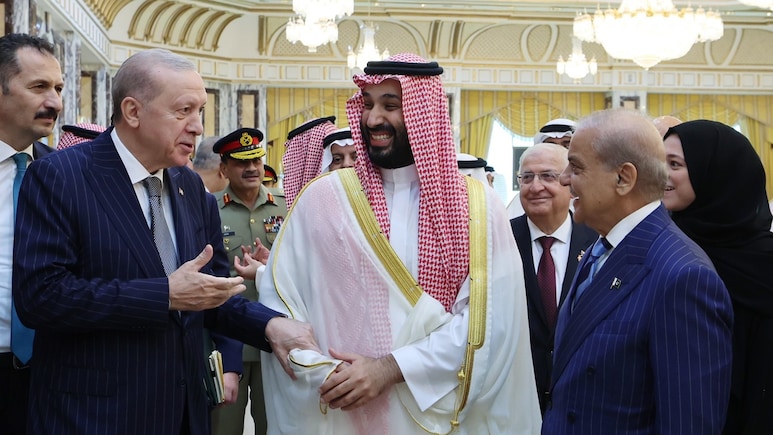
It also prominently showcases Pakistan Prime Minister Shehbaz Sharif, Saudi Crown Prince Mohammed bin Salman, Turkish President Recep Tayyip Erdogan and Pakistan Army Chief Field Marshal Asim Munir.
The production repeatedly invokes religious symbolism, with its central refrain built around the message of “One God, One Prophet, One Holy Quran, One Qibla, Three Flags, One Heart.”
However, the campaign quickly became the subject of memes, parody videos and criticism on social media.
Critics argued that a major defence agreement with potentially significant regional implications would have been better communicated through conventional diplomatic channels rather than a cinematic military anthem.
The backlash was also fuelled by Pakistan's economic challenges, including fiscal pressures, inflation and its continued dependence on international financial support.
The reaction contrasted sharply with the restrained messaging from Saudi Arabia and Turkey. Riyadh said the agreement was aimed at strengthening collective security and regional stability and was not intended to create a military axis or sectarian bloc.
ALSO READ | 'Stop Begging For Security': Iranian Official Slams Saudi's 'Paper Pact' With Turkey, Pakistan
Ankara similarly described it as a defensive arrangement not directed at any particular country.
Iran also criticised the pact. Iranian lawmaker Ebrahim Rezaei said a “paper agreement” with Turkey and Pakistan would not guarantee Saudi security.
Despite the publicity controversy, the defence agreement itself is strategically significant.
It includes a collective-security provision under which an armed attack on one member would be treated as an attack on all three, potentially deepening military cooperation, intelligence sharing, training and defence production among the countries.
Essential Business Intelligence, Sharp Market Insights, Practical Personal Finance Advice, Daily Fuel, Gold and Silver Prices and Latest Stories — On NDTV Profit.