- Explosions reported on Iran's southern coast near Strait of Hormuz on Saturday night
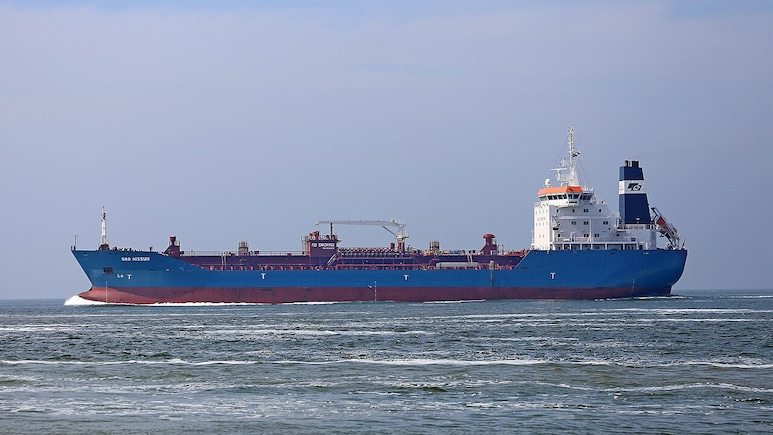
- IRGC Navy said two oil tankers hit sea mines on unauthorized route through the strait
- US military struck M/V Huda after it ignored warnings near Iran and tried to breach blockade
Fighting flared on two fronts in the Gulf over the weekend. It began just as oil markets had started pricing in an end to the eight-month US-Iran war.
Late on Saturday, explosions were reported along Iran's southern coast. Iranian state media named Qeshm Island, which sits inside the Strait of Hormuz, along with the ports of Jask, Sirik and Bandar Abbas. Hours later, the navy of the Islamic Revolutionary Guard Corps (IRGC) said two oil tankers had hit sea mines while using what it called an unauthorised route through the strait.

-
 Indian Markets Turning Corner After Two Tough Years, Says Sandeep Tandon
-
 NDTV Profit Ignite 2026: Experts See Opportunity In Equities, Stay Bullish For Long-Term
-
 Buy Right, Sit Tight Does Not Work for Individual Stocks, Says Dinshaw Irani
-
 'Worst Is Behind': Quant MF Sees Market Bottom, Flags 'Extreme Euphoria' In Midcaps
-
 India's Mutual Fund Industry Could Become A $1 Trillion Opportunity, Say Fund Managers
-
 'Foreign Investors Are Baraatis': Raamdeo Agrawal's Take On LTCG Tax
-
 Stay Invested Through Market Cycles: Raamdeo Agrawal at NDTV Profit Ignite
-
 Ramesh Damani Remains Bullish On India For Next 20-30 Years, Sees Bargains Amid Market Weakness
-
 CAS Came After A Long Consultation Process: SEBI Chairman Tuhin Kanta Pandey AT NDTV PROFIT IGNITE
-
 Aim To Cut FPI Onboarding Time From Mth To Five Days: SEBI Chairman Tuhin Kanta Pandey AT NDTV PROFI
Separately, Yemen's Iran-aligned Houthis said they had launched six missile and drone attacks on Saturday. The targets included Saudi Aramco installations, Riyadh's main airport and Saudi military positions.
Also Read | Layoffs Are Rising In Tech, But These Skills Are Helping People Unlock Better Pay
Mine claims and coastal blasts
The IRGC Navy said the two tankers had switched off their tracking systems. It said both ships caught fire, were badly damaged and stopped moving. It did not name the ships or say where they were headed. There has been no independent confirmation of Iran's account.
Iranian authorities have not formally explained the coastal blasts. Tasnim, a semi-official news agency, first reported that two missiles had hit Qeshm. It later carried a source who denied any missile strike. Iranian state television linked the sounds to military activity in the strait. Iran has made similar mine claims almost every day in recent weeks.
US fires on blockade runner
US Central Command (CENTCOM) said a US military aircraft fired precision-guided munitions at the stern of the M/V Huda in the Gulf of Oman on Saturday. The ship is St. Kitts and Nevis-flagged. CENTCOM said the civilian crew had ignored repeated warnings and tried several times to get past Washington's naval blockade of Iran.
CENTCOM said its forces first told the crew to “abandon the targeted spaces” on board. According to the command, the ship had called at an Iranian port and was trying to leave regional waters.
The Huda is a 24,993-deadweight-tonne dry bulk carrier built in 1999 and managed from Turkey, according to The Maritime Executive. The publication said the ship did not appear to be under sanctions. UK Maritime Trade Operations (UKMTO) placed the ship about 18 nautical miles east of Khor Fakkan in the UAE and said it did not know the crew's condition.
This is the first ship the US has reported disabling since October 10. On that date it struck the bulk carrier Ocean Molica, also in the Gulf of Oman. CENTCOM said 147 commercial vessels have been redirected since the blockade restarted in mid-July. In the same period, five vessels that refused to comply have been disabled.
The weekend's events follow US strikes on Qeshm earlier in the week. US officials described those strikes as limited and defensive. In a Fox News interview, President Donald Trump said Iran had spent about two months building an anti-aircraft site on the island. “As soon as it was completed — we hit it,” Trump said.
UKMTO data show the pressure on shipping is not easing. It recorded six confirmed attacks in the region in the first days of November and five more in late October. By its count, 133 vessels have been damaged in the region so far this year.
Houthis widen attacks on Saudi oil assets
Across the Arabian Peninsula, Houthi military spokesman Yahya Saree listed the group's targets for Saturday. He said it hit King Khalid International Airport and Aramco oil storage tanks and a distillation tower in Riyadh. He also named an Aramco facility at Khurais in the Eastern Province and Pumping Station No. 8 at Dawadmi, west of the capital.
Saree said the group used “a large number of ballistic and cruise missiles” and drones. He said the other three attacks targeted a Saudi National Guard camp in Najran and Saudi-backed forces in Yemen's Al-Jawf and Marib provinces. He gave no casualty figures that could be checked.
Saudi Arabia did not immediately confirm any damage. The Saudi-led coalition said it had intercepted a Houthi cruise missile fired towards Riyadh on Saturday. Saudi Civil Defence briefly issued a threat alert for Najran and lifted it about 10 minutes later.
The Houthis said the attacks were retaliation for air strikes they blame on Saudi Arabia. Those include strikes on Saturday on homes in the Bani Hushaysh district east of Sanaa. Houthi-run media and health officials put the death toll there at between 25 and more than 30, many of them women and children. The Houthis also cite a deadly strike on a market in Taiz province a day earlier. The coalition did not comment on the casualty reports.
ALSO READ: 'Can Do That In 10 Mins': Trump Renews Threat To Strike Iran's Pickaxe Mountain
Fighting between the Houthis and Saudi Arabia has picked up sharply since July, when a truce largely broke down. Since then, airports and oil facilities have been among the group's main targets inside the kingdom.
What it means for oil
The weekend escalation follows a week in which crude prices fell steeply. Brent settled 3 cents higher at $98.32 a barrel on Friday and fell more than 16% over the week. Traders had bet on a diplomatic breakthrough after the US midterm elections. WTI settled at $90.83.
Not everyone in the market believes the conflict is over. Bob McNally, president of Rapidan Energy Group, told CNBC he sees an 80% chance that fighting resumes. He said both benchmarks could go back above $100 a barrel.
Markets reopen on Monday. Traders will be watching whether the mine claims near Hormuz and the Houthi strikes on Aramco's Eastern Province and pipeline sites bring back some of the risk premium that came out of oil prices last week.
ALSO READ: US Offers $20 Million Reward For Information On Iran's Nuclear Programme
Essential Business Intelligence, Sharp Market Insights, Practical Personal Finance Advice, Daily Fuel, Gold and Silver Prices and Latest Stories — On NDTV Profit.