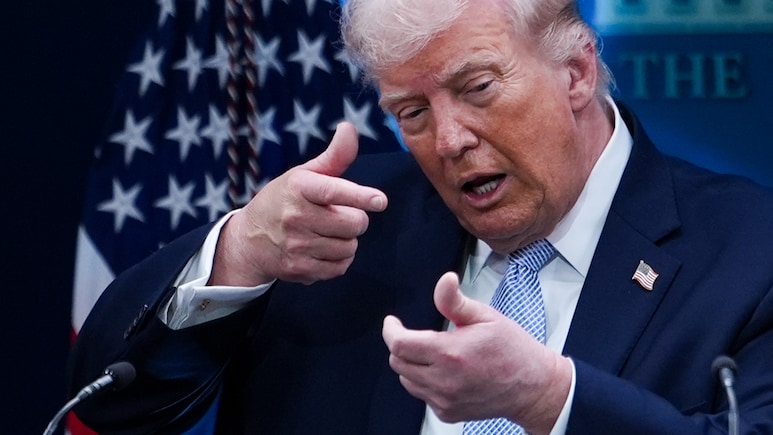
President Donald Trump said prospects for a deal with Iran are “looking very good” as the two sides are in discussions to extend a truce ahead of its expiration next week.
“It's looking very good that we're going to make a deal with Iran, and it's going to be a good deal,” Trump told reporters at the White House. Talks between Washington and Tehran could resume this weekend, he said.
Trump said he believed Iran had agreed to terms it has long resisted, including giving up ambitions for a nuclear weapon and turning over nuclear material. The deal would also include “free oil” and an opening of the Strait of Hormuz, Trump added.
Tehran has not publicly confirmed it's made those concessions.
Trump said he didn't believe he would have to extend the two-week ceasefire in order to reach a deal, predicting a resolution would be made “fairly soon,” but if he needed to he would.
“They've agreed to almost everything,” Trump said. “They got to get to the table with a pen.”
Earlier on Thursday the president announced that Israel and Lebanon had agreed to a 10-day ceasefire, a move that offers to ease tensions more broadly in the region.
Trump said the truce was set to begin at 5 p.m. New York time. He also directed Vice President JD Vance and Secretary of State Marco Rubio and Joint Chiefs of Staff Chairman Dan Caine “to work with Israel and Lebanon to achieve a Lasting PEACE.”
ALSO READ: 'China Very Happy': Trump Claims Xi Backing US Move To Permanently Open Hormuz
Israel has been hammering Iranian proxy Hezbollah in southern Lebanon, a military campaign that threatened to derail the separate ceasefire with Iran. Trump's announcement on Thursday made no mention of Hezbollah.
Trump said he spoke with his Lebanese counterpart, Joseph Aoun, and Israeli Prime Minister Benjamin Netanyahu before declaring the ceasefire. In a subsequent post, Trump said he would invite both leaders to the White House for talks. Later on Thursday he said that visit could take place within a week.
Separately, Pakistan's army chief, Asim Munir, traveled to Iran this week as his nation seeks to mediate a longer truce between Washington and Tehran. Pakistan hosted high-level talks between US and Iranian officials last weekend — discussions that failed to yield a breakthrough amid the six-week war. Munir was greeted by Iran's Foreign Minister Abbas Araghchi.
The US and Iran are considering a two-week ceasefire extension, according to a person familiar with the matter, who asked not to be identified discussing sensitive talks. Neither side wants to resume fighting, said another person familiar with the discussions.
Comments from both Iranian and US officials on Thursday suggest the sides remain far apart on key issues, but the ceasefire with Lebanon could provide fresh momentum. Iran's Parliament Speaker Mohammad Bagher Ghalibaf, who took part in the Pakistan talks, had earlier said a permanent ceasefire must cover the fighting in Lebanon.
Essential Business Intelligence, Sharp Market Insights, Practical Personal Finance Advice, Daily Fuel, Gold and Silver Prices and Latest Stories — On NDTV Profit.