Six planets will appear together in the night sky in the end of February, creating a rare sight for skywatchers. The event, known as a planetary parade, will give people across India a chance to see several of Earth's neighbouring planets at once, if the skies are clear.
A planetary parade occurs when multiple planets appear to line up on one side of the Sun. While they are not arranged in a perfectly straight line, they cluster closely together along the ecliptic, which is the flat plane of Earth's orbit around the Sun, creating the illusion of alignment.
When And Where To Watch Planetary Parade 2026
Those hoping to catch the spectacle should step outside shortly after sunset on Saturday, Feb. 28, and look toward the western horizon. If the skies are clear, Mercury, Venus, Jupiter and Saturn will be visible to the naked eye. Uranus and Neptune, however, will require binoculars or a telescope, reported AP.
Also Read | Layoffs Are Rising In Tech, But These Skills Are Helping People Unlock Better Pay
This year's display is being described as a six-planet alignment, as Mars will not be visible this month. This alignment will remain visible over the weekend and in the days that follow, though Mercury will eventually slip below the horizon.
In 2025, observers were treated to line-ups involving six, and even all seven, planets.
ALSO READ: Total Lunar Eclipse On March 3: Check Timings And Visibility In India
Which Planets Will Stand Out Most
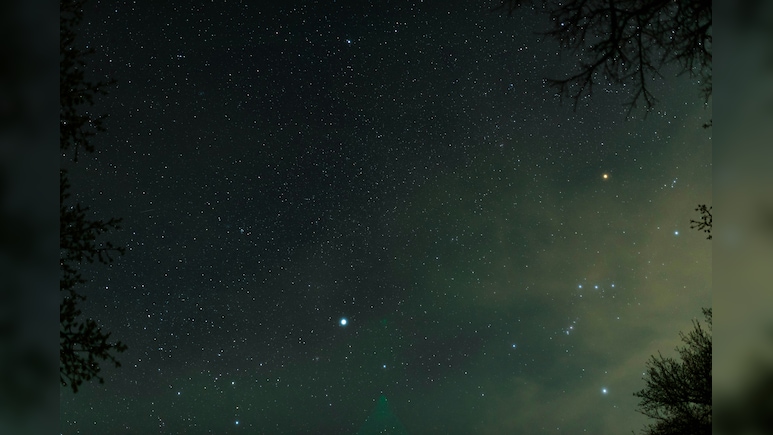
Of the six planets, Jupiter will be the easiest to identify due to its intense brightness. As of late Feb., it can be found in the southern sky after dark, not far from the Orion constellation.
Venus, shining brilliantly near the western horizon, will be another standout. Both Venus and Mercury will appear low in the twilight, hugging the horizon.
Just above them, Saturn and Neptune will follow, while higher in the sky, Uranus and Jupiter will appear more distinct.
How To Tell A Planet From A Star
For those unsure whether they have located a planet, planetary scientist Sara Mazrouei offered a simple tip. "If it's twinkling, it's a star. If it is not twinkling, it's a planet," she told AP.
NASA states that on most clear nights, at least one bright planet can be seen in the sky. It is common to spot two or three planets around sunset. At times, four or even five bright planets become visible together to the naked eye. These events are known as "planet parades." They are not extremely rare, but they do not occur every year, making them worth watching.
Best Viewing Tips For India
People across India are expected to get a clear view of the rare planetary event, with the best time to watch being shortly after sunset. As per reports, the best way to watch it is by stepping out around 30 minutes after sunset and looking toward the western horizon.
But people need to make sure that the Sun has completely set before attempting to view the planets, as looking directly at the Sun can cause eye damage.
In cities affected by light pollution, a rooftop or open area with an unobstructed view of the western sky can improve visibility. While Saturn and Mercury may be seen with the help of binoculars in the fading light, binoculars or a telescope will be necessary to spot Uranus and Neptune.
Essential Business Intelligence, Sharp Market Insights, Practical Personal Finance Advice, Daily Fuel, Gold and Silver Prices and Latest Stories — On NDTV Profit.