The debate over Zomato co-founder Deepinder Goyal's Rs 85,000 wearable device, Temple, has intensified after hepatologist Dr Cyriac Abby Philips, popularly known as The Liver Doc, questioned the science behind its claims.
In a post on X, Philips raised doubts about the device's ability to measure blood flow inside the brain and interpret its proprietary Entropy metric. His remarks come amid an ongoing public exchange with Goyal over the scientific evidence supporting the wearable's claims.

-
 Indian Markets Turning Corner After Two Tough Years, Says Sandeep Tandon
-
 NDTV Profit Ignite 2026: Experts See Opportunity In Equities, Stay Bullish For Long-Term
-
 Buy Right, Sit Tight Does Not Work for Individual Stocks, Says Dinshaw Irani
-
 'Worst Is Behind': Quant MF Sees Market Bottom, Flags 'Extreme Euphoria' In Midcaps
-
 India's Mutual Fund Industry Could Become A $1 Trillion Opportunity, Say Fund Managers
-
 'Foreign Investors Are Baraatis': Raamdeo Agrawal's Take On LTCG Tax
-
 Stay Invested Through Market Cycles: Raamdeo Agrawal at NDTV Profit Ignite
-
 Ramesh Damani Remains Bullish On India For Next 20-30 Years, Sees Bargains Amid Market Weakness
-
 CAS Came After A Long Consultation Process: SEBI Chairman Tuhin Kanta Pandey AT NDTV PROFIT IGNITE
-
 Aim To Cut FPI Onboarding Time From Mth To Five Days: SEBI Chairman Tuhin Kanta Pandey AT NDTV PROFI
Comparing Temple with Baba Ramdev's Coronil, Philips wrote, "Deepinder's Temple device is very much like Baba Ramdev's Coronil. Only one difference. Former is scienceploitation, latter is pseudoscience and both are harmful in their own ways. Learn to identify a scam and fraud when you see one."
Also Read | Layoffs Are Rising In Tech, But These Skills Are Helping People Unlock Better Pay
Goodmorning to you good people (not you Deepinder). Now that India has entered the commercial era of "scienceploitation", I would like to educate and inform the people on this topic, using one of Temple device's claims as an example. This is long, but stay with me, you will really benefit. But first, what is Scienceploitation? It is a marketing and communication tactic where brands, influencers, or media outlets borrow or manipulate language from legitimate, emerging areas of science (such as stem cell research, the microbiome, or epigenetics) to promote unproven health, wellness, or beauty products and services. The term was coined by @CaulfieldTim (I am honored to have known him and written an editorial with him in the BMJ), a professor of health law and policy at the University of Alberta. Temple Device is your first boss battle against scienceploitation. Let me explain this using their own biggest claim - ENTROPY. Temple claims it measures Entropy. What is entropy? In lay terms, entropy is a measure of how spread out, mixed up, or disorganized things naturally become over time. In human health, entropy can be a measure of disorder, wear and tear, and loss of organization in your body's cells, tissues, and organ systems. Low Entropy = High Health (Order): A young, healthy body is in a state of low entropy. Your cells are communicating well, your DNA is intact, your proteins are folded properly, and your heartbeats have a smooth, adaptable rhythm. High Entropy = Disease or Aging (Disorder): As entropy increases, biological "mess" builds up. Damaged DNA accumulates, proteins misfold, cells stop working right, and communication breaks down. Aging is essentially a slow, natural rise in entropy. While conditions like cancer (uncontrolled, chaotic cell growth), neurodegeneration (like Alzheimer's protein tangles), and metabolic dysfunction (like uncontrolled blood sugar) represent spikes of high entropy in specific parts of the body. Note that - aging is a normal anatomical and physiological process, it is not a disease. Now you know how complex this term is? Well, this is what Deepinder Goyal's Temple device claims to measure. A device can produce a number without proving that the number means what its advertising says. That is the central problem with Temple's “Entropy.” “Entropy” has different scientific meanings. In physics, it concerns energy transformations. In heartbeat or brainwave analysis, it describes how irregular or unpredictable a signal is. Measuring one does not mean you have measured the other, or someone's overall health. Yes, wearable recordings can be used to calculate signal entropy. A Polar H10 chest strap, for example, records heartbeat intervals that suitable software can analyse. GE's clinical Entropy monitor analyses electrical signals from the forehead to help assess anaesthesia. Neither tells you how much “disorder” your body contains or how long you will live. Temple's published research describes an optical sensor that shines light into skin and detects changes associated with blood flow. That can provide useful physiological information of flow and perfusion only there or at the heart level, but not the brain or other systems. And detecting blood-related signals does not automatically measure whole-body heat loss, metabolism or thermodynamic entropy. Those claims are wild. Extraordinary claims require extraordinary evidence. Researchers have estimated human thermodynamic entropy production. The experiment cited by Temple used a whole-body calorimeter, measurements of breathing gases and mathematical modelling. It did not demonstrate that a small optical sensor at the temple could do the same job. Misrepresenting and misinterpreting genuine research and extrapolating that to a new device does not establish that Temple performs the measurement described in that research - this is classical Scienceploitation. It Is "sciencey" word salads. Non-medical people will fall for this sort of gimmicks. Temple also claims that lower resting “Entropy” means better health. That is not an established universal rule. Even the theoretical paper it cites discusses the importance of maintaining adequate entropy production and increasing it when needed—not simply driving the resting value ever lower. A lower number needs a proven health meaning before it becomes a health goal. Deepinder's Science Team has to prove this first, before they let their "machine" measure it - if it really can. A reading that changes with exercise, meals, stress or temperature may be responding to real physiology. But that does not prove it measures immune health, digestion, reproductive function or recovery. Responding to many things is not the same as understanding or measuring all those things. Temple lists (their own) preliminary studies of heart rate and brain-circulation-related signals. Those studies do not establish the advertised health meanings of “Resting Entropy,” “Entropy Max” or “Span.” These cannot be measured using currently available wearable tech, including Temple. Combining readings into a new score does not remove the need to validate that score, or if the score is really meaningful to start with. Pretty much like Homeopathy. So much stuff, no content or context. Highly advanced wearable science is not impossible. The problem is presenting an unvalidated interpretation as an established fact about your body. Calling a product “wellness” does not make its scientific claims true. Temple device is the commercial, expensive example of consumer scienceploitation. The website needs to be updated with medical and health truths rather than magical thinking and delusions of so-called founder and his science team. Deepinder's Temple device is very much like Baba Ramdev's Coronil. Only one difference. Former is scienceploitation, latter is pseudoscience and both are harmful in their own ways. Learn to identify a scam and fraud when you see one.
— TheLiverDoc™ (@theliverdoc) November 7, 2026
ALSO READ: Deepinder Goyal Vs Doctors: What Is The Row Over 'Temple' - An Explainer
What is Deepinder Goyal's Temple?
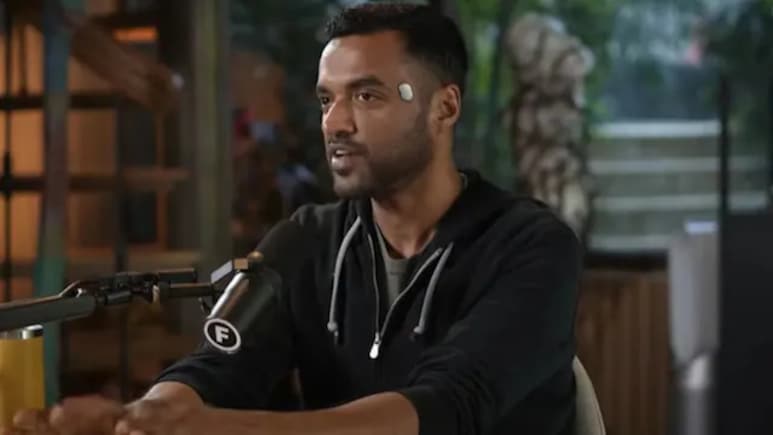
Temple is a wearable health and fitness tracking device developed by Goyal. It is designed to be worn near the temple region of the forehead and has been promoted for its ability to monitor physiological signals.
One of its key features, BrainFlow, is intended to track changes in cerebral blood flow. The device also uses a metric called Entropy, which its developers describe as an indicator of how hard the body is working to maintain its internal functioning.
Temple opened for pre-orders on November 1 at a price of Rs.85,000. The product has attracted scrutiny from medical professionals who have questioned whether its advertised capabilities have been adequately validated.
Why is The Liver Doc Questioning The Temple?
Philips has argued that Temple's sensors may be detecting blood flow in the superficial temporal artery, a blood vessel located outside the skull that supplies areas around the temple, scalp and face. The doctor has questioned whether readings from this artery can establish changes in cerebral blood flow, which refers to circulation within the brain.
In his criticism, Philips has also raised concerns about the scientific methodology behind Temple's research and the interpretation of its findings.
The Liver Doc's criticism of Temple is broadly centred on the concern that a product is being marketed with ambitious health-related claims and consumers are being asked to pay a substantial amount for it.
The debate has focused on whether the device's measurements can reliably support the health-related claims made by its developers. The scientific questions remain disputed, and Philips' allegations have not been established through a legal finding.
Comparison With Coronil
The comparison with Coronil refers to the controversy the product faced over claims about its effectiveness during the COVID-19 pandemic.
Developed by Patanjali Ayurved and promoted by Baba Ramdev, Coronil came under scrutiny over claims that it could treat COVID-19. In July 2021, the Union Ministry of AYUSH clarified that the product had been approved as an immunity booster and an adjunct in COVID-19 management, not as a cure for the disease.
In July 2024, the Delhi High Court also directed Patanjali and its promoters to remove content claiming that Coronil could cure COVID-19.
Philips' comparison draws on the questions raised over the scientific evidence behind health-related product claims. However, Temple and Coronil are different products, and the controversy surrounding Coronil does not, by itself, establish whether Temple's claims are scientifically valid.
Deepinder Goyal Defends Temple
Goyal has rejected allegations that Temple is a scam and defended the research behind the product. In a post on X addressed to “Concerned Indian Doctors” on November 5, the Zomato co-founder said that approximately $30 million had been invested in Temple's development, including $20 million from his personal funds.
Goyal also cited the device's 14-day, no-questions-asked return policy, arguing that consumers would be able to determine whether the product delivered on its promises. He said that the company stood by its science and that further validation would continue, with independent studies expected to emerge as the device becomes available to users.
Goyal has also clarified that Temple is being positioned as a fitness and wellness device, rather than a medical device.
Essential Business Intelligence, Sharp Market Insights, Practical Personal Finance Advice, Daily Fuel, Gold and Silver Prices and Latest Stories — On NDTV Profit.