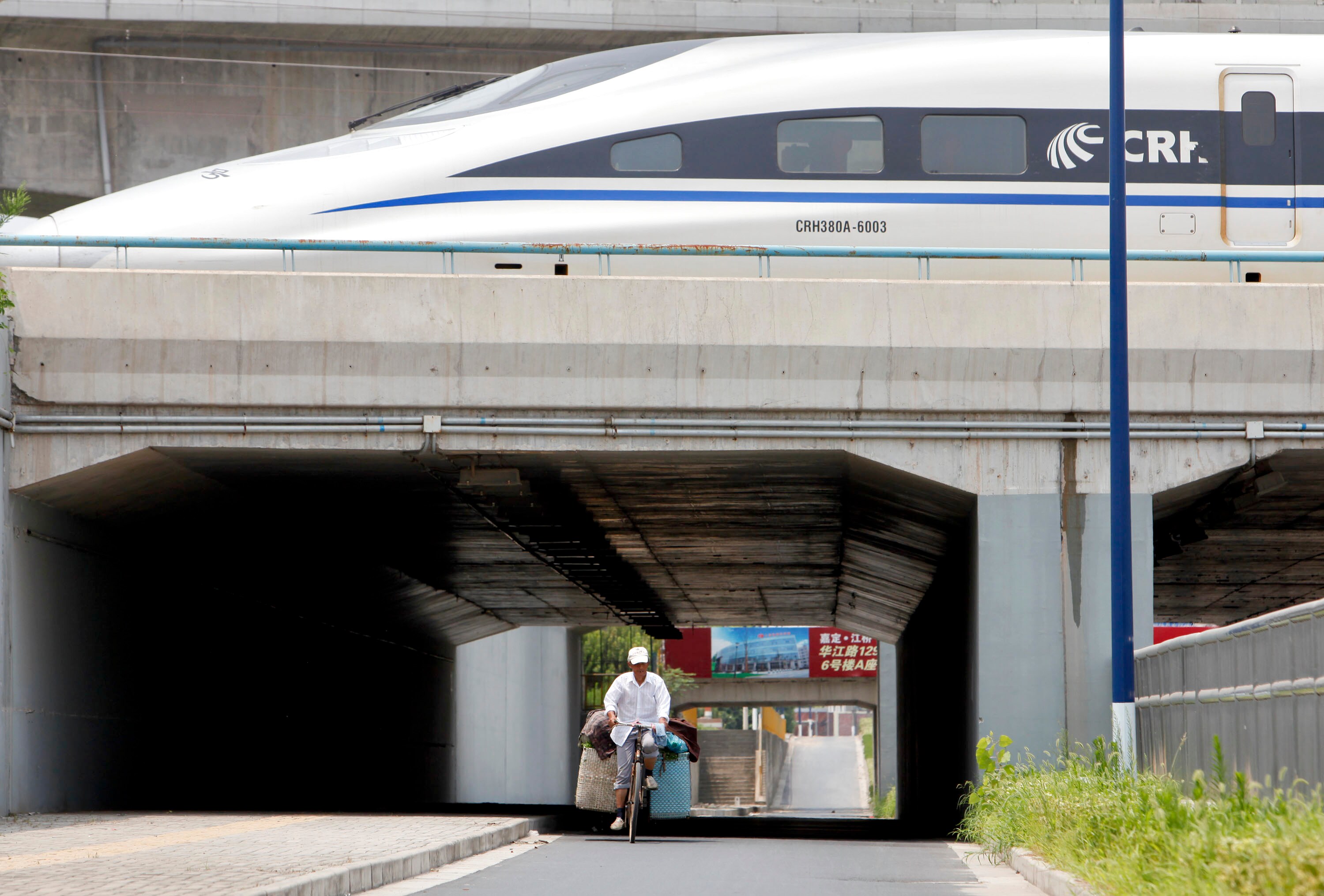
Imagine covering the 150-kilometre stretch from Mumbai to Pune in 90 minutes as opposed to the 4 odd hours it takes now by road or rail. You'd need a bullet train for that. And until Prime Minister's Modi's $15-billion pipe dream becomes a reality, you'd have to look elsewhere – China or Japan – to experience such electric speed.
Japan is a pioneer in the bullet train space. But over the years, the Chinese have done what they do best and reverse-engineered the technology to come up with their own indigenous bullet trains. Of late, the Chinese have been pitching the technology around the world. India has selected Japan to attempt to build its first high-speed rail link between Mumbai and Ahmedabad. And while this could be viewed as a defeat for China – which had also bid for the project – it looks like the ‘rail wars' between these two Asian powers have only just begun.
This deal came shortly after Japan lost out to China on a $5-billion rail deal in Indonesia. China has also been working on similar deals with Mexico, Russia and many cities on both coasts of the U.S.
Also Read | Layoffs Are Rising In Tech, But These Skills Are Helping People Unlock Better Pay
According to Jeff Kingston, the director of Asian studies at Temple University's Japan campus, the ‘rail wars' between China and Japan are a battle for influence in the region that goes beyond sales and profits. “Modi would prefer to play one off the other and see what he can get for India, but geostrategically his government is leaning towards the U.S. and Japan,” he told BloombergQuint in an interview.
That isn't the case with rail projects in other countries. According to the Wall Street Journal, Chinese firms are selling the technology for much cheaper than their Japanese counterparts.
Although Japan's sales pitch revolves around quality – its network boasts a record zero fatal accidents in more than 50 years of operations – Chinese bullet trains have come a long way in a very short time.
On a recent visit to China, I decided to experience a Chinese bullet train first hand and found it impressive. I boarded the train from Guangzhou East to Shenzhen in the first week of the Chinese New Year. An ordinary train ride between those two destinations can take nearly three hours. On a bullet train, this 105-kilometre stretch took just 80 minutes to cover.
A one-way ticket cost me just ¥80, that's around Rs 800. They say you shouldn't convert prices much when traveling abroad but this experience was definitely worth the money.
Also Read: Is Xiaomi Really The Apple Of China's Eye?
Essential Business Intelligence, Sharp Market Insights, Practical Personal Finance Advice, Daily Fuel, Gold and Silver Prices and Latest Stories — On NDTV Profit.