The global smartphone market will contract 12.9% in 2026 because of the unprecedented memory chip shortage, marking "a crisis like no other," according to researcher IDC.
The new forecast, a dramatic revision down from earlier estimates, gives the latest accounting of the ongoing memory crunch that's affecting every corner of the electronics industry. The demand for advanced memory to power artificial intelligence tasks has drained global supply until well into next year and now jeopardizes the business model of many smartphone makers.
IDC now sees roughly 1.1 billion mobile shipments in 2026, down from 1.26 billion the prior year and erasing years of gradual gains. Smartphone manufacturers are adapting to the elevated component costs by reining in specifications, eliminating unprofitable entry-level models and pushing consumers to buy more premium devices.
Also Read | Layoffs Are Rising In Tech, But These Skills Are Helping People Unlock Better Pay
"The tariffs and pandemic crisis seem a joke compared to this," said IDC Senior Research Director Nabila Popal. "The smartphone market will witness a seismic shift by the time this crisis is over - in size, average selling prices and competitive landscape. We don't expect the situation to ease up until mid-2027, at least."
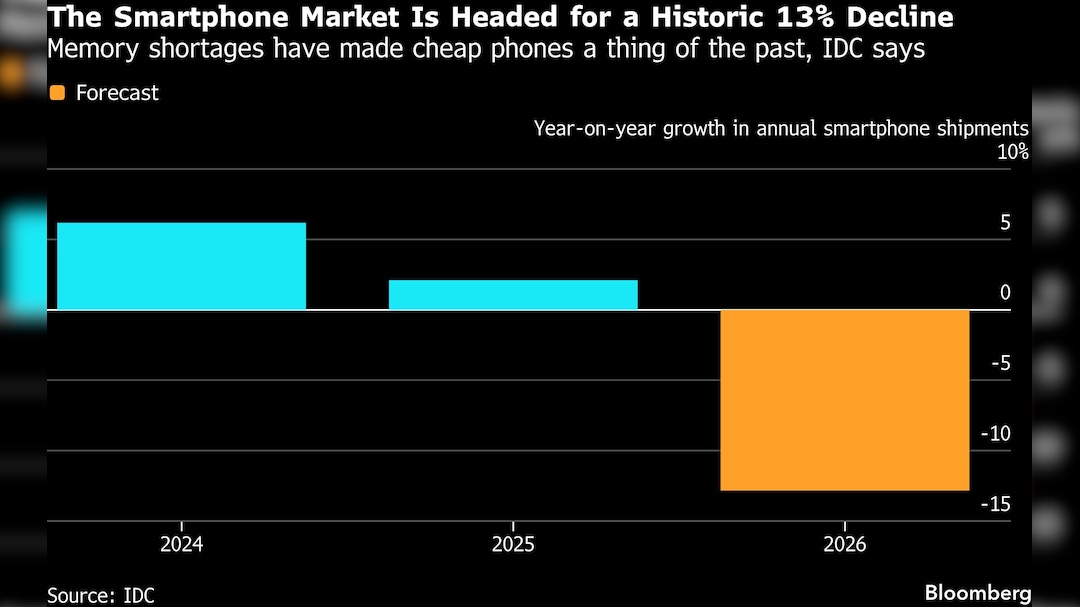
Smartphone market headed for 13% decline
Photo Credit: Bloomberg
The spiking cost of chips - both DRAM for handling processing tasks and NAND for storage - is impacting already thin profit margins for many Android device brands. Chinese players like Xiaomi Corp. and Oppo engage in a fierce battle for consumers, spending heavily on the top components, to secure a larger share of the domestic market and burnish their credentials on the global stage. Their entry-level devices are most exposed to the new cost pressures, as memory represents a larger share of their cost of materials, IDC said.
"We just wish there was more memory," said Cristiano Amon, the chief executive officer of Qualcomm Inc., the biggest provider of mobile processors, after reporting earnings this week. "That issue is not just the price. The issue is just availability. So I think the memory availability will determine the overall size of the handset market."
Premium handsets, like the bulk of Apple Inc.'s iPhone lineup, will weather the crisis better, though companies like Xiaomi and Lenovo Group Ltd. have warned that consumer prices may have to rise. The memory shortage is set to extend into 2027 and even when supply is replenished, returning to the old pricing structures now appears unlikely.
"The days of cheap smartphones are gone, as even when the crisis is over, we don't expect memory prices to go back down to 2025 levels," Popal said. Last year, there were roughly 170 million smartphones shipped that cost below $100, a segment that IDC said is now uneconomical to maintain.
(This story has not been edited by NDTV staff and is auto-generated from a syndicated feed.)
Essential Business Intelligence, Sharp Market Insights, Practical Personal Finance Advice, Daily Fuel, Gold and Silver Prices and Latest Stories — On NDTV Profit.