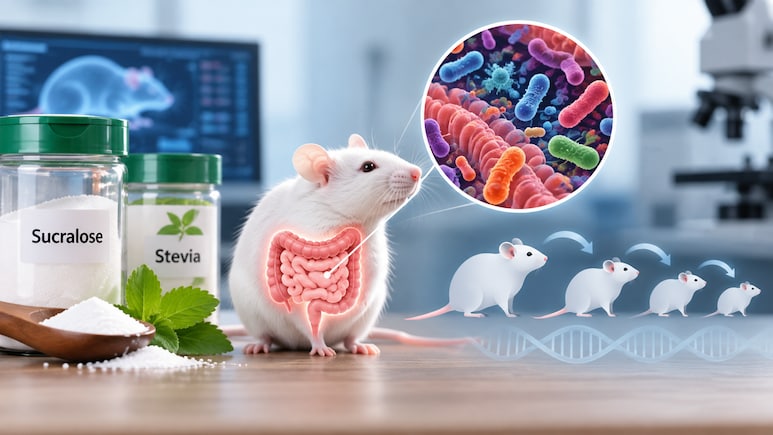
New research suggests that two widely used zero-calorie sweeteners, sucralose and stevia, may produce biological changes that persist beyond direct exposure. A study published in Frontiers in Nutrition found that the sweeteners altered gut bacteria, metabolic markers and gene activity in mice, with some effects also observed in later generations that were never directly exposed.
Why Researchers Looked Into This
Non-nutritive sweeteners are widely used as alternatives to sugar, but questions remain about their long-term effects on metabolism and other aspects of health.
"We found it intriguing that despite the growing consumption of these additives, the prevalence of obesity and metabolic disorders such as insulin resistance has not declined," said lead author Dr Francisca Concha Celume of the Universidad de Chile.
Also Read | Layoffs Are Rising In Tech, But These Skills Are Helping People Unlock Better Pay
"This does not mean that sweeteners are responsible for these trends, but it raises the question of whether they influence metabolism in ways we do not yet fully understand."
How The Study Was Designed
The experiment involved 47 mice divided into three groups. One group received ordinary water, while the other two were given water containing either sucralose or stevia at doses designed to reflect realistic levels of human consumption.
The mice were subsequently bred over two generations. Importantly, the offspring were not directly exposed to either sweetener and received only plain water, allowing researchers to examine whether biological changes associated with parental exposure could also be observed in later generations.
ALSO READ | Beyond Probiotics: Better Gut Health Starts With Your Nervous System, Says Nutritionist — Here's Why
Concha said animal models allow researchers to isolate the effects of specific dietary factors while studying changes across multiple generations.
Researchers measured glucose tolerance, analysed faecal samples to study changes in gut bacteria and short-chain fatty acids, and monitored the activity of five genes linked to inflammation, metabolism and gut barrier function.
Different Sweeteners, Different Effects
The effects varied between the two sweeteners and across generations.
In the first generation, impaired glucose tolerance was observed only in male descendants of mice exposed to sucralose. By the second generation, elevated fasting blood glucose was observed in male descendants from the sucralose group and female descendants from the stevia group.
ALSO READ | Genetically Modified Pig Kidney Helps Man Survive Nine Months Without Dialysis
Gut bacterial diversity increased in mice from both sweetener groups. However, this was accompanied by lower levels of short-chain fatty acids, compounds produced by gut bacteria that play an important role in metabolism and gene regulation. The reduction was also observed in later generations.
The effects associated with sucralose were generally more pronounced, with larger changes in gut bacterial composition and gene activity.
Sucralose's Effects Persisted Across Generations
Two generations after the original mice were exposed, researchers continued to observe changes associated with sucralose at the genetic level. Genes linked to inflammation remained more active, while some genes associated with metabolism showed reduced activity.
Stevia produced some similar changes, but the effects were generally weaker and did not appear to persist as strongly into the second generation.
"When we compared generations, these effects were generally strongest in the first generation and tended to decrease in the second generation," Concha said.
"Overall, the effects linked to sucralose were more consistent and persistent across generations."
Importantly, none of the mice developed diabetes. The researchers said the changes in glucose tolerance and gene expression could represent early biological signals associated with metabolic or inflammatory processes rather than evidence of disease.
ALSO READ | Chronic Burden: Hypertension, Diabetes, Cholesterol Drugs Dominate 40% Of Indian Pharma Landscape
What This Study Does And Doesn't Prove
The researchers stressed that the findings come from an animal study and cannot be directly applied to humans. The results also do not establish that consuming these sweeteners causes diabetes or other metabolic diseases.
"The goal of this research is not to create alarm, but to highlight the need for further investigation," Concha said.
The study suggests that further research is needed to understand whether similar long-term or intergenerational effects could occur in humans.
Essential Business Intelligence, Sharp Market Insights, Practical Personal Finance Advice, Daily Fuel, Gold and Silver Prices and Latest Stories — On NDTV Profit.