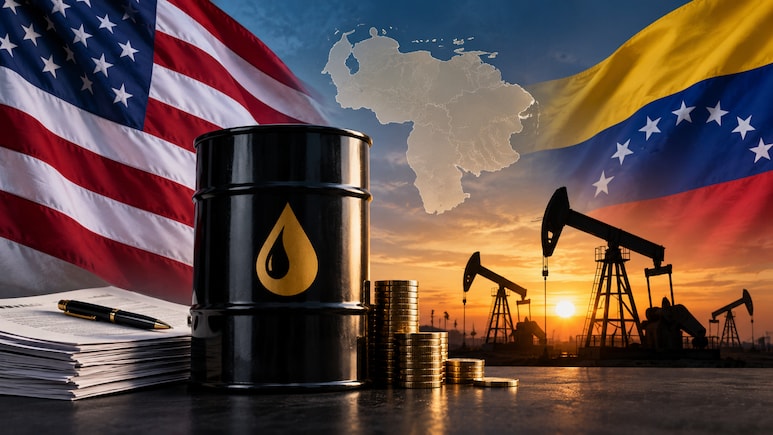
- The US holds a 35% stake in a Venezuelan oil venture via penny warrants to prevent dilution
- Warrants allow the US to maintain economic interest as NABEP raises capital for oilfield development
- NABEP, led by Alejandro Betancourt, has 100-year rights to develop 17 oilfields with 65 billion barrels
The United States has structured its 35% stake in a Venezuelan oil venture to protect its ownership from being diluted as the project seeks to raise additional capital, a U.S. official said, according to Reuters.
The stake has been structured through “penny warrants” held by the U.S. government in North American Blue Energy Partners (NABEP), the official said.
The warrants give Washington the right, but not the obligation, to purchase the equity at a nominal price in the future, helping preserve its 35% economic interest as the project secures new funding.
Also Read | Layoffs Are Rising In Tech, But These Skills Are Helping People Unlock Better Pay
ALSO READ | Trump's Big Venezuela Deal Leaves US Oil Industry Blindsided
NABEP, controlled by Venezuelan businessman Alejandro Betancourt, has been granted 100-year rights to develop 17 oilfields with estimated reserves of about 65 billion barrels under a recent agreement between Washington and Caracas.
The concessions were awarded without a competitive bidding process.
According to the official, the warrant structure is intended to ensure that the U.S. ultimately retains an economic interest equivalent to 35% of the project's value when production reaches maturity, despite capital being raised during the development phase.
The arrangement also allows Washington to receive dividends before the warrants are exercised. The official described it as giving the U.S. the benefits of an equity holder while protecting its stake from dilution during the project's development.
The Pentagon also holds a separate right of first offer to purchase NABEP's oil output. Under the arrangement, the U.S. can purchase 20% of the output at a price linked to production costs, while the remaining volumes would be bought at market prices.
ALSO READ | Iran Receives Over $1 Billion From Oil Sales In 11 Days: Report
The deal has faced scrutiny over Betancourt's past business dealings, which have been investigated by U.S. and European authorities. He has denied wrongdoing and has never been charged.
Venezuela currently produces about 1.1 million to 1.2 million barrels of oil per day. U.S. Energy Secretary Chris Wright has said output could more than double in coming years as new agreements with international energy companies begin taking effect.
In a separate development, the Pentagon said officials with past ties to Cerberus Capital Management must recuse themselves from transactions involving the firm's assets.
Essential Business Intelligence, Sharp Market Insights, Practical Personal Finance Advice, Daily Fuel, Gold and Silver Prices and Latest Stories — On NDTV Profit.