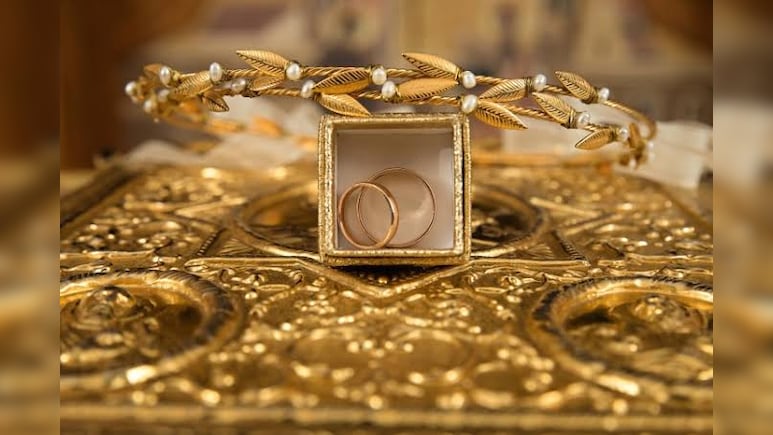
The practice of purchasing gold for one's spouse is particularly common during festivals such as Dhanteras. Partners may pay for jewellery, coins or bars from their own income and register the purchases in their partners' names. While there is no immediate income-tax outgo merely because the gold is bought, the arrangement can have tax consequences when the asset is sold at a later date.
Understanding Clubbing Provisions
The tax treatment of such transactions largely depends on where the money used to buy the gold comes from. If a husband purchases the asset using his declared income or transfers money to his wife specifically for the purchase, the income-tax clubbing rules could become relevant when the gold generates a profit.

-
 Indian Markets Turning Corner After Two Tough Years, Says Sandeep Tandon
-
 NDTV Profit Ignite 2026: Experts See Opportunity In Equities, Stay Bullish For Long-Term
-
 Buy Right, Sit Tight Does Not Work for Individual Stocks, Says Dinshaw Irani
-
 'Worst Is Behind': Quant MF Sees Market Bottom, Flags 'Extreme Euphoria' In Midcaps
-
 India's Mutual Fund Industry Could Become A $1 Trillion Opportunity, Say Fund Managers
-
 'Foreign Investors Are Baraatis': Raamdeo Agrawal's Take On LTCG Tax
-
 Stay Invested Through Market Cycles: Raamdeo Agrawal at NDTV Profit Ignite
-
 Ramesh Damani Remains Bullish On India For Next 20-30 Years, Sees Bargains Amid Market Weakness
-
 CAS Came After A Long Consultation Process: SEBI Chairman Tuhin Kanta Pandey AT NDTV PROFIT IGNITE
-
 Aim To Cut FPI Onboarding Time From Mth To Five Days: SEBI Chairman Tuhin Kanta Pandey AT NDTV PROFI
Section 99 of the Income-tax Act, 2025, provides that income, including capital gains, arising from assets transferred to a spouse without adequate consideration to be added to the income of the person making the transfer. Tax professionals point out that gifts between spouses are exempt from tax, irrespective of the amount involved. This exemption does not extend to gains subsequently made from assets purchased using the gifted money, which may still be taxable in the husband's hands.
Also Read | Layoffs Are Rising In Tech, But These Skills Are Helping People Unlock Better Pay
Capital Gains Tax Structure
Even when gold is purchased in the wife's name, the husband may remain responsible for the tax on profits from its eventual sale if he provided the money for the investment. In such cases, the capital gains are generally included in his income under the clubbing rules.
For gold held for 24 months or less, any profit is classified as a short-term capital gain and taxed according to the applicable income-tax slab. If the asset is retained for more than 24 months, the gain is treated as long-term and taxed at 12.5% without indexation.
There is an important distinction when the wife funds the investment herself. Gold acquired from her independent earnings or legitimate pin money, provided for personal and household expenses, does not attract these clubbing provisions.
Essential Documentation To Prevent Scrutiny
There is no legal restriction on purchasing gold in a wife's name, but the transaction could invite questions from the Income-tax Department if its value is significantly higher than her declared income would suggest. Maintaining adequate documentation is therefore essential. Experts recommend keeping invoices, proof of payment and relevant bank records safely.
Where the husband provides the money, couples should also ensure that the transfer can be traced through their bank accounts. A properly documented gift, supported by transaction records, can help establish the source of the investment. Under Sections 103 and 104 of the Income-tax Act, 2025, investments for which the source of funds remains unexplained may attract tax consequences and penalties. Seeking professional tax advice before making large purchases is advisable.
Essential Business Intelligence, Sharp Market Insights, Practical Personal Finance Advice, Daily Fuel, Gold and Silver Prices and Latest Stories — On NDTV Profit.