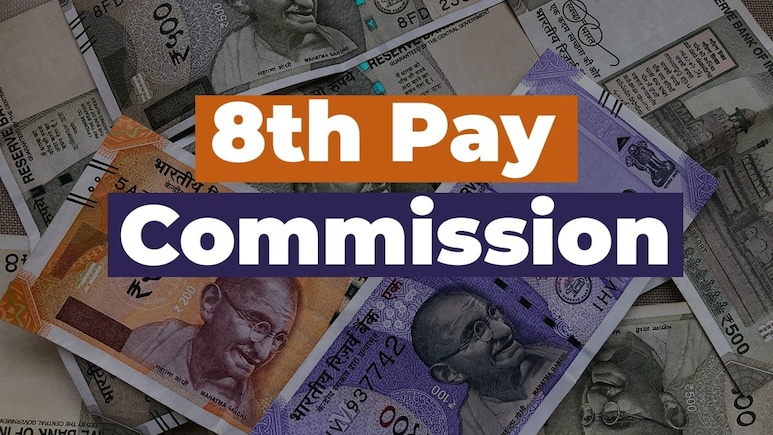
The 8th Pay Commission is likely to reach its decision soon. One of the most talked about proposals in the negotiations was a claim that the minimum basic pay of Central government employees could jump to Rs 69,000 from Rs 18,000.
The move could impact almost 1.2 crore people in the public sector, about 50 lakh serving employees and almost 70 lakh pensioners. However, the minimum basic pay of Rs 69,000 is not an official proposal of the 8th Pay Commission.
The Math Behind The Figure
Also Read | Layoffs Are Rising In Tech, But These Skills Are Helping People Unlock Better Pay
The figure comes from a demand made by employee unions. The government has not given any indications that it will accept the proposal. Experts told NDTV that the final recommendation will likely be much more measured, balancing employee expectations with the government's fiscal capacity.
The figure has become central to the pay revision due to fitment factor. It is a multiplier used to revise a worker's basic pay whenever the government implements a new Pay Commission. The fitment factor is the foundation on which pensions, salaries and several allowances are recalculated.
The fitment factor was fixed at 2.57 under the 7th Pay Commission, which increased the minimum basic salary to Rs 18,000 from Rs 7,000.
The National Council-Joint Consultative Machinery (NC-JCM), is behind the demand for a new change in fitment factor. The body, which represents central government employees, has demanded a fitment factor of 3.83. The minimum basic pay could climb to almost Rs 69,000 if the figure is accepted.
Another change is how the family unit is calculated for wage calculations. The 7th Pay Commission based its calculations on a three-unit family consisting of an employee, spouse and two children. The employee unions have proposed increasing this to a five-unit family, adding dependent parents, including dependent parents-in-law, as per Live Mint.
Under the proposed formula, the family would comprise:
- Employee: 1 unit
- Spouse: 1 unit (up from 0.8 unit)
- Two children: 0.8 unit each (1.6 units)
- Dependent parents, including parents-in-law: 0.8 unit
This totals 5.2 units, which the unions have rounded off to five units for wage calculations.
Other changes in wage calculations include:
- Food and clothing calculations are based on the latest recommendation of the Indian Council of Medical Research (ICMR) which comes to 3,490 calories daily.
- Housing expenditure increased from 3% to 7.5% under the earlier framework.
- Fuel, water and electricity charges pegged at 20% of the overall cost.
- Skill development expenses fixed at 25%.
- Additional expenditure of 5% towards recreation, festivals, marriage and other social obligations.
A fitment factor close to 3.83 would place a massive financial burden on the central government, many experts believe. The burden would also fall on many state governments which often revise their salary structures after the Centre does.
Several experts think the fitment factor would be somewhere between 2.0 and 2.1. Others say there is a possibility of the factor remaining close to the current figure of 2.57 if fiscal conditions permit.
What Would The Final Salary Be?
The discussions around the 8th Pay Commission determine pension, House Rent Allowance (HRA), gratuity, Transport Allowance (TA) and several retirement benefits, which are all linked to the revised basic pay. Any jump in the basic pay automatically impacts these components.
This means that the final take-home salary can rise substantially even if the fitment factor remains lower than what employee unions are asking for.
ALSO READ: Five Ways To Impart Financial Education To Children From An Early Age
Essential Business Intelligence, Sharp Market Insights, Practical Personal Finance Advice, Daily Fuel, Gold and Silver Prices and Latest Stories — On NDTV Profit.