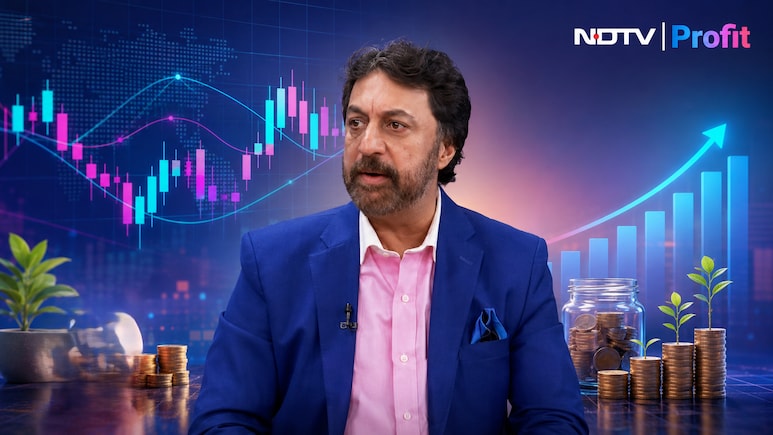
- Shankar Sharma says SIPs benefit institutions, not average retail investors
- Indian market valuations remain high, favoring foreign institutional investors
- Retail investors should focus on gold, real estate, fixed deposits, and corporate deposits
Ace investor Shankar Sharma has highlighted that systematic investment plans (SIPs) are a great financial product to make money and growth one's wealth through risk-free compunding, however, the asset product is not retail investors. In an exclusive interaction with NDTV Profit's Managing Editor Tamanna Inamdar at the channel's Townhall Event, the veteran market expert highlighted that SIPs have only made money for institutional investors, but been like a 'forced EMI' for retail investors.
''SIPs have made a lot of money but not for SIP investors. It has not money for the average Joe as much as it has for PE/VCs, family offices and FIIs. So, its a great product but only for these four major selling groups,'' he told NDTV Profit. According to the expert, the Indian market's valuations are still very expensive and has given easy exit for foreign institutional investors. This has also impacted returns in the primary market for the average retail investor as FIIs make easy exits from mega IPOs, explained Sharma.
ALSO READ: NDTV Profit Exclusive: Shankar Sharma Defends Infosys, TCS, Wipro; Says No To Anthropic, OpenAI IPOs
Where should retail investors put their money? Shankar Sharma decodes
The retail investor in India is sitting on net lower returns, according to Sharma. ''The major money has been given through a well-crafted mechanism called the SIP,'' he claimed. Highlighting other asset classes that the average investor can target for stable returns, Sharma said gold is a 'fantastic' investment for Indians even now. ''Among others, real estate, fixed deposits, corporate deposits should comprise around 80-90% of the average Indian's portfolio. 10% can be mutual funds,'' he said.
Sharma added that he does not see 'much headline return' from the Nifty 50 index in the next four years. According to the expert, the equity market is meant for professionals and the average investors should be cautious in direct investments. Sharma pointed to taxation as the most effective lever to manage outflows. "FII taxation is the best mechanism to disincentivise the equity train," he added.
ALSO READ: Is Shankar Sharma A Bull Or Bear? Market Veteran Explains Why This Categorisation Is Wrong
He also drew a sharp line between what the RBI can realistically defend and what it should simply let go, as the markets continue to see a sustained period of drawdown. Sharma argued that while the central bank has the tools to manage the bond market, the same cannot be said for the currency or equities, both of which are shaped by forces far beyond domestic control. "RBI can easily manage the bond market, but currency and equities are more global in nature," he said.
Essential Business Intelligence, Continuous LIVE TV, Sharp Market Insights, Practical Personal Finance Advice and Latest Stories — On NDTV Profit.