- Nifty and Sensex opened lower due to US-Iran tensions and weak market sentiment
- Prime Minister Modi urged fuel conservation and postponing non-essential foreign travel
- All sectors traded in red, with media, realty, auto, and consumption down over 1.2%
Nifty and Sensex have opened the week under pressure, with overnight geopolitical tensions casting a shadow over any hopes of recovery with US and Iran again coming to a standstill in terms of negotiations. Prime Minister Narendra Modi's call for Indians to conserve fuel, avoid unnecessary foreign travel and even postpone non-essential gold purchases has also put a wide swathe of stocks in focus, from oil marketing companies to consumer and hospitality names.
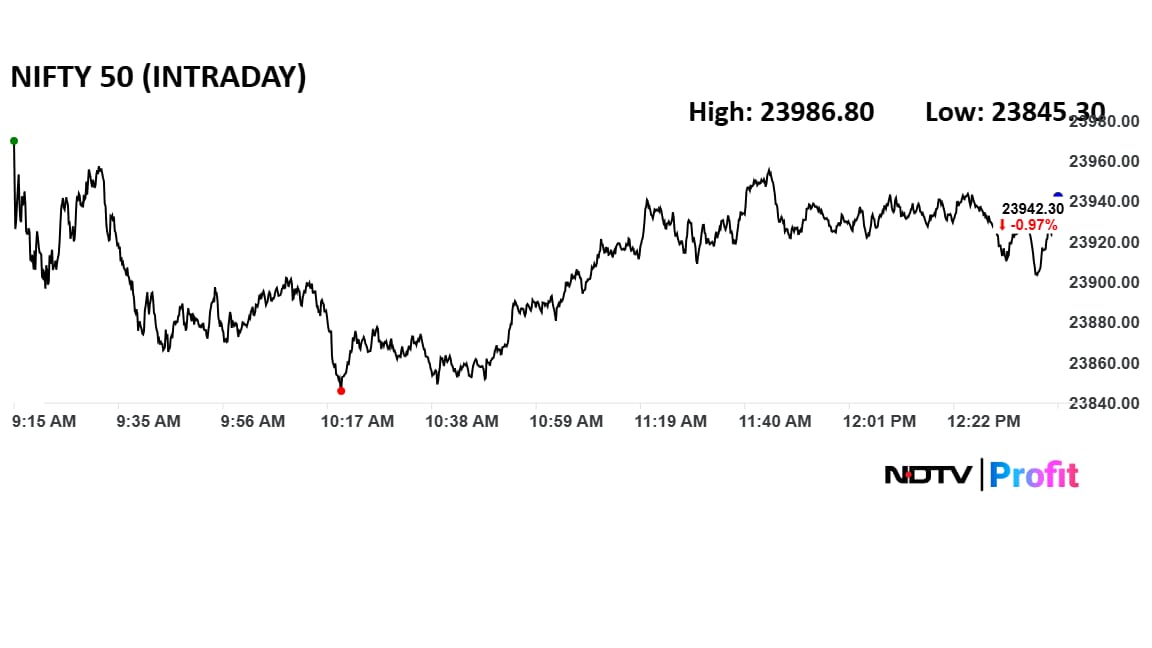
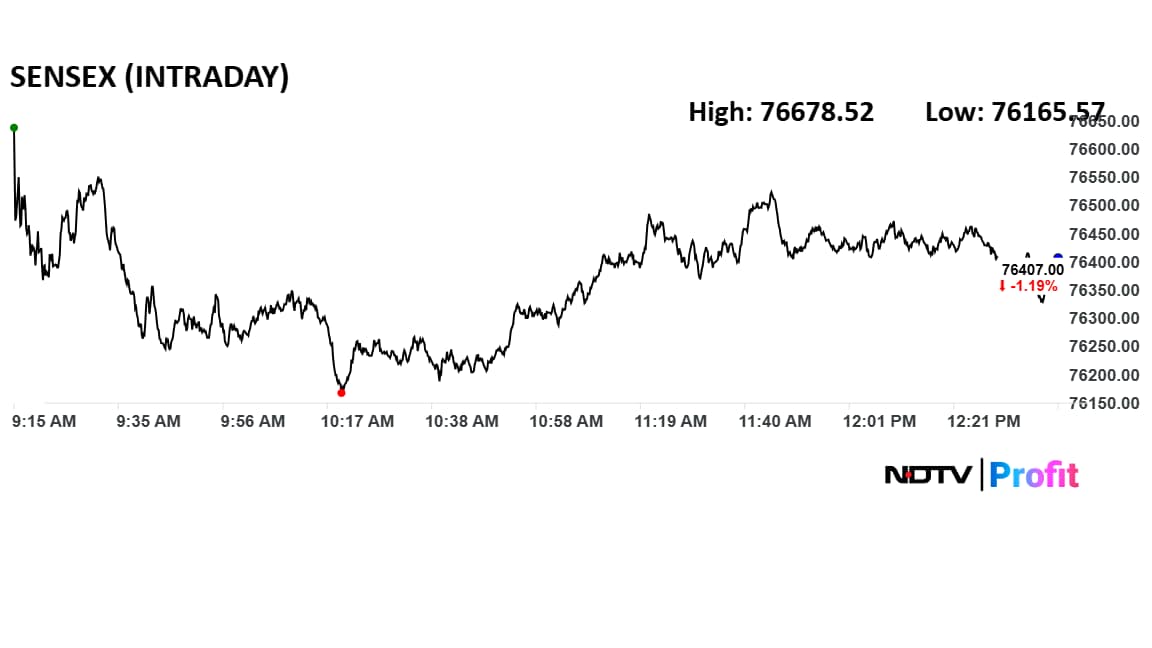
Nifty is trading with cuts of over 0.97% (around 230 points lower) at 23,942.05. Sensex, meanwhile, is also 1.19% lower (900 points lower) at 76,407.59, as of 12:40 pm. Intraday, Nifty fell as much as 1.35% or around 330 points, and Sensex slumped nearly 1,200 points, or 1.50%
The Indian rupee opened weaker against the US dollar and fell as much as 43 paise to 94.91 in early trade.
Also Read | Layoffs Are Rising In Tech, But These Skills Are Helping People Unlock Better Pay
All sectors, barring FMCG, IT and Pharma, are trading in red, with Nifty Realty, and PSU Bank leading the losses, followed by Oil and Gas, Energy and Consumption, with cuts of around 1.5%.
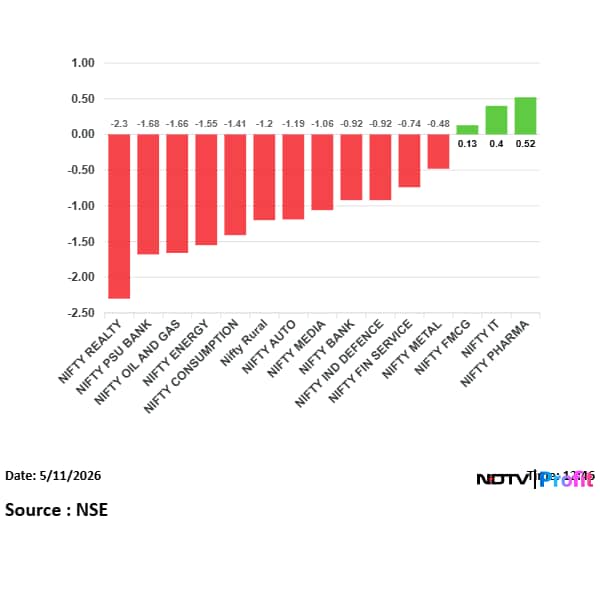
The broader market is slightly overperforming the benchmarks, but is also facing pressure with the Nifty Smallcap 250 falling almost 0.74%, and the Nifty Midcap 150 dropping about 0.77%.
Here are three reasons why markets are crashing today:
Geopolitical Tensions Rising
Iran has rejected the US peace plan, instead demanding war reparations, recognition of its control over the Strait of Hormuz, an end to US sanctions, and the release of its frozen assets. US President Donald Trump has rejected Iran's proposal to end the months-long war as “totally unacceptable” without sharing details even as a key Republican leader urged him to consider the “military option”.
ALSO READ: 'Unacceptable': Trump Rejects Iran's Response To US Peace Proposal
Trump received the Iranian proposal on Sunday amid hopes that it could lead to a breakthrough to end the war with Iran that began on February 28, blocking the key sea route for global oil supplies, leading to fuel shortages in several countries.
Get the latest updates on the US-Iran war here.
Meanwhile, Prime Minister Narendra Modi on Sunday called on Indians to revive pandemic-era work-from-home practices, reduce dependence on petrol and diesel, and defer foreign travel — framing the measures as acts of national duty in the face of the escalating West Asia conflict.
Modi said the global crisis demanded collective sacrifice and a sense of purpose. "We have to make a resolution keeping duty paramount and fulfil it with complete dedication," he said. On fuel conservation, the Prime Minister urged citizens in metro-connected cities to switch to public transport and encouraged carpooling for those who must drive. He also called on electric vehicle owners to maximise their use of EVs.
Crude Prices Resume Rally
Oil prices surged on Monday after US President Donald Trump rejected Iran's latest proposal to end the conflict in the Middle East, dashing hopes of a quick breakthrough and reinforcing fears that the Strait of Hormuz will remain severely disrupted.
Brent crude rose as much as 3.5% to $104.80 a barrel, while West Texas Intermediate climbed toward $99. The move extended the geopolitical risk premium that has gripped energy markets since the conflict began in late February.
A survey by Goldman Sachs Group found that most respondents expect disruptions in Hormuz to continue well into the second half of the year.
Rupee
The Indian rupee has opened considerably weaker against the US dollar on Monday, depreciating by almost half a percent amid global jitters, including tension in the Middle East and rising crude prices.
The local currency opened at Rs 94.88 on Monday, which accounts for a 40 paise depreciation compared to Friday's closing price of Rs 94.48.
ALSO READ: Rupee Weakens By Over 40 Paise Amid Rising Crude Prices, PM Modi's Appeal
Essential Business Intelligence, Sharp Market Insights, Practical Personal Finance Advice, Daily Fuel, Gold and Silver Prices and Latest Stories — On NDTV Profit.