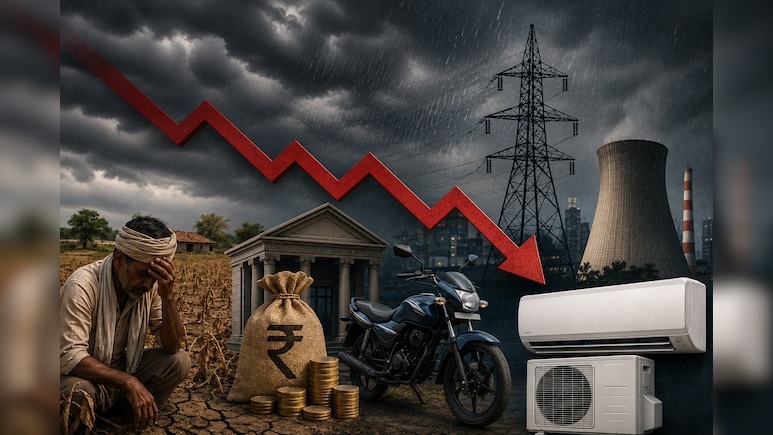
- India’s southwest monsoon started with nearly 40% below-normal June rainfall, a historic deficit
- Poor monsoon may raise food inflation, hurt rural incomes, and prompt more fiscal support
- Sectors tied to rural demand, like consumer staples and rural lenders, face significant risks
India's southwest monsoon has begun on one of its weakest notes in more than a century, prompting global brokerage to Jefferies to warn that the poor start could reshape sectoral performance over the coming quarters. In a strategy note titled "Worrisome Start to the Monsoons," Nandurkar said June rainfall — typically accounting for about 19% of the season's precipitation — was nearly 40% below normal, making it the third-worst June monsoon deficit in over 100 years.
While stronger reservoir levels and adequate foodgrain stocks should cushion the immediate economic impact, the brokerage expects weaker rainfall to push up food inflation, weigh on rural incomes and potentially trigger additional fiscal support measures.
Get all the live updates on Mumbai Monsoon here.
Also Read | Layoffs Are Rising In Tech, But These Skills Are Helping People Unlock Better Pay
Negatively Impacted Sectors
Jefferies believes sectors with significant exposure to rural demand could face headwinds if rainfall remains below normal through the season. Consumer staples companies with large rural exposure, two-wheeler manufacturers and rural-focused lenders are among the most vulnerable.
The brokerage also flagged select financial stocks with meaningful exposure to agricultural and tractor financing. Bandhan Bank, Mahindra & Mahindra Financial Services, and the broader microfinance segment could face pressure if farm incomes weaken and credit costs rise.
Higher food inflation is another key risk. Jefferies expects rural real income growth to slow as inflation accelerates, potentially weighing on discretionary spending in villages even if nominal income growth remains healthy. The brokerage also believes the government may have to increase spending on rural employment schemes, drought relief and farm subsidies if rainfall fails to improve.
ALSO READ: India Needs Water Buffers In Coming Years, FinMin Warns Amid Weak Monsoon
Positively Impacted Sectors
Nandurkar expects power companies to benefit as lower rainfall boosts irrigation demand and keeps temperatures elevated, driving higher electricity consumption during the first half of FY27. The brokerage believes this could support the broader power ecosystem, including transmission and equipment manufacturers.
The brokerage also points to cooling demand as another likely beneficiary. Higher temperatures could lift sales of air-conditioners, making companies such as Voltas and Blue Star, along with electronics manufacturing service providers supplying the sector, potential beneficiaries.
Construction-related sectors may also gain according to Jefferies. Lower rainfall typically results in fewer weather-related disruptions, allowing more working days for infrastructure and real estate projects. As a result, cement and building material companies could see improved execution and demand.
Essential Business Intelligence, Sharp Market Insights, Practical Personal Finance Advice, Daily Fuel, Gold and Silver Prices and Latest Stories — On NDTV Profit.