Foreign-investor selling has been one of the major reasons behind the major slump in Indian equities. In the last five months, the Indian benchmark — NSE Nifty 50 — has dropped nearly 20% in dollar terms, while the broader indices have slipped anywhere between 25% and 30%.
In these last five months, the FIIs have sold nearly $37 billion of Indian equities. In the previous month, the FIIs were net sellers at Rs 34,574 crore. In the 20 trading sessions, they were buyers on just two instances — Feb. 4 and Feb. 18.

-
 Indian Markets Turning Corner After Two Tough Years, Says Sandeep Tandon
-
 NDTV Profit Ignite 2026: Experts See Opportunity In Equities, Stay Bullish For Long-Term
-
 Buy Right, Sit Tight Does Not Work for Individual Stocks, Says Dinshaw Irani
-
 'Worst Is Behind': Quant MF Sees Market Bottom, Flags 'Extreme Euphoria' In Midcaps
-
 India's Mutual Fund Industry Could Become A $1 Trillion Opportunity, Say Fund Managers
-
 'Foreign Investors Are Baraatis': Raamdeo Agrawal's Take On LTCG Tax
-
 Stay Invested Through Market Cycles: Raamdeo Agrawal at NDTV Profit Ignite
-
 Ramesh Damani Remains Bullish On India For Next 20-30 Years, Sees Bargains Amid Market Weakness
-
 CAS Came After A Long Consultation Process: SEBI Chairman Tuhin Kanta Pandey AT NDTV PROFIT IGNITE
-
 Aim To Cut FPI Onboarding Time From Mth To Five Days: SEBI Chairman Tuhin Kanta Pandey AT NDTV PROFI
There are two parts to what could have led to such a kind of sell-off in Indian equities.
Also Read | Layoffs Are Rising In Tech, But These Skills Are Helping People Unlock Better Pay
Part 1: Non-India Factors
Equity to debt shift — global investors prefer debt as US yields rose to 4.5%
The shift from India to other emerging markets and developed markets owing to global uncertainties related to tariffs. Foreign investors might have also preferred US equities on expectation of tax rate cuts.
Part 2: India Specific Factors
High valuations with low single-digit earnings growth. We started the current financial year with earnings growth expectations of 13–15%, but these have been mellowed down to just 5% now.
A slowdown in capital expenditure owing to general elections and various state elections.
Tight liquidity and lower credit growth constrained the economy, which also led to lower growth.
Who Is Selling?
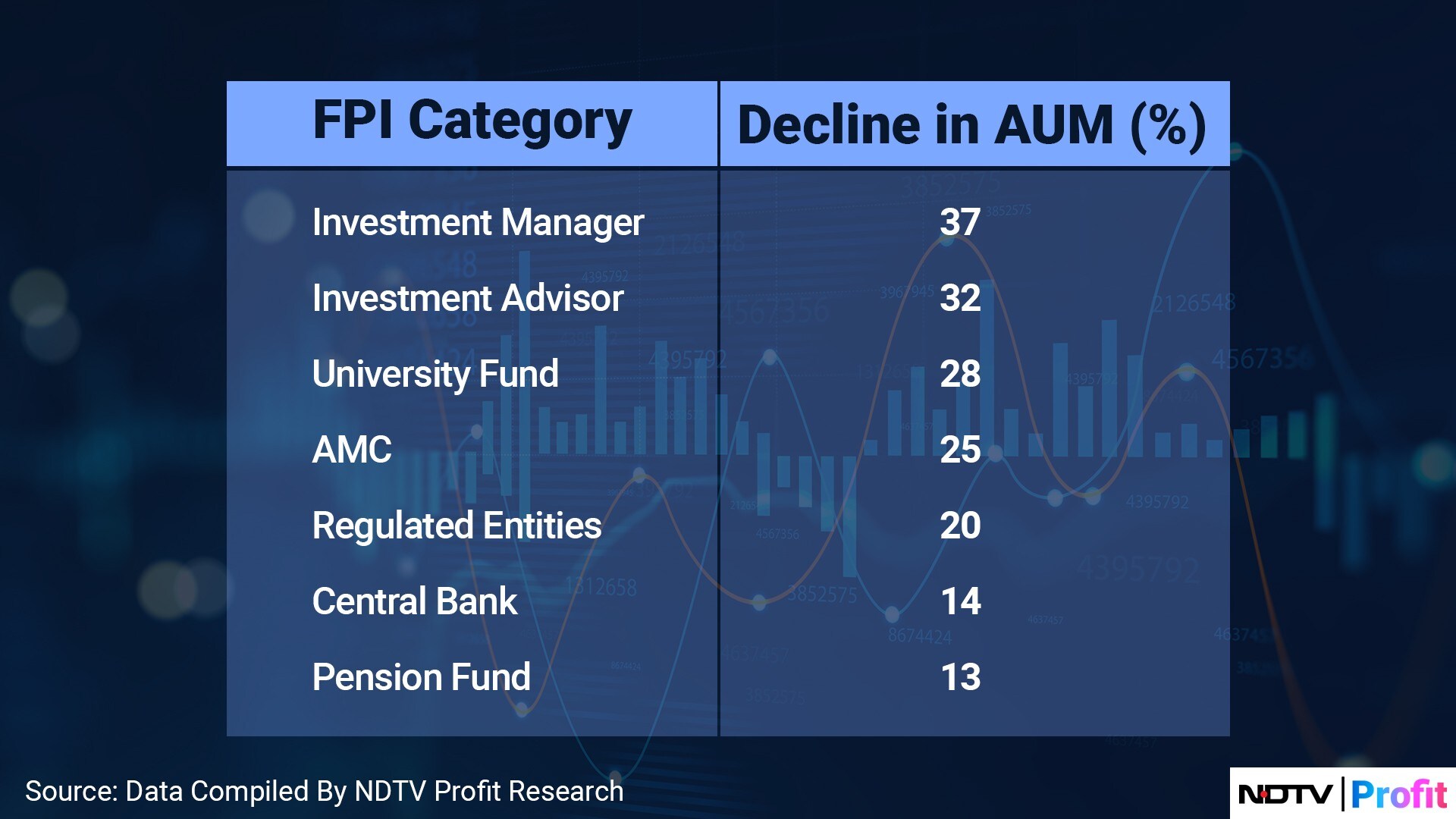
To arrive at this data, we have used the foreign portfolio investors' asset-under-management data, published by the National Securities Depository Ltd. We compared the AUM as of September 2024 with that of January 2025 to check which FPI category has seen the biggest drop.
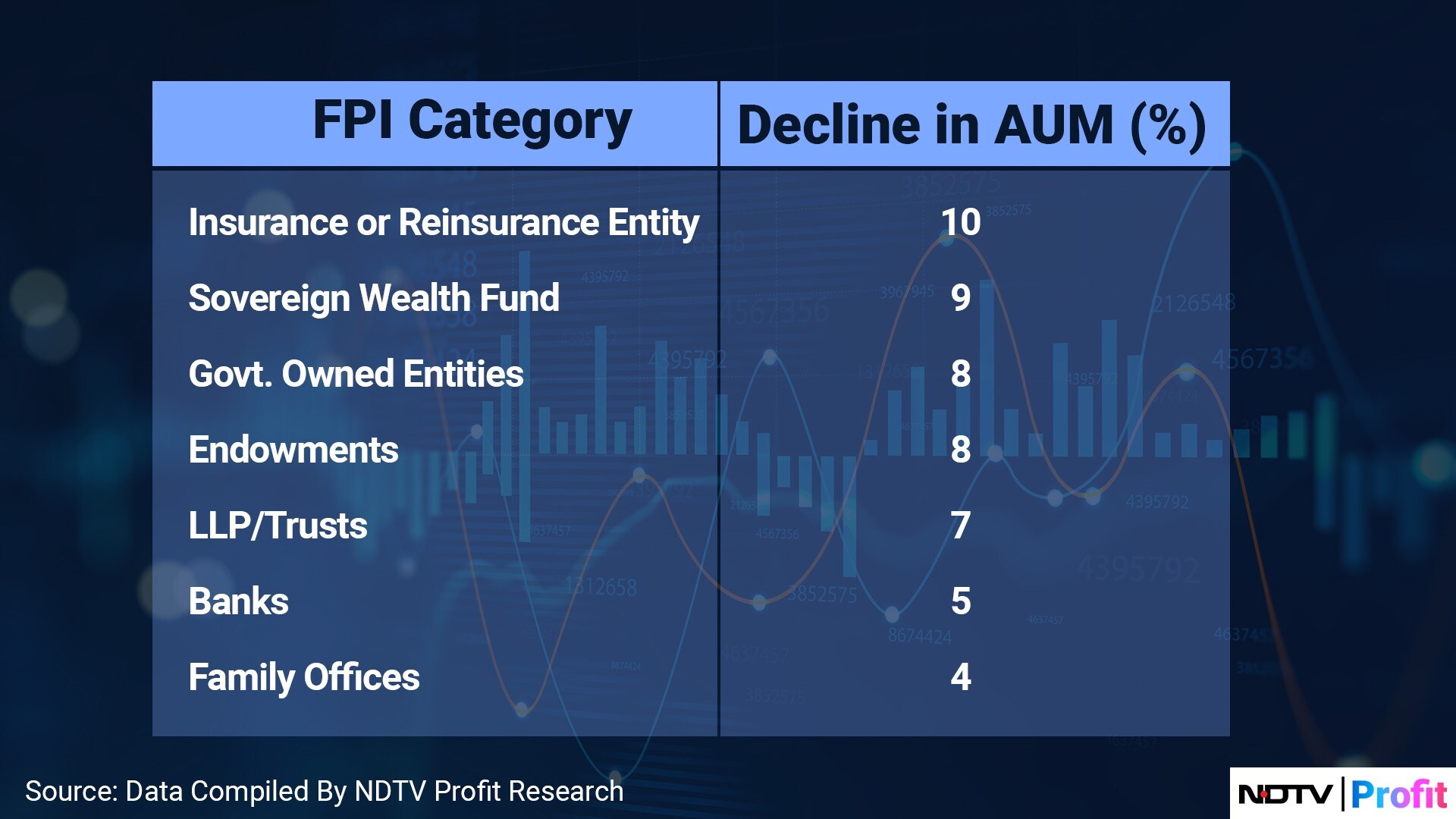
The reduction behind the AUM could be owing to a fall in stock price and/or selling by the funds. Thus, if the fall in the AUM for a certain FPI category is more than the overall FPI AUM fall, then it can be safely assumed that the respective FPI category has been selling more in equity markets.
The FPI AUM in India has fallen by 13% between September 2024 and January 2025.
These FPI categories have seen a bigger drop compared to the overall drop in the FPI AUM.
FPI Who Could Have Bought?
Given that the fall in these FPI categories is much lower compared to overall drop in markets and the FPI AUM, it can be safely assumed, that these categories have deployed more money in Indian equities in the past five months.
Essential Business Intelligence, Sharp Market Insights, Practical Personal Finance Advice, Daily Fuel, Gold and Silver Prices and Latest Stories — On NDTV Profit.