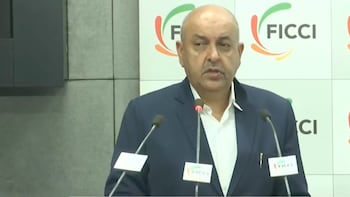
- Global IPO super cycle expected over next 2-2.5 years driven by AI and investor interest
- Capital raising will involve public, private equity, and debt markets globally
- India's market cap grew from $1.5T to $4.8T in ten years amid diverse sector growth
Global capital markets are on the cusp of a major transformation, with growing investor appetite for public listings and artificial intelligence expected to drive an IPO super cycle over the next two to two-and-a-half years, according to Aloke Gupte, Global Co-head of Equity Capital Markets at Citi.
He added that funding this next wave of growth will require capital from every available source, including both public and private equity and debt markets, making it one of the most significant capital-raising periods in recent history.
Speaking at Citi India conference 2026, Gupte said the trend of companies staying private for longer was now clearly reversing. With the SpaceX IPO having launched in the US on the very morning of the event, Gupte called this a record year for global IPOs in the making, with numerous other markets also seeing a surge in listing activity.
Twelve to 18 months ago, many of the companies now at the forefront of capital market dialogue were barely known. That expansion, he said, will only continue.
ALSO READ | Exports, Telecom And Data Centres To Drive India's Next Electronics Boom: Dixon Founder
On AI infrastructure, Gupte drew careful distinctions across what he called a very wide gamut. At one end sits the data centre, a real estate-adjacent business with recurring cash flows, long-term contracts and valuations driven by EBITDA multiples or dividend yields.
At the other end of the spectrum sits the compute, chips and memory segment, which is valued in an entirely different way. Citi recently took Cerebras public in the US, a semiconductor company valued on a two-year forward revenue basis, drawing comparisons to the high-growth listings of 2021 where companies were valued on revenue rather than any profit multiple.
Where a company sits within the AI infrastructure ecosystem determines how it will be valued, Gupte said, and investors are quite discerning about that distinction. His own conviction, he added, spans the entire AI infrastructure economy, which he views as vast, expanding and continuously bringing new elements to the fore.
On the question of private capital versus public markets, Arvind Vashisth, India Head of ECM at Citi, said there is space for both. When markets are buoyant, public markets become the natural destination for companies seeking capital. When conditions slow, private capital picks up. The toggle between the two is simply a function of market conditions at any given time. Globally, however, appetite across both remains immense.
On India, Vashisth urged a longer view beyond the current noise around FII outflows and geopolitical uncertainty. Ten years ago, India's total market capitalisation stood at $1.5 trillion. It is $4.8 trillion today, built on ten consecutive years of positive market returns that no other major global market has delivered.
Aloke Gupte, Global Co-Head, ECM at Citi, on valuing AI infrastructure companies versus old-school tech companies and where to place your bets, in conversation with @Riddhima765 pic.twitter.com/i9hmHYbTkv
— NDTV Profit (@NDTVProfitIndia) June 4, 2026
The current weakness is an inevitable cyclical rotation as capital moves across geographies, not a structural reversal. India also has 114 companies with a market capitalisation exceeding $10 billion, third only to the US and China, and spread across a genuinely broad base of sectors.
This distinguishes India meaningfully from markets like Japan, Korea and Taiwan which, while performing well, are defined by a limited number of sectors and tend to be export-oriented rather than consumption-driven economies.
On FII outflows, Gupte was direct. Total FII ownership in India stands at approximately $850 billion. The $25 to $30 billion of outflows seen this year, similar to the previous year, is a portfolio rebalancing, not an exit. A large amount of capital had previously flowed into India while less had gone to markets like China, and some of that is now correcting.
When deals are actually being priced, whether IPOs or follow-ons, foreign investors participate at a roughly 40 to 60 ratio against domestic investors. Last year, foreigners put $5 billion net into Indian primary market deals, and both bankers expect that to continue unchanged. India's overall ECM volumes stood at $65 billion last year, even during an FII outflow year, and once current geopolitical volatility fades, both bankers expect issuance activity to resume meaningfully.
India's IPO pipeline at the ground level has not stalled. Mandating activity, bake-offs and deal kick-offs have continued without interruption, and the back half of 2026 is expected to see a strong resurgence, mirroring the pattern of prior years.
Market multiples remain elevated at 19 times earnings, second only to the US where the S&P 500 trades at 21 times and the Nasdaq at 25 times, underpinned by strong corporate quality, sectoral breadth and earnings that have broadly beaten expectations this quarter. While the next quarter may see some temporary disruption from global supply chains, both Gupte and Vashisth were clear that this is a blip and not a break in the larger story.
ALSO READ | Citi To Double Down On India Institutional Business, Sees 'Tremendous Opportunity'
On the energy and geopolitics front, Gupte noted that the world has excess oil and any near-term shock to India should be viewed as temporary. Energy security will remain a government priority and India is already making the right investments in renewables and diversification, steps that will reflect positively over the coming years.
India's cost of capital has also structurally declined, Vashisth noted, which means market multiples should structurally be higher. That, combined with strong growth, broad sectoral representation and what both bankers believe will be India's meaningful entry into the AI ecosystem over time, makes the medium to long-term outlook as compelling as it has ever been.
India, Gupte said, may have been slow to enter the AI economy but is likely to emerge as a long-term winner on multiple fronts. On a five-year view, both bankers expressed firm conviction that India's best years in capital markets are firmly and squarely still ahead.
Essential Business Intelligence, Continuous LIVE TV, Sharp Market Insights, Practical Personal Finance Advice and Latest Stories — On NDTV Profit.