The World Meteorological Organization (WMO) has confirmed the development of potentially “strong” El Niño conditions, warning that it may lead to above-average temperatures across most parts of the world between June and August.
According to the WMO, there is a 90% probability that El Niño will persist in the coming months. The phenomenon, driven by unusually warm waters in the tropical Pacific Ocean, will increase the risk of extreme weather events.
???? WMO confirms: El Niño conditions are developing and are set to influence global temperature and rainfall patterns around the world in the months ahead. Most forecast models suggest it will be at least moderate – possibly strong.
Be prepared. More info➡️ https://t.co/htyps0XfsE pic.twitter.com/0dbWunyqyUAlso Read | Layoffs Are Rising In Tech, But These Skills Are Helping People Unlock Better Pay
— World Meteorological Organization (@WMO) June 2, 2026
“The science is clear: El Niño is arriving on our doorstep in the coming months with 90% certainty. The world must treat it as the urgent climate warning it is. El Niño conditions will pour fuel on the fire of a warming world,” the WMO warned on Tuesday.
El Niño typically recurs every two to seven years and can result in above-average temperatures and weaker monsoon for countries like India. The WMO indicates that there is an 80% chance of El Niño developing during June to August. The likelihood of the climate pattern persisting until at least November is estimated at 90% or higher.
“We need to prepare for a potentially strong El Niño event – which will exacerbate drought and heavy rainfall and increase the risk of heatwaves both on land and in the ocean,” said WMO Secretary-General Celeste Saulo.
ALSO READ: Super El Nino Warning: Scorching Heat, Weaker Monsoon Ahead — What It Means For India
Impact of El Niño On Indian Weather:
El Niño is usually associated with increased rainfall in parts of southern South America, the southern United States, parts of the Horn of Africa and central Asia. On the other hand, it leads to drier conditions over Central America, northern South America, the Caribbean, Australia, Indonesia, and parts of southern Asia.
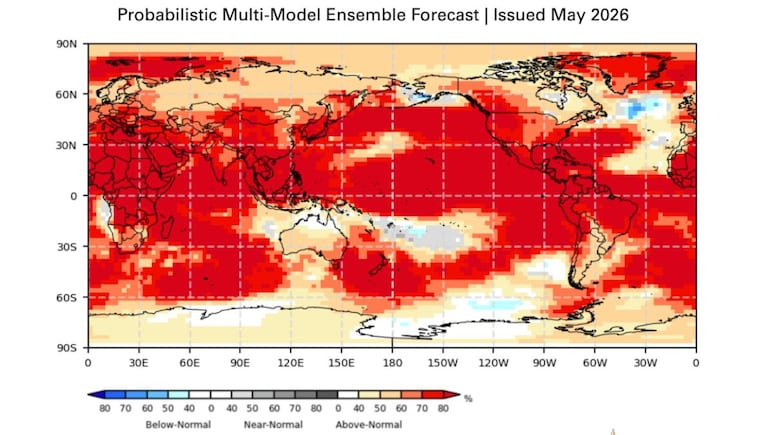
“For the June-July-August season, forecasts project a nearly universal dominance of above-normal temperatures in nearly all parts of the globe. These increase risks of heat stress and compounding hazards in some regions and accelerate the development of drought conditions where rainfall is reduced,” the WMO warned.
This could mean that India is also likely to experience drier than normal weather conditions in the coming months. The presence of El Niño is also associated with weaker southwest monsoon in India, which has already been predicted by the India Meteorological Department (IMD). The critical June–September southwest monsoon matters because it delivers nearly 70-75% of India's annual rainfall and serves as the lifeline of the country's agrarian economy.
Poor or irregular monsoon rains may reduce crop production and affect water availability, hurting socio-economic growth. In other words, key summer crops (Kharif) such as rice, pulses, oilseeds, sugarcane, and cotton may get impacted as they require steady, predictable moisture in June and July. Delayed or weak rains will stall sowing cycles.
ALSO READ: A Searing Asian Summer Will Add To Risk Of Surging Gas Prices
The most recent El Niño in 2023-24 was among the five strongest ever recorded and contributed to the record-breaking global temperatures seen in 2024. With the possibility of potentially strong El Niño conditions again, 2026 or 2027 could become the hottest year on record.
Essential Business Intelligence, Sharp Market Insights, Practical Personal Finance Advice, Daily Fuel, Gold and Silver Prices and Latest Stories — On NDTV Profit.