- United Spirits expects muted FY26 results amid policy and premiumisation challenges
- Sales and promotional expenses rose 15% to Rs 1,295 crore by FY26-end
- Higher advertising spend pressures EBITDA margin down 104 basis points to 16.8%
The alcoholic beverage business is not just bubbles and fizz all the time. Hard calls often need to be made, especially for the sake of the bigger picture. Take United Spirits, for instance, the company is going to shut its manufacturing unit in Hyderabad by Aug. 31, 2026, as part of a broader supply chain optimisation initiative. .
The facility, located in Malkajgiri, Telangana, contributed around Rs 599 crore, or nearly 2% of the company's revenue from operations, during the financial year 2025-26.
Beyond that, analysts expect the McDowell's maker to deliver a muted quarter on the blade of a double-edged sword: policy and a push for premiumisation.
Also Read | Layoffs Are Rising In Tech, But These Skills Are Helping People Unlock Better Pay
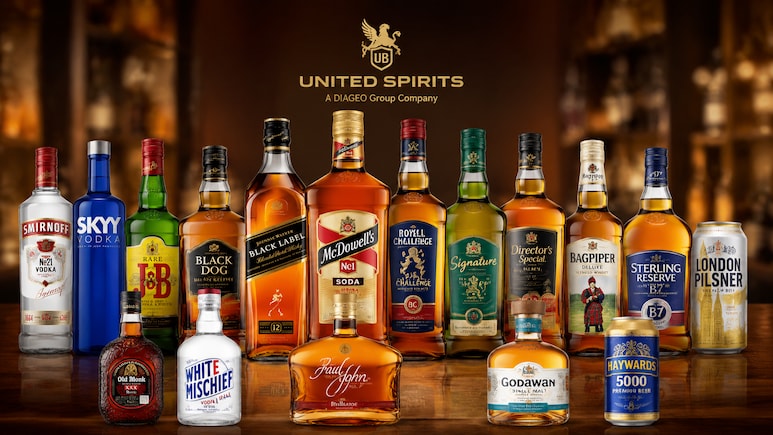
With a market capitalisation of over Rs 1 lakh crore, UNSL dominates the Indian liquor arena. However, the company's sales and profitability are expected to be hit by a host of headwinds.
The company's sales and promotional spending went up by 15% to Rs 1,295 crore by the end of the financial year 2026, compared to Rs 1,128 crore by the end of FY25.
United Spirits not only spends more on advertising in absolute terms than peers such as Radico Khaitan (which is expected to be an outperformer), but also allocates a significantly larger share of its revenue to brand building. Radico Khaitan's Rs 279 crore ad spend made up only 4.6% of its total revenue in FY26 (Rs 6,050 crore), whereas United Spirits spent double that proportion of its Rs 12,448 crore income.
By the looks of it, this is not going to be the end of the promotional push, as brokerages price higher spends into declining margins.
"Ebitda is seen declining 2% to Rs 4,448 crore as higher advertising and promotion spending weighs on profitability. Margin is estimated at 16.8%, down 104 basis points year-on-year, whilst PAT is projected to increase 2% to Rs 3,152 crore," Jefferies underlined in its preview note.
DAM Capital echoed the view and said that it expects margins to be under pressure, thanks to higher A&P. Of all the promotions that UNSL did in the last fiscal, the McDowell's relaunch stood out as the most prominent, with its new packaging, new communication campaign, and repositioning to appeal to younger consumers.
Along with elevated promotional expenditure, analysts point to Iran war-induced headwinds such as higher packaging costs and pricier glass, and, more prominently, Maharashtra's excise duty hike and the MML (Maharashtra Made Liquor) initiative.
The Excise Duty Hike: A Recap
In June last year, the Maharashtra government raised the state excise duty on Indian-made foreign liquor (IMFL) by over 50%, which led to a substantial increase in retail prices of over 60%.
The government also increased the duty on country liquor and imported premium liquor, which hiked their retail prices by 14% and over 25%, respectively.
The Impact: Big, But Not Unanticipated
In its annual financial year 2026 report, UNSL management admitted Maharashtra to be the most "significant near-term challenge". However, this was not entirely unexpected.
During the Black Dog manufacturer's post-earnings conference call, the management explicitly said that it expected the impact to spill over into the first two quarters of FY27, albeit emphasising that the "worst" was behind them.
Although, for the company's popular segment, Maharashtra Made Liquor is likely to be a bigger hurdle. To boost local manufacturing, revive idle distilleries, and increase state revenue, the state government introduced 'Maharashtra Made Liquor' as a category.
The category was meant to offer affordable, grain-based spirits exclusively produced in the state, retailing at roughly Rs 148 for a 180 ml bottle. Whilst it may have been a boon for consumers, it spelled higher competition for brands like UNSL.
In one of its most crucial markets, the company had to combat higher tax slabs along with cheaper, state-manufactured liquor.
"Sharp consumer price spikes and the introduction of Maharashtra Made Liquor created additional competitive complexity at the lower end of the portfolio," said Praveen Someshwar, managing director and chief executive officer of the company.
At the same time, he pointed out that evolving consumer preferences, structural changes, and the expansion of the company's premium portfolio helped offset some of the state's impact through other markets.
Going ahead, analysts have flagged that the popular segment will likely clock a double digit decline in the quarter under review.
The Push For Premium
Premiumisation is not a new approach in the alcobev industry and is definitely not unique to United Spirits. Whilst Radico Khaitan may not be spending as much as UNSL on brand promotion in absolute terms, the expenditure surged by over 45% year-on-year from Rs 192 crore in fiscal 2025.
JM Financial, in its research report, termed the trend a structural shift that will prove to be a key value driver and a tool to navigate an adverse regulatory and inflationary environment.
The push for premium (especially in the beer and Indian-made foreign liquor segment) has helped cushion some of the impact of adverse regulation and input cost inflation, according to the brokerage.
The analysis seems to ring true in the case of United Spirits, although, brokerages are split on how the P&A segment is going to look for Q1. While some expect sales to grow on the back of better pricing and portfolio mix, others point to flattish volumes.
There may be a margin pinch in the near term, but whether the premiumisation bet pays off will depend on how the company pours the long-term strategy toast.
ALSO READ: 'We'll Be Getting Into Commercial Flights,' Says Skyroot CEO Pawan Chandana After Vikram-1 Success
Essential Business Intelligence, Sharp Market Insights, Practical Personal Finance Advice, Daily Fuel, Gold and Silver Prices and Latest Stories — On NDTV Profit.