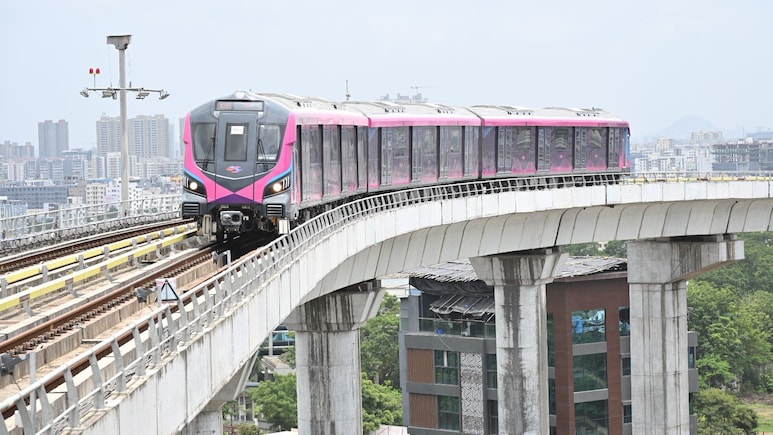
Pune's urban transport network is set for a major expansion, with the city's new Metro Pink Line combining two distinctive features: an all-women train operating team and plans to meet nearly 30% of its electricity requirements through solar power.
Prime Minister Narendra Modi will inaugurate Pune Metro Line 3, also known as the Pink Line, on November 3, 2026, as part of a wider package of Metro projects worth around Rs 21,800 crore.

-
 Indian Markets Turning Corner After Two Tough Years, Says Sandeep Tandon
-
 NDTV Profit Ignite 2026: Experts See Opportunity In Equities, Stay Bullish For Long-Term
-
 Buy Right, Sit Tight Does Not Work for Individual Stocks, Says Dinshaw Irani
-
 'Worst Is Behind': Quant MF Sees Market Bottom, Flags 'Extreme Euphoria' In Midcaps
-
 India's Mutual Fund Industry Could Become A $1 Trillion Opportunity, Say Fund Managers
-
 'Foreign Investors Are Baraatis': Raamdeo Agrawal's Take On LTCG Tax
-
 Stay Invested Through Market Cycles: Raamdeo Agrawal at NDTV Profit Ignite
-
 Ramesh Damani Remains Bullish On India For Next 20-30 Years, Sees Bargains Amid Market Weakness
-
 CAS Came After A Long Consultation Process: SEBI Chairman Tuhin Kanta Pandey AT NDTV PROFIT IGNITE
-
 Aim To Cut FPI Onboarding Time From Mth To Five Days: SEBI Chairman Tuhin Kanta Pandey AT NDTV PROFI
The inauguration and foundation stone-laying ceremonies will take place through video conferencing at 12:30 p.m., according to a press release issued by the Press Information Bureau.
Also Read | Layoffs Are Rising In Tech, But These Skills Are Helping People Unlock Better Pay
ALSO READ | PM Modi Approves North Corridor Of Bullet Train Project: Delhi-Guwahati Trip In Eight Hours
Built at a cost of more than Rs 8,300 crore, the Pink Line stretches approximately 23 kilometres, connecting Maan to District Court Metro station. It will provide Metro connectivity between Hinjewadi, one of Pune's major IT hubs, and Shivajinagar, improving access to a key employment centre and facilitating the daily commute of thousands of IT professionals and other passengers.
One of the corridor's most distinctive features is its emphasis on women's participation in public transport. According to the PIB release, the Pink Line will be operated entirely by women train operators, making it a first-of-its-kind initiative.
The project also places emphasis on environmental sustainability. Around 30% of its total electricity requirements are envisaged to be met through solar power, reducing its dependence on conventional sources of electricity.
What makes Pune Metro's new Pink Line so special? 23 km connecting Hinjewadi's IT hub with Shivajinagar. Operated by women. Almost a third of the electricity needs planned from solar energy. Tomorrow, this Rs. 8,300 crore infra enhancement will be inaugurated! A significant boost to 'Ease of Living' for Pune! https://t.co/sPMa94JF6k
— Narendra Modi (@narendramodi) November 2, 2026
The new corridor is expected to help ease traffic congestion, reduce dependence on private vehicles and lower vehicular emissions by providing commuters with an alternative to road transport.
Alongside the Pink Line inauguration, the Prime Minister will lay the foundation stone for Pune Metro Phase-II, estimated to cost around Rs 13,500 crore. The expansion will comprise Lines 2A, 2B, 4 and 4A, aimed at extending Metro connectivity across the city's growing residential, commercial and information technology hubs.
Lines 2A and 2B will together cover approximately 12.75 kilometres. Line 2A will connect Vanaz with Chandani Chowk, while Line 2B will link Ramwadi with Vitthalwadi.
Line 4, spanning around 25.52 kilometres, will connect Kharadi with Khadakwasla. Line 4A will cover 6.12 kilometres between Nal Stop and Manik Baug.
ALSO READ | ISRO's GSLV Rocket Successfully Places NVS-03 Satellite Into 'Designated' Orbit, PM Modi Reacts
The proposed corridors will serve key locations, including Kharadi, Magarpatta, Hadapsar, Swargate, Manik Baug, Nanded City, Pune Cantonment and Warje.
The expanded network will also integrate with the existing Pune Metro system and intercity bus services. Interchange facilities are planned at Swargate, Nal Stop and Kharadi Bypass to facilitate seamless connectivity across different parts of the city.
Together, the Pink Line and Phase-II expansion are expected to strengthen Pune's public transport infrastructure and provide commuters with a more integrated urban mobility network.
Essential Business Intelligence, Sharp Market Insights, Practical Personal Finance Advice, Daily Fuel, Gold and Silver Prices and Latest Stories — On NDTV Profit.