Pirate Party Surge Falls Short as Icelanders Back Stability
(Bloomberg) -- The ruling Independence Party emerged as the winner in Iceland's snap election, surviving a surge by the populist Pirate Party in a vote for stability as the nation emerges from eight years of economic turmoil.
With all the votes counted, the Independence Party rose to 29 percent from 26.7 percent in 2013, while their outgoing coalition partner, the Progressive Party, slumped to 11.5 percent from 24.4 percent. The Pirates jumped to 14.5 percent from 5.1 percent in 2013 but fell well short of pre-election polling. New parties such as Revival also captured a significant number of votes. Bad weather reduced turnout to 79.2 percent from 81.9 percent in 2013.
Sunday's results mean neither the government nor the left-wing opposition have a majority in the 63-member parliament, the Althing, setting the nation up for broad talks on how to form a new ruling coalition. Iceland has been ruled by two-party coalitions since 1991, but the next government will necessarily need the backing of at least three parties.
The outcome of the election was seen as another defeat for pollsters, who exaggerated the support for the Pirate Party after failing to correctly predict the outcome of the 2015 general election in the U.K. Pollsters were also blamed for not accurately predicting the outcome of the June referendum on Britain's membership of the European Union.
Click here for a description of Iceland's main political parties.
Finance Minister Bjarni Benediktsson, who leads the Independence Party, gained followers by pointing to his success in steering an economy that is expanding at a pace of more than 4 percent a year and driving down unemployment below 2 percent. He has also largely dismantled capital controls that have been in place since 2008. The krona has gained 12 percent against the euro this year.
If the results stand, it's “natural” that the Independence Party take charge in government talks, Benediktsson said in a party leader debate on RUV television early Sunday.
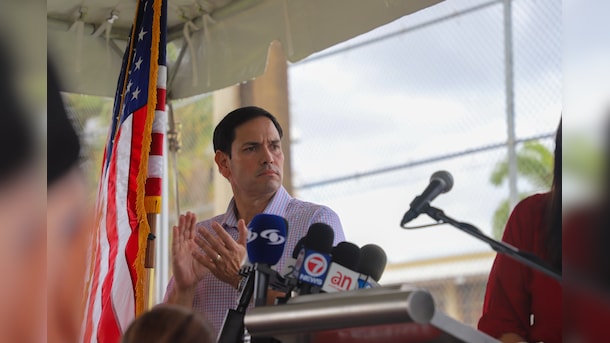
Bjarni Benediktsson
“I'm also thinking about the next election term and asking myself, what will the projects be?” he said. “Let's not forget that we're somewhere at the top of the economic curve right now -- we've been increasing our quality of life over a relatively short period of time, but still everybody feels that it still falls a bit short.”
The government agreed in April to bring elections forward by six months after protesters hurling bananas and yogurt forced then-Prime Minister and Progressive Party leader Sigmundur David Gunnlaugsson to step down.
The Revival party, headed by defectors from the Independence Party, won 10.5 percent of the vote and is projected to have seven seats. It could help the government form a majority, but is seeking a new referendum on whether to continue accession talks with the EU. The Independence Party opposes EU membership.
The Pirates´ surge had become a global story over the past months as polls showed they could win 20 percent of the vote to become the first populist movement to break into government amid a groundswell for anti-establishment parties across the Western world.
--With assistance from Samuel Parker and Sammy Jenkins To contact the reporter on this story: Omar R. Valdimarsson in Reykjavik at valdimarsson@bloomberg.net. To contact the editors responsible for this story: Jonas Bergman at jbergman@bloomberg.net, Nick Rigillo

-
Navigating Friction And Energy Realities: An Analysis Of Marco Rubio's October Visit To India

Occurring at a critical juncture marked by stalled trade negotiations and escalating geopolitical pressures over global energy supplies, the visit offers a profound window into modern US-India relations.
-
India Exports Capital. Why Not Export Trusteeship?
The big question, then, is whether India can build an institution that global borrowers, investors, banks, and lawyers can trust, even without an Indian connection.
-
France's Economy & Politics Are In Crisis | The Reason Why
Let's look at how the French economy and politics evolved under Nicolas Sarkozy, Franois Hollande and Emmanuel Macron.
-
You May Inherit The Business. You Must Earn Its Credibility.
Succession tests the founder's ability to share authority as much as it tests the next generation's readiness to assume it.
-
Signing Deals Is One Thing; Making Them Work Is Another | The Week In Whys
Sometimes, things don't turn out as planned. Indian companies have lost some bids to rivals, some projects won't produce until 2030.
-
FOMC Wall, PERM Suspension, Hospital Stocks | Talking Points This Week
A PERM suspension would directly affect green-card sponsorship rather than H-1B visas, so the near-term earnings impact could remain relatively limited. The key question is whether this marks a new phase in US scrutiny of Indian IT.
-
Everything, Everywhere, All At Once: Dalal Street's Week To Forget | Joining The Dots
Visa curbs, a Starlink spat and cancer drug caps: what connects this week's shocks for Indian markets
-
India Is Going Abroad For Critical Minerals. But It May Take Years To Pay Off | The Reason Why
Although India's steps are in the right direction, they remain modest compared with India's growing dependence.
-
When Everyone Has AI, What Gives You An Edge?
India's young workforce is entering an uncertain world of work where powerful AI tools are becoming widely accessible. The advantage will belong to those who combine deep expertise with digital fluency, and the distinctly human capabilities that technology cannot manufacture.
-
Wrong Labels, High Pesticide Residues Holding Back Agri Exports | The Reason Why
India needs stronger domestic food-safety and labelling standards, with best practices becoming part of everyday business for farmers, traders and food companies.