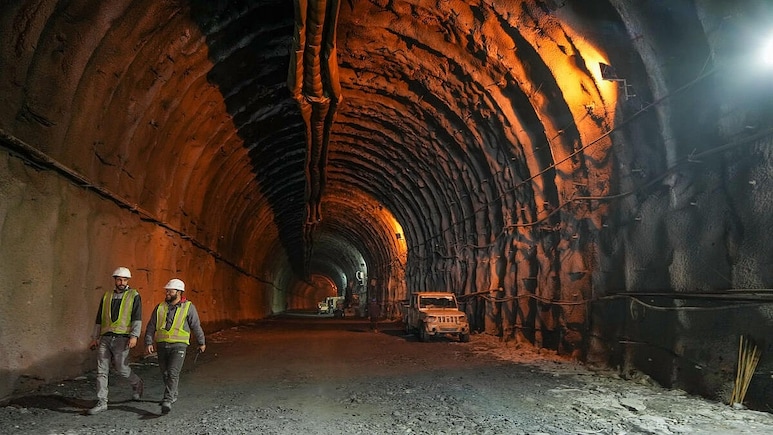
Union Minister for Road Transport and Highways Nitin Gadkari will inaugurate the Zojila Tunnel on June 9, marking a major milestone in India's infrastructure development in the Himalayan region. The tunnel, one of the most challenging engineering projects in the country, is being built at an altitude of 11,578 feet and is expected to significantly improve connectivity between Ladakh and the rest of India.
Gadkari wrote on X, "India's most challenging infrastructure project taking shape in the rugged heights of the Himalayas: the Zojila Tunnel! Main Tunnel Breakthrough Ceremony: June 9, 2026."
हिमालय की दुर्गम उँचाईयों में आकार ले रही भारत की सबसे चुनौतीपूर्ण अवसंरचना : जोज़िला टनल!
— Nitin Gadkari (@nitin_gadkari) June 8, 2026
मुख्य 'सुरंग ब्रेकथ्रू' समारोह : 9 जून 2026#ZojilaTunnel #AllWeatherRoad #TunnelBreakthrough #PragatiKaHighway #GatiShakti #BuildingTheNation pic.twitter.com/QurXHRD7mu
The Zojila Tunnel will become India's longest road tunnel and Asia's longest bi-directional tunnel, spanning a total project length of 30.18 km, including a 13.153 km main tunnel and 17.030 km of approach roads.
ALSO READ: India Clears Rs 13,000-Crore Dual-Use Airport In Great Nicobar: Report
The project, estimated at Rs 6,809.69 crore, is part of a larger effort to strengthen all-weather connectivity along the Srinagar-Kargil-Leh corridor on National Highway-1.
Significance of the World's Longest Single-Tube
The tunnel, being constructed under the Zojila Pass between Sonamarg and Drass, aims to provide uninterrupted connectivity to Ladakh, which remains cut off during winter months due to heavy snowfall and avalanche risks.
Once operational, it will reduce travel time on the stretch from over three hours to around 15 minutes, while also improving safety and strategic mobility for both civilian and defence purposes.
The tunnel is being developed using the New Austrian Tunnelling Method and incorporates a Smart Tunnel (SCADA) system equipped with CCTV surveillance, ventilation, radio communication and uninterrupted power supply.
The government has also claimed that the adoption of advanced construction technology has resulted in savings of over Rs 5,000 crore. The project is seen as a critical part of India's broader tunnel infrastructure push in Jammu and Kashmir and Ladakh, where investments have exceeded Rs 1 lakh crore.
Working Conditions
The construction of the tunnel was fraught with challenges and hardships. According to officials, when approximately 12 kilometres of the tunnel had been completed, leaving around 1,200 metres under active construction after steady progress since work began in 2020, at that time, engineers highlighted the extreme geological and climatic challenges of the project.
Noting that excavation progressed at an average rate of just 2.5 to 3 metres per day, consequently, the entire operation required an immense amount of patience and precision.
Essential Business Intelligence, Sharp Market Insights, Practical Personal Finance Advice, Daily Fuel, Gold and Silver Prices and Latest Stories — On NDTV Profit.