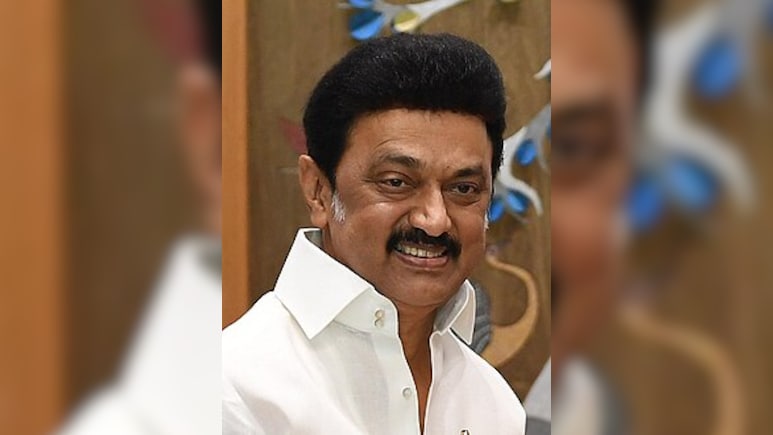
The Dravida Munnetra Kazhagam (DMK) has backed the Centre's revised delimitation proposals, marking a significant political shift ahead of Parliament's special session beginning November 30.
The move gives the government in centre a boost in its bid to secure support for the constitutional amendments while allowing MK Stalin to claim a political victory, having secured safeguards for Tamil Nadu's share of parliamentary representation.
With the DMK backing the revised proposal, the Lok Sabha could see its maximum strength rise to 850 seats, marking a 50% expansion while preserving the existing proportion of representation among states.
Also Read | Layoffs Are Rising In Tech, But These Skills Are Helping People Unlock Better Pay
By supporting the revised formula, the DMK can also project itself as having forced the Centre to accommodate its key demands, strengthening its position in the politically charged debate over federalism and the representation of southern states.
The move is particularly consequential amid growing political tensions between northern and southern states over the possible redistribution of parliamentary seats and its implications for federal representation.
DMK president and Tamil Nadu Chief Minister MK Stalin said the party had agreed to support the revised Bills after the Centre incorporated its two key demands, prompting its opposition to the earlier proposal in April.
Calling it a victory for Tamil Nadu and other southern states, Stalin said the revised framework protected states that had successfully controlled population growth from losing their relative share of parliamentary representation.
The decision was announced following a meeting of DMK parliamentarians chaired by Stalin in Chennai on Saturday. Senior party leader and MP A Raja subsequently confirmed that the party would extend its support to the proposed constitutional amendments.
"We have decided to extend the DMK's support to the proposed Bills being introduced to provide a 50 per cent increase in seats across all states from the existing level," Raja said.
ALSO READ: Delimitation Explained: What Is The Bill And Why It Matters?
Stalin maintained that the party had carefully examined the revised framework before arriving at its decision, pointing out that the two conditions which had prompted the DMK to oppose the earlier legislation were now incorporated into the proposed Bills.
"The two demands for which we opposed the delimitation Bill last April have been included in writing in the new Bill," he said.
What has changed in the revised delimitation framework?
The DMK's earlier opposition was primarily rooted in concerns that a population-based redistribution of Lok Sabha seats could reduce the political weight of southern states, which have recorded comparatively slower population growth following decades of investment in education, healthcare, family planning and social development.
Under the revised framework, the Centre has proposed increasing Lok Sabha representation by 50 per cent across all states while retaining their existing relative share in the House.
The allocation of seats based on the 1971 Census is proposed to remain frozen for another 25 years, extending the arrangement until 2051.
The proposed formula is intended to address the concerns of states such as Tamil Nadu, Kerala, Karnataka, Andhra Pradesh and Telangana, which have repeatedly argued that population growth alone should not determine their political representation in Parliament.
Tamil Nadu currently has 39 Lok Sabha seats, accounting for approximately 7.18 per cent of the House's representation. According to Raja, its share would marginally increase to 7.21 per cent under the revised arrangement rather than decline.
The proposed expansion would take the maximum strength of the Lok Sabha to 850 seats. The Centre's framework also envisages increasing the maximum permissible strength of state Legislative Assemblies to 650.
For the DMK, the revised formula represents a political and constitutional safeguard against a redistribution exercise that could potentially shift the balance of parliamentary representation towards states with larger populations.
A politically sensitive issue between North and South
Delimitation has emerged as one of the most politically contentious constitutional issues, particularly because of the contrasting demographic trajectories of different regions.
Several southern states have argued that rewarding population growth through a larger share of parliamentary seats could effectively penalise states that have successfully implemented family-planning programmes and achieved better social indicators.
The concern has extended beyond the DMK, with several non-BJP-ruled states demanding assurances that their existing political representation would not be diluted.
Stalin had emerged as one of the most vocal opponents of the proposed exercise, positioning the issue as a question of federalism and equitable representation rather than merely a regional political dispute.
In February 2024, the Tamil Nadu Legislative Assembly adopted a resolution seeking protection of the existing proportion of parliamentary seats allocated to states under the 1971 Census.
The campaign gathered momentum in March 2025, when Stalin convened an all-party meeting in Chennai and subsequently initiated a Joint Action Committee involving states including Kerala, Andhra Pradesh, Telangana, Karnataka, West Bengal, Odisha and Punjab.
The initiative sought greater transparency in the delimitation process and an extension of the constitutional freeze on the inter-state allocation of parliamentary seats for another 25 years.
The DMK has consistently maintained that it is not opposed to delimitation itself but wants constitutional safeguards to ensure that states are not politically disadvantaged for their achievements in population stabilisation and socio-economic development.
DMK's backing comes amid wider political realignment
The decision assumes additional political significance because of the charged political atmosphere ahead of the special parliamentary session.
The DMK Parliamentary Party, in its latest resolution, also criticised the Congress over its position on delimitation, accusing its former ally of political opportunism and describing its change in stance as an "impracticable U-turn".
The criticism comes amid changing political equations in Tamil Nadu, with the Congress joining hands with actor-politician C Joseph Vijay and becoming part of his coalition government.
The DMK's decision to support the revised proposals could therefore have implications beyond the immediate legislative exercise, particularly as political parties attempt to reposition themselves ahead of the state's evolving political contest.
Why DMK's support matters for the Centre
The DMK's backing could strengthen the Centre's bid to secure parliamentary approval for the constitutional amendments. Under Article 368, such amendments require a majority of the total membership of each House and a two-thirds majority of members present and voting.
The DMK has 22 members in the Lok Sabha and eight in the Rajya Sabha, making its support politically significant as the government seeks to build the numbers necessary to clear the constitutional hurdle.
The NDA has around 320 MPs in the Lok Sabha, and support from parties outside the ruling alliance could become important in securing the required majority.
The legislative package also seeks to facilitate the implementation of 33 per cent reservation for women in legislatures by linking it to the delimitation exercise.
The second part of the Eighth Session of the Eighteenth Lok Sabha is scheduled to commence on November 30 and conclude on December 3. The revised delimitation proposals are expected to feature prominently during the proceedings.
Essential Business Intelligence, Sharp Market Insights, Practical Personal Finance Advice, Daily Fuel, Gold and Silver Prices, Watch Business News Live and Latest Stories — On NDTV Profit.