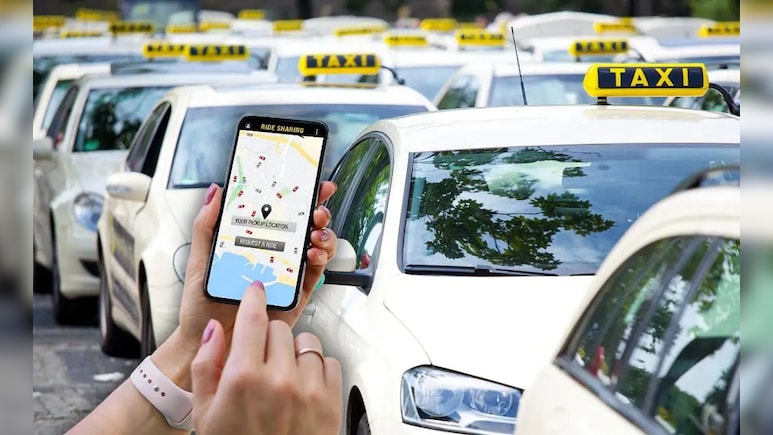
Applying GST on every ride booked through online platforms is reducing the take-home income of driver partners, and there is a need to re-look at its applicability to cab booking services, the internet platforms' industry body IAMAI said in a recent letter to the government.
Internet and Mobile Association of India (IAMAI), which represents online firms, like Rapido, Uber, and Ola, in a letter to the Finance Ministry last month, said that the issue not only impacts private online aggregators, but also government-supported digital mobility platforms like Bharat Taxi.
Under the current GST structure, wherein 5% GST is applied on every ride billed through digital platforms, there is a direct and disproportionate impact on driver earnings and the affordability of these services by consumers, the industry body said.
Also Read | Layoffs Are Rising In Tech, But These Skills Are Helping People Unlock Better Pay
"We request the GST Council and the Finance Ministry to re-examine the applicability of Section 9 (5) and structure of GST on app-based mobility services with a view to exempting SaaS models from its ambit," IAMAI said.
The section cited by IAMAI on GST structure states that "Electronic Commerce Operator (ECO) is required to pay tax on supply of services such as Passenger Transport Service, Accommodation services, Housekeeping Services & Restaurant Services, if such services are supplied through ECO".
IAMAI said under the SaaS-based technology model, the aggregator is not involved in fare collection, as the payments are settled directly between the driver and the passenger, resulting in an inherent impossibility for the aggregator to discharge GST at 5% on the ride value.
"In other words, the additional GST burden is effectively passed on to drivers and consumers, reducing the take-home income of drivers and undermining the very objective of technology-led inclusion, formalisation and affordable access to essential services," IAMAI said.
State governments like Karnataka have imposed GST liability on the online ride-hailing app but exempted the open-source platform Namma Yatri from the same.
IAMAI said that given the contradictory rulings made by certain state authorities on Advance Ruling (AAR) on the applicability of GST rule on SaaS (software-as-a-service) models and the subsequent legal challenge, it has led to uncertainty in the business environment of online ride-hailing apps.
"Government-backed or government-supported digital mobility platforms such as Bharat Taxi, which are also built on SaaS and platform models, face the same structural challenge. Given the thin margins in daily mobility services, even a small tax incidence materially alters ride economics," it said.
It has sought an opportunity to share industry perspectives with the GST Council and the Finance Ministry on the matter.
ALSO READ:New CPI Series, Q3 Season Ends, Two New IPOs — The Week Ahead
(This story has not been edited by NDTV staff and is auto-generated from a syndicated feed.)
Essential Business Intelligence, Sharp Market Insights, Practical Personal Finance Advice, Daily Fuel, Gold and Silver Prices and Latest Stories — On NDTV Profit.