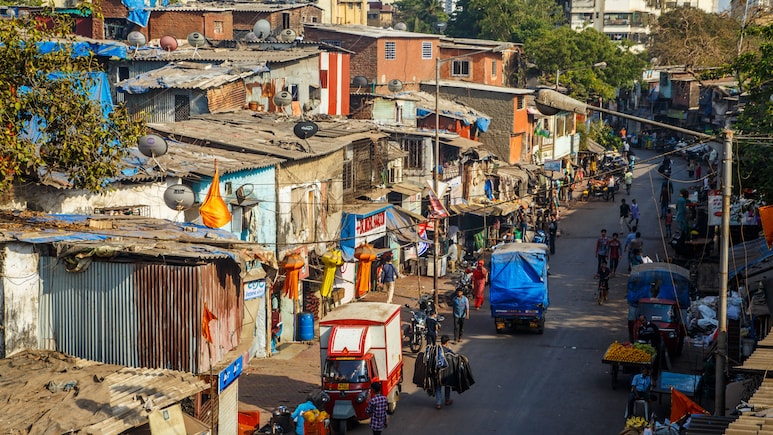
Lakhs of families living in Delhi's jhuggis could soon move into permanent flats, most of them without leaving their neighbourhoods.
The Delhi government, led by Chief Minister Rekha Gupta, has approved the Rehabilitation Policy 2026, which its office called “a landmark decision.” By the government's estimate, 4 to 5 lakh families, close to 20 lakh people, stand to benefit.
“For families living in Delhi's jhuggis, the dream of a permanent home has waited far too long,” the Chief Minister's Office said in a thread on X, released along with a set of posters carrying the tagline “From Jhuggis to Permanent Homes.”
Also Read | Layoffs Are Rising In Tech, But These Skills Are Helping People Unlock Better Pay

-
 Indian Markets Turning Corner After Two Tough Years, Says Sandeep Tandon
-
 NDTV Profit Ignite 2026: Experts See Opportunity In Equities, Stay Bullish For Long-Term
-
 Buy Right, Sit Tight Does Not Work for Individual Stocks, Says Dinshaw Irani
-
 'Worst Is Behind': Quant MF Sees Market Bottom, Flags 'Extreme Euphoria' In Midcaps
-
 India's Mutual Fund Industry Could Become A $1 Trillion Opportunity, Say Fund Managers
-
 'Foreign Investors Are Baraatis': Raamdeo Agrawal's Take On LTCG Tax
-
 Stay Invested Through Market Cycles: Raamdeo Agrawal at NDTV Profit Ignite
-
 Ramesh Damani Remains Bullish On India For Next 20-30 Years, Sees Bargains Amid Market Weakness
-
 CAS Came After A Long Consultation Process: SEBI Chairman Tuhin Kanta Pandey AT NDTV PROFIT IGNITE
-
 Aim To Cut FPI Onboarding Time From Mth To Five Days: SEBI Chairman Tuhin Kanta Pandey AT NDTV PROFI
ALSO READ | Delhi's Winter Pollution Plan: Non-BS6 Vehicles Face Entry Ban From November 1
“This is not just about replacing jhuggis with flats,” it added. “It is about replacing uncertainty with security, hardship with hope and years of struggle with a future of dignity.”
The Cut-Off
January 1, 2025. Any slum settlement that existed before that date comes under the policy.
Staying Close to Home
Residents won't be pushed to the city's edges, the government says. New homes will be built on the same land wherever possible, and failing that, preferably within 3 km. The CMO called this the most important part of the plan: “keeping families close to their jobs, schools and communities.”
The slogan for it is “Jahan Jhuggi, Wahan Makaan.”
ALSO READ | Delhi Satya Niketan Building Collapse: Five Civic Body Officials Suspended
The Flats
Every eligible family gets a 1-BHK. These will be part of planned housing complexes that also have schools, anganwadis, health facilities and playgrounds for children.
The Fine Print
Some rules are written around how families in jhuggis actually live. If separate households occupy different floors of the same jhuggi, each eligible household gets its own flat. Couples who are married will be allotted flats jointly. Families with a person with a disability get first claim on ground-floor units.
No eligible family will be moved out without somewhere else to go. While a site is being redeveloped, families will get either temporary housing or support to pay rent.
A footnote on the government's posters adds that all of this depends on certification and availability.
ALSO READ | 100% Salary Hike: Delhi Government Increases Remuneration Of These Employees
Who Gets Which Flat
Allotment will happen through a computerised lottery. GIS mapping will be used to catch anyone trying to claim twice, and there will be a process to file complaints and appeals.
For the first five years, the government will handle maintenance and security. Residents will then take charge of the shared facilities.
Essential Business Intelligence, Sharp Market Insights, Practical Personal Finance Advice, Daily Fuel, Gold and Silver Prices and Latest Stories — On NDTV Profit.