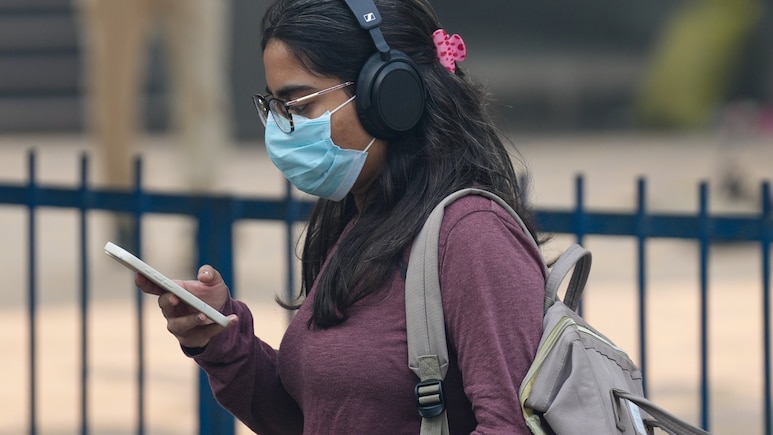
Delhi's Diwali celebrations on Sunday evening unfolded against a worsening pollution backdrop, with residents reporting the smell of smoke and hazy conditions across the national capital as firecracker celebrations gathered pace.
The city's instantaneous Air Quality Index (AQI) stood at 371 at 7 pm, placing it in the 'very poor' category, according to data from monitoring stations. The reading came close to the threshold for the 'severe' category, raising concerns about a further deterioration in air quality after the festivities.

-
 Indian Markets Turning Corner After Two Tough Years, Says Sandeep Tandon
-
 NDTV Profit Ignite 2026: Experts See Opportunity In Equities, Stay Bullish For Long-Term
-
 Buy Right, Sit Tight Does Not Work for Individual Stocks, Says Dinshaw Irani
-
 'Worst Is Behind': Quant MF Sees Market Bottom, Flags 'Extreme Euphoria' In Midcaps
-
 India's Mutual Fund Industry Could Become A $1 Trillion Opportunity, Say Fund Managers
-
 'Foreign Investors Are Baraatis': Raamdeo Agrawal's Take On LTCG Tax
-
 Stay Invested Through Market Cycles: Raamdeo Agrawal at NDTV Profit Ignite
-
 Ramesh Damani Remains Bullish On India For Next 20-30 Years, Sees Bargains Amid Market Weakness
-
 CAS Came After A Long Consultation Process: SEBI Chairman Tuhin Kanta Pandey AT NDTV PROFIT IGNITE
-
 Aim To Cut FPI Onboarding Time From Mth To Five Days: SEBI Chairman Tuhin Kanta Pandey AT NDTV PROFI
Of the 59 monitoring stations that reported data at 7 pm, 19 recorded 'severe' air quality, while 33 were in the 'very poor' category and seven reported 'poor' conditions. Jahangirpuri emerged as the worst-affected location, with an AQI of 460.
Also Read | Layoffs Are Rising In Tech, But These Skills Are Helping People Unlock Better Pay
Several residents took to the social media platform X to flag the worsening conditions, reporting the smell of firecracker smoke and smog in different parts of Delhi. Some also reported reduced visibility as the evening celebrations intensified. Delhi's average AQI settled at 376 on Sunday, compared with 369 a day earlier, indicating a further deterioration in pollution levels.
According to the Central Pollution Control Board (CPCB), an AQI reading between 301 and 400 falls in the 'very poor' category, while readings above 400 are classified as 'severe'. The scale ranges from 'good' (0-50) to 'severe' (401-500).
The outlook for the coming days remains concerning. The Air Quality Early Warning System (EWS) for Delhi has forecast that pollution levels could enter the 'severe' category from November 9 and remain there for the subsequent few days.
Firecracker emissions, vehicular pollution and the ongoing peak stubble-burning season in neighbouring states are expected to add to the city's pollution load. Unfavourable weather conditions could further limit the dispersion of pollutants, worsening the situation.
The EWS has identified a ventilation index below 6,000 square metres per second, along with average wind speeds of less than 10 kilometres per hour, as unfavourable conditions for pollutant dispersion.
PM2.5 remained the predominant pollutant in Delhi on Sunday, with firecracker emissions adding to the concentration of fine particulate matter.
Meanwhile, the Decision Support System (DSS) for Delhi projected that the transport sector would be the largest contributor to the city's pollution on Sunday, accounting for 19% of the overall pollution load.
Stubble burning was estimated to contribute 3.5% on Sunday, with its share projected to ease slightly to around 2.99% on Monday. With Diwali celebrations adding another layer of emissions to an already polluted atmosphere, Delhi's air quality faces the prospect of further deterioration in the days ahead.
(With PTI inputs)
Essential Business Intelligence, Sharp Market Insights, Practical Personal Finance Advice, Daily Fuel, Gold and Silver Prices and Latest Stories — On NDTV Profit.