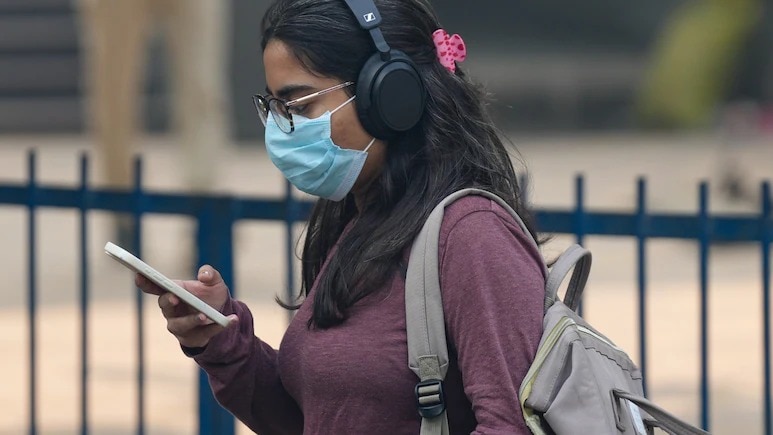
New Delhi recorded the highest Air Quality Index (AQI) among six Indian cities, with a reading of 223, placing it in the 'Poor' category.
Chennai reported the second-highest AQI at 171, followed by Mumbai at 141. Bengaluru recorded an AQI of 132, while Kolkata and Hyderabad reported readings of 123 and 120, respectively. All five cities fall in the 'Moderate' category.
The readings show a difference in air quality across major Indian cities, with New Delhi recording a higher pollution level than the other five cities.
Also Read | Layoffs Are Rising In Tech, But These Skills Are Helping People Unlock Better Pay
India's Cities AQI Today
The air quality readings across six Indian cities are:
| City | AQI |
|---|---|
| New Delhi | 223 |
| Mumbai | 141 |
| Bengaluru | 132 |
| Kolkata | 123 |
| Chennai | 171 |
| Hyderabad | 120 |
New Delhi's Air Quality Today
New Delhi recorded an AQI of 223, the highest among the six cities. Under India's National Air Quality Index classification, a reading between 201 and 300 falls in the 'Poor' category.
An AQI in this range may cause breathing discomfort to most people on prolonged exposure. People with respiratory conditions, children and older adults may be particularly vulnerable to elevated pollution levels.
With the national capital recording the highest AQI in this comparison, air quality remains a concern for residents.
AQI Today: How Do Other Cities Compare?
Chennai recorded an AQI of 171, making it the second-most polluted city among the six in this comparison. Mumbai followed with a reading of 141.
Bengaluru reported an AQI of 132, while Kolkata recorded 123. Hyderabad had the lowest reading among the six cities, at 120.
All five cities fall in the 'Moderate' category under India's National Air Quality Index classification.
The readings highlight the difference in air quality across these urban centres, with New Delhi being the only city in the 'Poor' category.
What Do The AQI Readings Mean?
The Air Quality Index is used to measure air pollution levels and communicate their potential impact on health. India's Central Pollution Control Board (CPCB) classifies AQI readings into six categories.
An AQI between 0 and 50 is classified as 'Good', while readings between 51 and 100 are considered 'Satisfactory'. The 'Moderate' category covers readings between 101 and 200, followed by 'Poor' (201-300), 'Very Poor' (301-400) and 'Severe' (401-500).
Even at moderate AQI levels, people with asthma or other respiratory conditions, children and older adults may experience breathing discomfort. Sensitive individuals should monitor local air quality updates and consider limiting prolonged or strenuous outdoor activity when pollution levels rise.
What Are PM2.5 And PM10?
The AQI is calculated using different air pollutants, including particulate matter.
PM2.5 refers to fine particles with a diameter of 2.5 micrometres or less, while PM10 refers to particles with a diameter of 10 micrometres or less.
These particles can enter the respiratory system when inhaled. PM2.5 particles are particularly concerning because their small size allows them to travel deep into the lungs.
High concentrations of particulate matter can cause breathing difficulties and aggravate existing respiratory and heart-related conditions.
ALSO READ: Pakistan's Punjab Minister Blames Diwali Firecrackers In India For Poor AQI In Lahore
Who Should Be Careful?
People with asthma and other respiratory conditions, children, older adults and those with heart-related illnesses are more vulnerable to the effects of air pollution.
During periods of elevated pollution, prolonged outdoor exposure and strenuous physical activity can increase the risk of health problems.
Residents are advised to monitor local air quality levels and limit outdoor exposure when pollution levels are high.
Essential Business Intelligence, Sharp Market Insights, Practical Personal Finance Advice, Daily Fuel, Gold and Silver Prices and Latest Stories — On NDTV Profit.