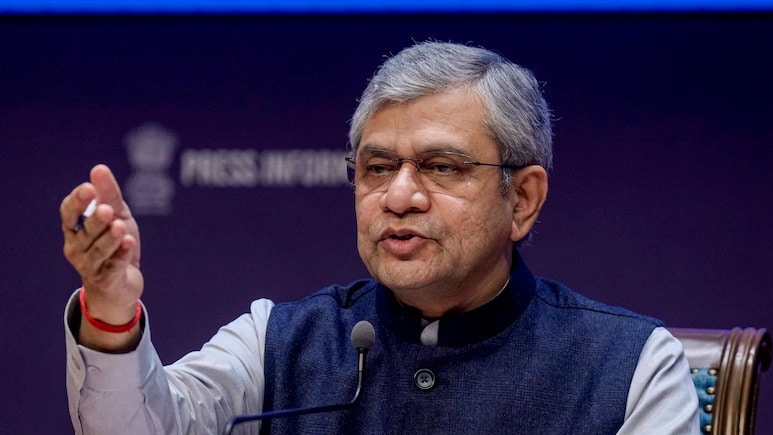
Information and Broadcasting Minister Ashwini Vaishnaw has addressed concerns that the Data Protection law could hamper journalistic freedom, saying the government has no intention of affecting press freedom.
"Journalistic freedom is guaranteed by the Constitution," he said, adding that the privacy law absolutely maintains that freedom.
Law Born Out Of A Supreme Court Judgement
Vaishnaw said the law has been enacted as a consequence of the Supreme Court's judgement that privacy is a right. The Supreme Court judgement, he said, has been converted into law.
Also Read | Layoffs Are Rising In Tech, But These Skills Are Helping People Unlock Better Pay

-
 Can India Mobilise Its Savings To Power Its Own Growth Story? Ben Flags Biggest Challenge
-
 "I Am A Material Man In A Material World': Quantum Advisors' Ajit Dayal On NDTV Profit Ignite
-
 Structurally Positive On India In The Long-term:Ben Powell, On NDTV Profit Ignite
-
 Why Tamannaah Bhatia Is Taking The Long Route To Scale Her Jewellery Business
-
 'I Am My Own Intern': Tamannaah Bhatia On NDTV Profit Ignite
-
 Indian Mkt Will Return With The 'Smart Mkt' Story: NSE MD & CEO Ashishkumar Chauhan On NDTV Profit I
-
 India Lacks An AI Story But Has IT 'Workhorses': Why NSE CEO Sees Foreign Money Returning
-
 NDTV Profit Ignite 2026 Live Updates: Some Large Caps Have Become Reasonable, Says S Naren
-
 Gold Price Dips Ahead Of Diwali: Can It Go Lower On Dhanteras? What To Expect
-
 NDTV Ignite, The Trillion-Dollar Trajectory: India's Road to 2030
A three-judge panel led by Chief Justice of India Surya Kant sent a notice to the Center over the DNPA's appeal on Tuesday, October 27. Additionally, the court scheduled the next hearing for November 17 and sent out a notice on an application for a stay of the challenged provisions.
The bench also included Justices V. Mohana and Joymalya Bagchi.
The Chief Justice emphasised during the hearing the necessity of balancing the media's right to report news with citizens' right to privacy.
He requested that publications provide controls that may both protect legitimate journalistic activities and avoid misuse.
“It's between the rights of innocent citizens and your rights. So, a balance has to be struck… You are the best persons to guide and suggest how you are going to ensure that… Rights are not misused,” the CJI noted.
Industry Was Part Of Consultation
The minister said the consultation had gone on for one month and that the industry was part of it.
What The Law Does Not Require
Vaishnaw clarified two points that have been at the centre of the concerns. There is no provision that requires a reporter to take clearance from the person on whom a story is being done. There is also no clause that requires a journalist to disclose the source of a story.
Door Open To Editors
Vaishnaw invited editors to come and have a clear and open discussion on the law, and said the government is open to hearing all concerns.
ALSO READ: India's Own Apple And Samsung? Vaishnaw Reveals October 2028 Deadline For Homegrown Smartphones
Essential Business Intelligence, Sharp Market Insights, Practical Personal Finance Advice, Daily Fuel, Gold and Silver Prices and Latest Stories — On NDTV Profit.