Bulgarian Socialist Leads in Exit Poll for Presidential Race
(Bloomberg) -- General Rumen Radev, the candidate of the opposition Socialists, will receive most of the votes in the presidential election in Bulgaria that tests the stability of Prime Minister Boyko Borissov's coalition cabinet, exit polls show.
Radev, 53, former chief of the Air Force, is forecast to win 24.8 percent of the votes, according to an Alpha Research exit poll released on national television in Sofia on Sunday. That sets up a Nov. 13 runoff with the ruling Gerb party's Tsetska Tsacheva, who trailed with 23.5 percent, according to the poll. Winning the presidency requires a majority vote. Estimated turnout was 52.4 percent at 7 p.m., according Alpha Research.
“There's no need to hurry with the resignation,” Finance Minister Vladislav Goranov told Nova TV in Sofia. “There's no point in putting the country's stability on a card and going into an uncertain future. We need to analyze whether the ruling majority is exhausted as there's still a lot of work for the public good to be done. This vote's results are different from a parliamentary vote and are not a sufficient argument to throw behind us the work we've done in the past two years.”
The Black Sea nation, the poorest in the European Union by per-capita output, is working to bring living standards closer to the bloc's average and solidify the membership it won in 2007. Prime Minister Boyko Borissov, who took office for a second term after winning 2014 snap elections, has said he'll step down if Tsacheva, 58, loses. There's no final decision yet as there are still no official results, Goranov said.
An exit poll conducted by Gallup showed Radev leading with 26.7 percent, followed by Tsacheva with 22.5 percent.
Both Radev and Tsacheva advocate easing EU and U.S. sanctions imposed against Russia over its seizure of Crimea and support of rebels in eastern Ukraine. They have campaigned to revise the penalties to appeal to those Bulgarians who value their country's religious and historical links with Russia, once Bulgaria's Cold War-era master. While the president's powers are largely ceremonial, the incumbents have played a role in shaping public opinion.
A NATO member since 2004, Bulgaria is seeking to balance its policy toward Russia, the source of most of its energy supplies, with the alliance's concerns over an increasing risk of confrontation with President Vladimir Putin.
To contact the reporter on this story: Slav Okov in Sofia at sokov@bloomberg.net. To contact the editors responsible for this story: James M. Gomez at jagomez@bloomberg.net, Elizabeth Konstantinova, Edward Dufner

-
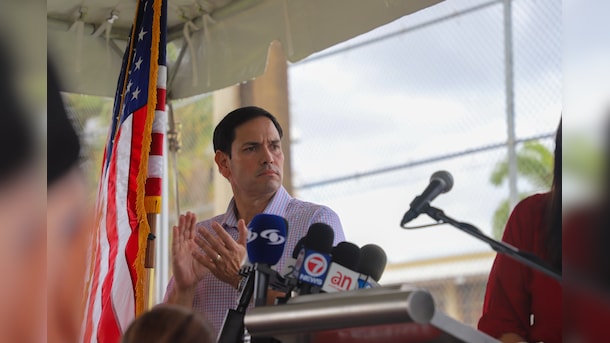
Navigating Friction And Energy Realities: An Analysis Of Marco Rubio's October Visit To India

Occurring at a critical juncture marked by stalled trade negotiations and escalating geopolitical pressures over global energy supplies, the visit offers a profound window into modern US-India relations.
-
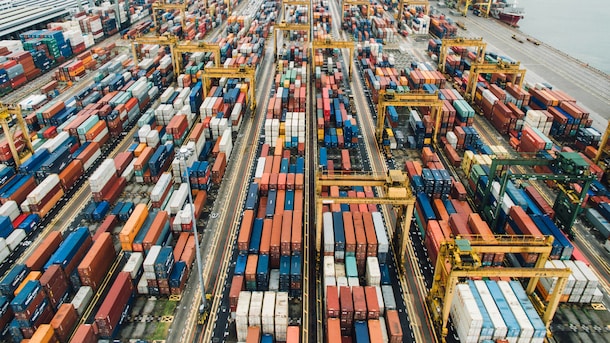
India Exports Capital. Why Not Export Trusteeship?
The big question, then, is whether India can build an institution that global borrowers, investors, banks, and lawyers can trust, even without an Indian connection.
-
France's Economy & Politics Are In Crisis | The Reason Why
Let's look at how the French economy and politics evolved under Nicolas Sarkozy, Franois Hollande and Emmanuel Macron.
-
You May Inherit The Business. You Must Earn Its Credibility.
Succession tests the founder's ability to share authority as much as it tests the next generation's readiness to assume it.
-
Signing Deals Is One Thing; Making Them Work Is Another | The Week In Whys
Sometimes, things don't turn out as planned. Indian companies have lost some bids to rivals, some projects won't produce until 2030.
-
FOMC Wall, PERM Suspension, Hospital Stocks | Talking Points This Week
A PERM suspension would directly affect green-card sponsorship rather than H-1B visas, so the near-term earnings impact could remain relatively limited. The key question is whether this marks a new phase in US scrutiny of Indian IT.
-
Everything, Everywhere, All At Once: Dalal Street's Week To Forget | Joining The Dots
Visa curbs, a Starlink spat and cancer drug caps: what connects this week's shocks for Indian markets
-
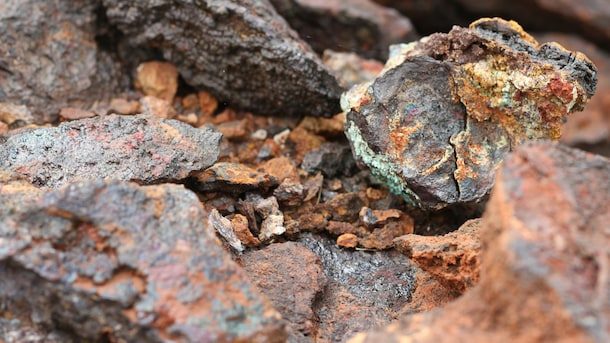
India Is Going Abroad For Critical Minerals. But It May Take Years To Pay Off | The Reason Why
Although India's steps are in the right direction, they remain modest compared with India's growing dependence.
-
When Everyone Has AI, What Gives You An Edge?
India's young workforce is entering an uncertain world of work where powerful AI tools are becoming widely accessible. The advantage will belong to those who combine deep expertise with digital fluency, and the distinctly human capabilities that technology cannot manufacture.
-
Wrong Labels, High Pesticide Residues Holding Back Agri Exports | The Reason Why
India needs stronger domestic food-safety and labelling standards, with best practices becoming part of everyday business for farmers, traders and food companies.