With the growing use of artificial intelligence in various sectors across the globe, US federal judge in Mississippi cancelled a civil trial and disqualified all four attorneys after finding out that both legal parties use AI to write their briefs.
The filings submitted in court included AI-generated research, which consisted of fake legal citations, leading the US District Judge Sharion Aycock to remove all four lawyers from the contract dispute, levy financial penalties, and bar two attorneys from practising in the Northern District of Mississippi for two years, according to a report by the New York Times.
In the order filed last week, Judge Sharion Aycock mentioned that the four lawyers had violated Rule 11 of the Federal Rules of Civil Procedure.
"This case presents the Court with an unusual scenario, attorneys for both litigants engaged in similar sanctionable conduct," the report quoted the order. "This court is yet again 'burdened with addressing AI hallucinations court filings.'"
"In an era of rampant unverified AI usage within the legal field, this case presents a prime example of the risk associated with serving as a rubber stamp when acting as local counsel," it added.
India's Move To Regulate AI Use In Legal System
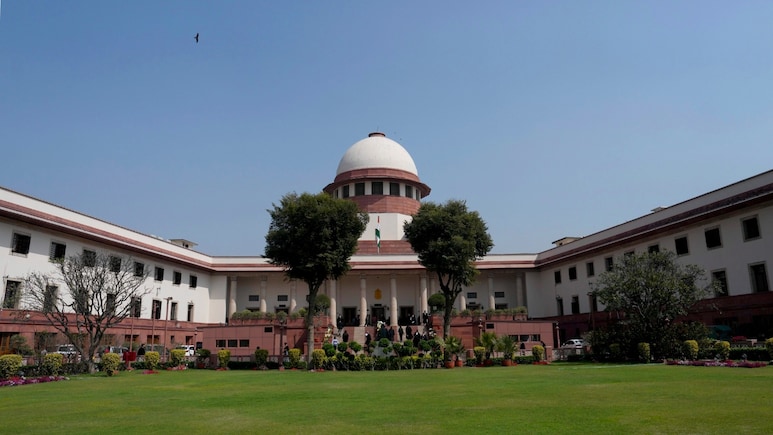
This unusual case from the United States comes at a time when Indian legal system is aiming regulate the use of artificial intelligence in its operations. The Supreme Court of India earlier this month issued the draft 'Regulations for Use of Artificial Intelligence (AI) in courts' which includes a list of permissible and forbidden usage, noting that "no judicial outcome shall be reached through Algorithmic Decision-Making alone."
Seeking comments and suggestions from stakeholders and the general public by June 20, the Artificial Intelligence Committee of the Supreme Court includes provision for allowing AI tools in "case management (including identification of defects in new filings), cause list preparation, hearing scheduling and docket prioritisation".
The draft regulations for use of AI in courts "shall apply to the use, deployment, or integration of AI in any judicial, adjudicatory or administrative function of the Supreme Court of India, High Courts, and all Courts including the Tribunals and statutory Commissions performing adjudicatory functions, within the territory of India".
The 35-page draft proposes a clear "red line" for technology, indicating that while AI may assist, it will never replace the human mind.
As per one of the regulations, "the use of AI in court processes shall at all times remain strictly subservient to human judgment and judicial authority and every AI System shall function solely in an assistive capacity and shall not supplant or compromise the independent exercise of judicial authority by a duly appointed judicial officer and the ultimate authority to determine matters of law, fact and justice shall vest exclusively in the judicial officers of the competent jurisdiction."
Another regulation mentions that the use of AI for arriving into judicial outcomes, such as judgments, sentencing, or determining the credibility of witnesses, is strictly forbidden.
"No judicial outcome (including any judgment, order, or finding of fact or law) shall be reached through Algorithmic Decision-Making alone or solely on the basis of AI-generated information, data, or analysis and the human judicial authority shall be the determinative authority in all adjudicative decisions," it said.
"No personal data of any person shall be used to train, test, or refine any AI System without the prior approval of the Appropriate Authority and, where applicable, in compliance with applicable data protection law,” the draft mentioned.
It further outlined a strategic roadmap for adopting AI to tackle the judiciary's massive caseload.
Courts, however will be encouraged to use AI for case management, automated transcription of proceedings, translation of legal documents into regional languages, legal research assistance, and guided chatbots to help litigants navigate court procedures.
The draft regulations expressly permit AI to be used for a range of judicial and administrative functions, subject to approval and human supervision.
(With inputs from PTI)
Essential Business Intelligence, Continuous LIVE TV, Sharp Market Insights, Practical Personal Finance Advice and Latest Stories — On NDTV Profit.