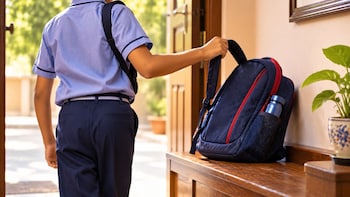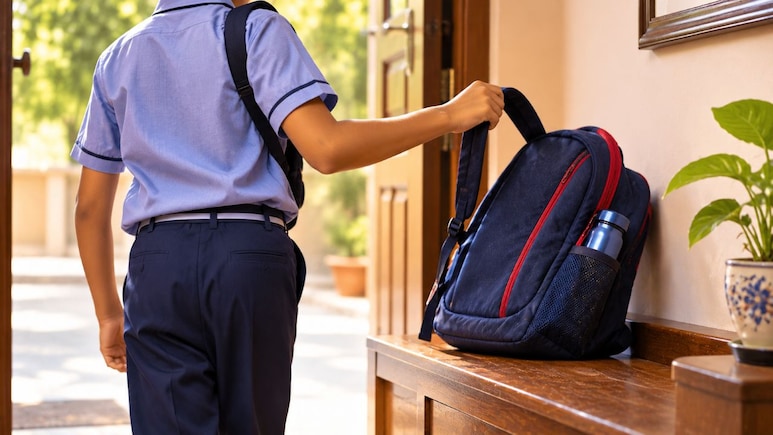
In some good news for school students from the hill state of Meghalaya, the government has ordered all schools to observe at least 10 bagless days from the 2027-28 academic year, which will be used rto promote practical learning, vocational training and competency-based assessments. The new academic session will begin from February 8, 2027, with schools required to observe at least 10 bagless days during the year, officials said on Sunday.
In the notification issued earlier this week, the Education Department outlined the academic calendar, instructional requirements and revised learning guidelines to improving students' overall development beyond traditional classroom education.
The academic year for pre-school students and those studying up to class 2 will end on November 26, 2027. For students of classes 3 to 10, the session will conclude on December 16, with winter holidays beginning the next day.
Also Read | Layoffs Are Rising In Tech, But These Skills Are Helping People Unlock Better Pay
Students from classes 1 to 5 will have a minimum of 200 working days and 1,000 instructional hours during the academic year. For Classes 6 to 8, schools must ensure 220 working days and 1,320 hours of instruction, while students of Classes 9 to 12 will undergo 1,540 instructional hours spread across 220 working days.
ALSO READ | Maharashtra Asks Schools Not to Stop ST Students From Appearing For Exams Over Delayed Payments
However, under the revised framework, schools have been mandated to dedicate 10 days to activities that encourage students to learn outside conventional classroom settings without carrying their bags to school.
Students will get to interact with farmers and local artisans, explore traditional crafts, visit farms, heritage sites, and would participate in sports, cultural activities and nature walks. The initiative will introduce children to environmental conservation, financial literacy and entrepreneurship.
Special attention will be given to vocational learning among students of classes 6 to 8, allowing them to gain practical knowledge through engagement with local professionals and skilled workers.
The government has made Community-Integrated Skill Learning (CISL) compulsory for students of Classes 6 to 10 from the upcoming academic session.
The initiative will carry 50 marks under the 100-mark Health and Physical Education subject, with the remaining marks assigned to conventional health and physical education activities.
ALSO READ | Students who come from Gurukuls and Madrasas are already 'mined poisoned', says Javed Akhtar
Through supervised learning programmes, students will gain hands-on experience in agriculture, traditional family occupations, digital skills, entrepreneurship, sports, arts, culture and community service.
Moreover, the department has prioritised foundational literacy, directing schools to assess students at an early stage to identify those requiring additional assistance with reading. Teachers will be expected to provide targeted support to improve listening skills, word recognition, comprehension and reading proficiency.
The notification has specified uniform operating hours for government schools. Lower primary classes will run from 9 am to 2 pm, while upper primary schools will function until 3 pm. Secondary and higher secondary classes will continue until 4 pm.
Daily morning assemblies will be mandatory and largely conducted by students. Activities will include news reading, quiz competitions, storytelling, speeches, cultural performances, alongside with discussions on public health, environmental awareness and civic duties.
School authorities have been instructed to ensure the entire prescribed syllabus is covered during the academic session through systematic lesson planning and periodic reviews.
Staying in line with the National Education Policy (NEP) 2020, Meghalaya will encourage schools to move away from rote learning and adopt assessment methods that evaluate students' understanding and practical application of knowledge.
Apart from written examinations, students will be evaluated through oral tests, assignments, projects, presentations, practical exercises and classroom participation.
Essential Business Intelligence, Sharp Market Insights, Practical Personal Finance Advice, Daily Fuel, Gold and Silver Prices, Watch Business News Live and Latest Stories — On NDTV Profit.