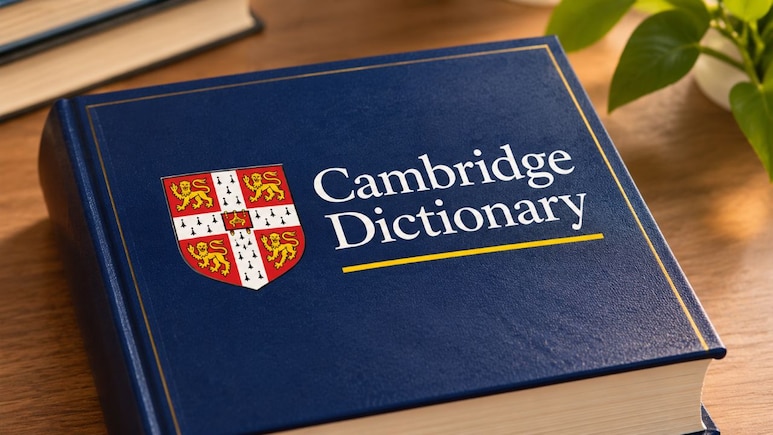
Cambridge Dictionary announced it's Word Of The Year for 2026 on November 18 and the winner was a simple yet deeply touching word "human". Given the enhancements made in technology and the subsequent dependence of humans on artificial intelligence and deep mind technology, 'human' seems to be the most relevant term of the year.
The word "human" emerged as the winner this year amid debates over AI and rising phrases like "human-made" and "human governance", following "parasocial" in 2025 and "manifest" in 2024.
Now, you may wonder how a particular word can be selected and what is the criteria of zeroing in on a single word to call it the Word of The Year", right?
Also Read | Layoffs Are Rising In Tech, But These Skills Are Helping People Unlock Better Pay
ALSO READ | Why 'Human' Has Been Named Cambridge Dictionary's Word Of The Year 2026
Here's some background for starters. The leading online and print dictionary published by the Cambridge University Press is widely used by learners and teachers of English Language across the world. Cambridge Dictionary introduced it's Word Of The Year in 2015 and the first winner announced at the time was "austerity". Cambridge Press recently added some internet and slang expressions including 'aura farming', 'looksmaxxing', and 'air jail' to its dictionary.
How Cambridge selects the Word of the year?
Cambridge Dictionary editors select the Word of The Year in November each year by evaluating three factors: User data, Language and Zeitgeist, which is the general intellectual, moral, cultural, and political climate or "spirit" of a particular era.
How do these factors help?
User data: Cambridge Editors analyse search statistics on the Cambridge Dictionary website to see which words were looked up most often or experienced sharp spikes in searches.
Zeitgeist: They look for a word that captures major cultural conversations, news events, or social shifts happening during the year.
Language: Editors examine how a word is used, how it is evolving and its shift in meaning, growing media usage, or frequent pairings (co-llocations) with other words.
Here's a look at Cambridge University's Word of the Year Since it's inception in 2015 until 2026.
- 2015: Austerity
- 2016: Paranoid
- 2017: Populism
- 2018: Nomophobia
- 2019: Upcycling
- 2020: Quarantine
- 2021: Perseverance
- 2022: Homer
- 2023: Hallucinate
- 2024: Manifest
- 2025: Parasocial
- 2026: Human
Essential Business Intelligence, Sharp Market Insights, Practical Personal Finance Advice, Daily Fuel, Gold and Silver Prices and Latest Stories — On NDTV Profit.