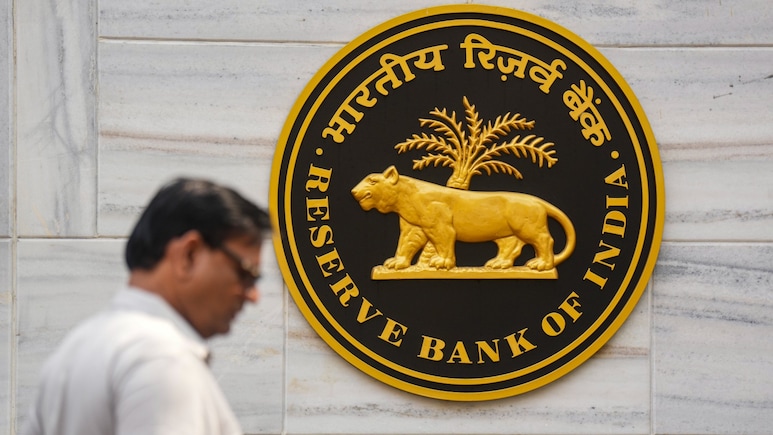
The Reserve Bank of India on Wednesday revised the GDP growth estimate for the financial year 2026 to 7.6% vs 7.3% earlier, while also noting that West Asia conflict may impede India's growth. The real GDP growth for the current financial year is seen at 6.9%.
Governor Sanjay Malhotra said that fundamentals of the Indian economy were resilient, however, global macros continued to weigh on domestic growth outlook. He noted that disruption in Strait of Hormuz due to the US-Iran war could affect growth this financial year as supply chain disruptions can hit some key sectors.
RBI sees Q1 FY27 GDP growth at 6.8% vs 6.7% earlier, while Q2 growth is expected at 6.7% vs 6.8% earlier. Q3 GDP growth is seen at 7%.
Also Read | Layoffs Are Rising In Tech, But These Skills Are Helping People Unlock Better Pay
In a widely expected move, RBI announced no change in the repo rate amid heightened global uncertainty due to the US-Iran tensions and their ripple effect on the economy as oil spiked and rupee weakened. Repo rate is the rate at which RBI lends money to commercial banks.
The announcement came at the conclusion of a three-day meeting of the Monetary Policy Committee, first of the new financial year, from April 6 to 8. With this decision, the repo rate now stands at 5.25%.
"The Monetary Policy Committee met on 6th, 7th and briefly today in the morning to deliberate and decide on the policy repo rate. After a detailed assessment of the evolving macroeconomic and financial developments and the outlook, the MPC voted unanimously to keep the policy repo rate unchanged under the liquidity facility at 5.25%. Consequently, the STF rate remains at 5% and the MSF rate and the bank rate at 5.5%. The MPC also decided to continue with the neutral stance," said RBI Governor Sanjay Malhotra.
All 33 economists tracked by Bloomberg had anticipated no change in the benchmark rate.
While inflation remained within the Reserve Bank's tolerance band, the central bank now has the challenge to navigate through upward pressure in the near term caused by the US-Iran war.
Malhotra said that the adverse spillovers from global markets could impact domestic financial conditions and raise borrowing rates. Elevated crude price could increase inflation, widen CAD, he noted, adding that core inflation pressures remain muted.
Consumer price inflation rose to 3.21% in February from 2.75% in January under the revised CPI series, reflecting increases in food and precious metal prices. While the level remains below the 4% target, cost pressures are beginning to strengthen.
Malhotra said data until Feb showed continued firm economic activity and that the government has taken measures to mitigate the adverse impact of the West Asia war.
Follow our Live Blog on RBI Policy Here
Essential Business Intelligence, Sharp Market Insights, Practical Personal Finance Advice, Daily Fuel, Gold and Silver Prices and Latest Stories — On NDTV Profit.