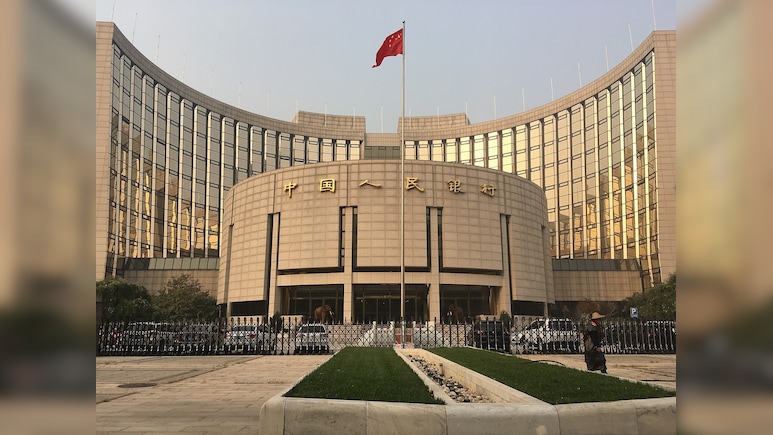
- China's banks hold 67% of central and local government bonds, dominating the market
- Tax exemptions make Chinese sovereign debt attractive but risk removal could cut yields
- India's diversified bondholder base limits its exposure to tax-related market risks
In China, banks account for 67% of outstanding central government bonds (CGBs) and local government bonds (LGBs), making them the dominant holder of these bonds. The position only solidifies due to certain tax exemptions given by the Chinese government, which in turns make sovereign debt especially attractive JPMorgan highlighted in a research note.
However, China's proposed taxation of government-bond income is exposing a structural vulnerability in the country's $7-trillion sovereign debt market. Years of preferential tax treatment has made them a dominant buyer and holder of Government Securities (G-Secs), but removal of these exemptions can hurt bond attractiveness by 30 to 55 basis points (bps), JPMorgan estimates.
The Indian government is fairly guarded from these vulnerabilities because of its diversified investor base which includes insurance companies, provident and pension funds,mutual funds, foreign portfolio investors, Reserve Bank Of India (RBI) along with banks.
Also Read | Layoffs Are Rising In Tech, But These Skills Are Helping People Unlock Better Pay
The brokerage also noted that China exempted government bond interest income from corporate income tax and VAT for banks to help develop the sovereign bond market. While VAT exemptions were partly removed in 2025, corporate income tax exemptions remain critical.
The bonds were attractive due to a combination of tax benefits, zero risk weighting, and regulatory advantages and removing tax exemption could lower tax and risk adjusted yields by 30-55 bps.
On the other hand, India's government bond market does not rely on a special tax exemption for banks in the same way, reducing its vulnerability to a sudden shift in the tax treatment.
According to the note, the Chinese government bonds account for 21% of assets at state-owned banks and 15% of assets at joint-stock banks, therefore, a 25% tax on bond interest income could reduce 2027 earnings by 4% for the former and 3% for the latter. Moreover, If applied to existing holdings, the earnings hit could rise to 17% and 12%, respectively.
As a result, while taxing bond income would increase government revenue, it could simultaneously reduce demand for government bonds, push yields higher, and raise borrowing and refinancing costs.
The report underlined that local governments had 54.8 trillion Chinese Yuan (CNY) of debt outstanding at end-2025 and account for around 85% of general-budget spending. Any rise in yields would increase financing costs and could erode the fiscal gains from the new tax.
JPMorgan identified three buffers to this cushion this potential blow including grandfathering existing bonds, shifting investments through mutual funds, and increased bond purchases by the People's Bank of China.
Essential Business Intelligence, Sharp Market Insights, Practical Personal Finance Advice, Daily Fuel, Gold and Silver Prices, Watch Business News Live and Latest Stories — On NDTV Profit.