- India-UK CETA removes tariffs on nearly all Indian exports to the UK starting July 15
- Indian exports to the UK may increase to $24.2 billion by FY31 from $13.5 billion in FY26
- Telecom, textiles, leather, gems, pharma, and agriculture sectors are expected to benefit most
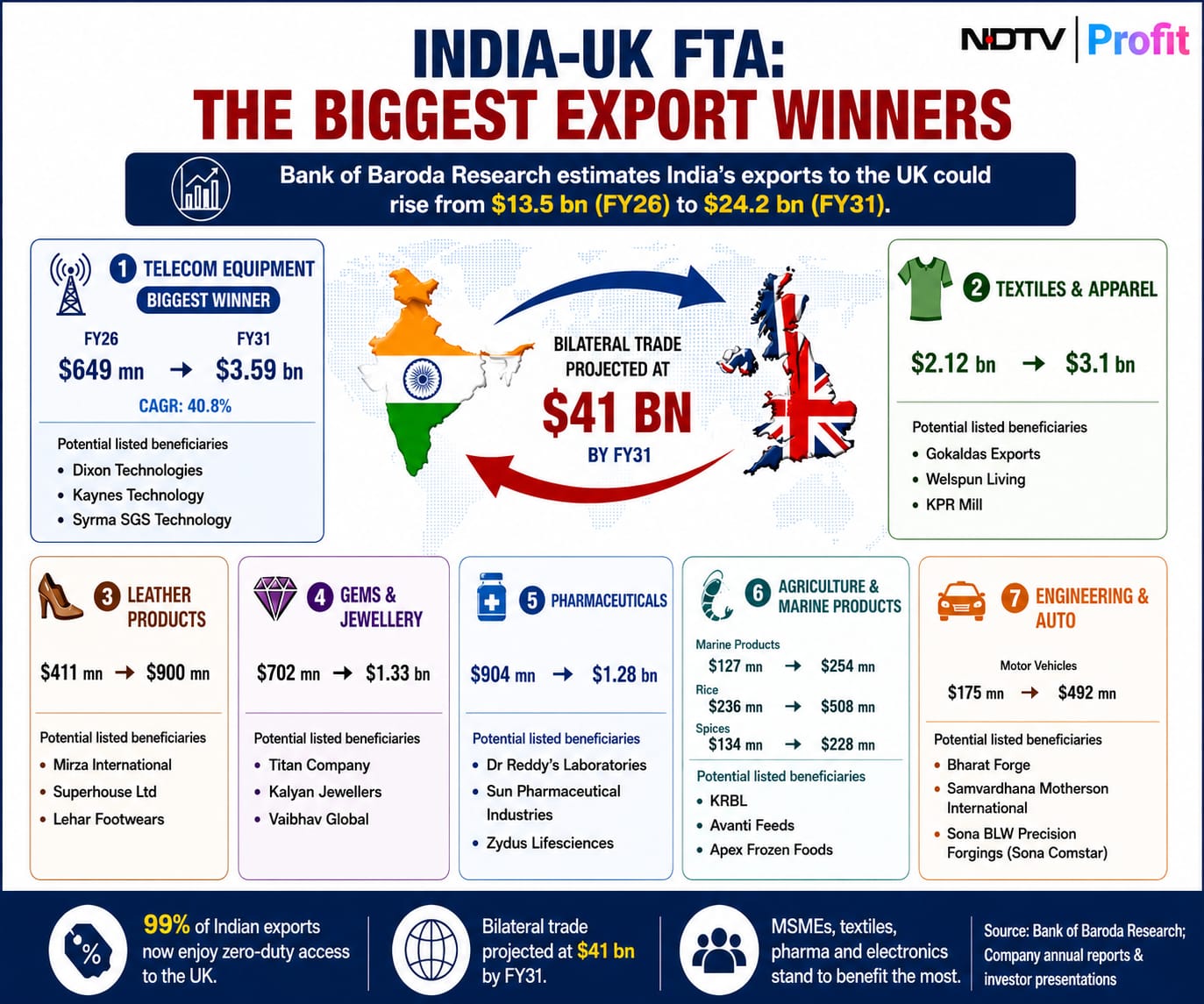
The India-UK Comprehensive Economic and Trade Agreement (CETA), which came into force on July 15, is expected to provide a significant boost to Indian exporters by eliminating tariffs on nearly all exports to the UK. Bank of Baroda Research estimates India's exports to the UK could climb to $24.2 billion by FY31 from $13.5 billion in FY26, while bilateral trade could increase to $41 billion from $25.1 billion over the same period. India's exports are projected to grow at a faster pace than imports, widening the country's trade surplus with the UK.
Here's a look at the sectors expected to benefit the most.
Telecom Equipment
Telecom instruments are projected to be the biggest beneficiary, with exports expected to jump to $3.59 billion by FY31 from $649 million in FY26, implying a CAGR of over 40%. Duty-free access is expected to make Indian electronics significantly more competitive in the UK market. Companies that could benefit, based on their existing exports or operations in the UK and Europe, include Dixon Technologies, Kaynes Technology and Syrma SGS Technology, according to their annual reports and investor presentations.
Also Read | Layoffs Are Rising In Tech, But These Skills Are Helping People Unlock Better Pay
ALSO READ: From Cheaper Whisky To Auto: How India-UK FTA Impacts Your Wallet Starting Today
Textiles & Apparel
The FTA removes the roughly 12% tariff previously imposed on Indian textile and apparel exports, putting Indian manufacturers on par with countries such as Bangladesh and Pakistan. Bank of Baroda expects exports to rise to $3.1 billion from $2.1 billion over the next five years. Among listed companies with meaningful UK exposure are Gokaldas Exports, KPR Mill and Welspun Living, based on company disclosures.
Leather Products
Leather exports could emerge as another major winner after import duties of up to 16% were eliminated. Exports are projected to more than double to $900 million from $411 million by FY31. Mirza International, Superhouse Ltd and Lehar Footwears are among listed exporters with business in the UK and Europe, according to company filings.
Gems & Jewellery
Lower tariffs are expected to support India's gems and jewellery exports, which are projected to increase to $1.33 billion by FY31 from $702 million currently. Listed companies with international operations that include the UK market include Titan Company, Kalyan Jewellers and Vaibhav Global, according to their annual reports.
ALSO READ: TCS, Infosys, Wipro Shares In Focus: Why The India-UK FTA May Spell Relief For IT Giants
Pharmaceuticals
The elimination of tariffs on drugs and pharmaceuticals is expected to improve access for Indian generic medicines in the UK. Exports are estimated to rise to $1.28 billion from $904 million. Dr Reddy's Laboratories, Zydus Lifesciences and Sun Pharmaceutical Industries have established UK operations or commercial presence, according to company disclosures.
Agriculture & Marine Products
Agricultural exports, including rice, spices and marine products, are also expected to gain from tariff-free access.
Bank of Baroda estimates marine exports will nearly double to $254 million from $127 million, while rice exports could increase to $508 million from $236 million. Spices exports are projected to rise to $228 million from $134 million. Listed exporters with exposure to these categories include Avanti Feeds, Apex Frozen Foods and KRBL, based on company filings.
Engineering & Auto
Engineering goods—including electric machinery, transport equipment, iron and steel products—are expected to see stronger demand under the agreement. Motor vehicle exports are projected to rise to $492 million from $175 million by FY31. Companies with established UK or wider European business include Bharat Forge, Sona BLW Precision Forgings (Sona Comstar) and Samvardhana Motherson, according to annual reports and investor presentations.
What The FTA Means
Under the agreement, around 99% of India's exports by value will now enjoy tariff-free access to the UK, improving the competitiveness of sectors ranging from labour-intensive industries such as textiles and leather to manufacturing segments including electronics, pharmaceuticals and engineering goods. At the same time, India has adopted a calibrated approach on imports, phasing tariff reductions while protecting sensitive sectors such as dairy, agriculture, smartphones and electric vehicles.
According to Bank of Baroda Research, the agreement could significantly strengthen India's export competitiveness, particularly for MSMEs and labour-intensive industries, while expanding India's trade surplus with the UK over the next five years. It estimates bilateral trade could rise to $41 billion by FY31, with India's exports growing faster than imports under the pact.
Essential Business Intelligence, Sharp Market Insights, Practical Personal Finance Advice, Daily Fuel, Gold and Silver Prices and Latest Stories — On NDTV Profit.