New Delhi: Headline inflation in India is at "manageable" levels, but risks around food inflation still persist, Barclays has said, adding that the average Consumer Price Index-based inflation for this fiscal year is likely to be 5 per cent.
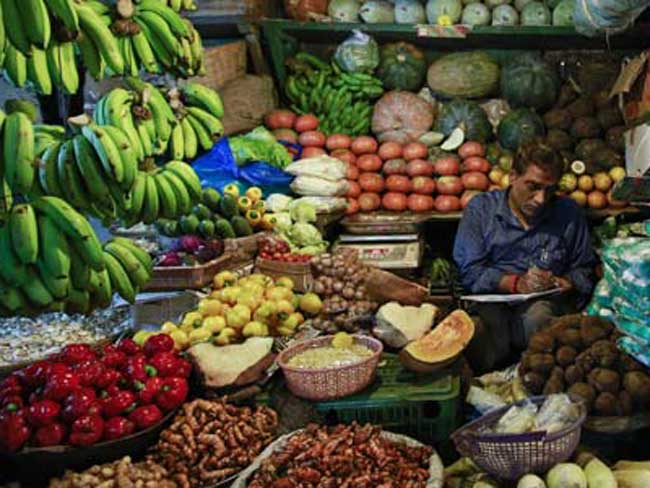
"Although India's headline inflation remains manageable, risks around food inflation persist," the global financial services major said in a research note.
The Reserve Bank of India, in its recent statement, noted that monsoon-related risks dominate its concerns around inflation.
According to India Meteorological Department (IMD), July is likely to see deficient rainfall. But, according to private weather agency Skymet, rains are likely to be "normal" this month.
Skymet said the North, East and West India will receive normal rainfall, but the southern peninsula may not witness the same.
"The South-west Monsoon rains are reverting to normal territory. After a significant improvement in late June, rainfall conditions are normalising," Barclays said.
Moreover, "the government has also made inflation management a top priority by placing import orders for wheat, pulses and oilseeds which have seen price rise recently", the brokerage firm added.
On a rate cut by the RBI, the report said it will be contingent on greater clarity on a number of factors, including "trends in commodity prices, the monsoon outcome, the likely 2016 inflation trajectory and the impact of a potential Federal Reserve rate hike, possibly in the second half of 2015".
In June 2 policy review, the RBI had cut repo 0.25 per cent for the third time this year to spur investment and growth, but hinted that there may not be any more cuts in the near term.
The RBI cut the repo rate (short-term lending rate) from 7.5 per cent to 7.25 in June, but left all other policy tools such as cash reserve ratio (CRR) and statutory liquidity ratio (SLR) unchanged at 4 per cent and 21.5 per cent, respectively.
"Although India's headline inflation remains manageable, risks around food inflation persist," the global financial services major said in a research note.
The Reserve Bank of India, in its recent statement, noted that monsoon-related risks dominate its concerns around inflation.
According to India Meteorological Department (IMD), July is likely to see deficient rainfall. But, according to private weather agency Skymet, rains are likely to be "normal" this month.
Skymet said the North, East and West India will receive normal rainfall, but the southern peninsula may not witness the same.
"The South-west Monsoon rains are reverting to normal territory. After a significant improvement in late June, rainfall conditions are normalising," Barclays said.
Moreover, "the government has also made inflation management a top priority by placing import orders for wheat, pulses and oilseeds which have seen price rise recently", the brokerage firm added.
On a rate cut by the RBI, the report said it will be contingent on greater clarity on a number of factors, including "trends in commodity prices, the monsoon outcome, the likely 2016 inflation trajectory and the impact of a potential Federal Reserve rate hike, possibly in the second half of 2015".
In June 2 policy review, the RBI had cut repo 0.25 per cent for the third time this year to spur investment and growth, but hinted that there may not be any more cuts in the near term.
The RBI cut the repo rate (short-term lending rate) from 7.5 per cent to 7.25 in June, but left all other policy tools such as cash reserve ratio (CRR) and statutory liquidity ratio (SLR) unchanged at 4 per cent and 21.5 per cent, respectively.
Essential Business Intelligence, Sharp Market Insights, Practical Personal Finance Advice, Daily Fuel, Gold and Silver Prices and Latest Stories — On NDTV Profit.