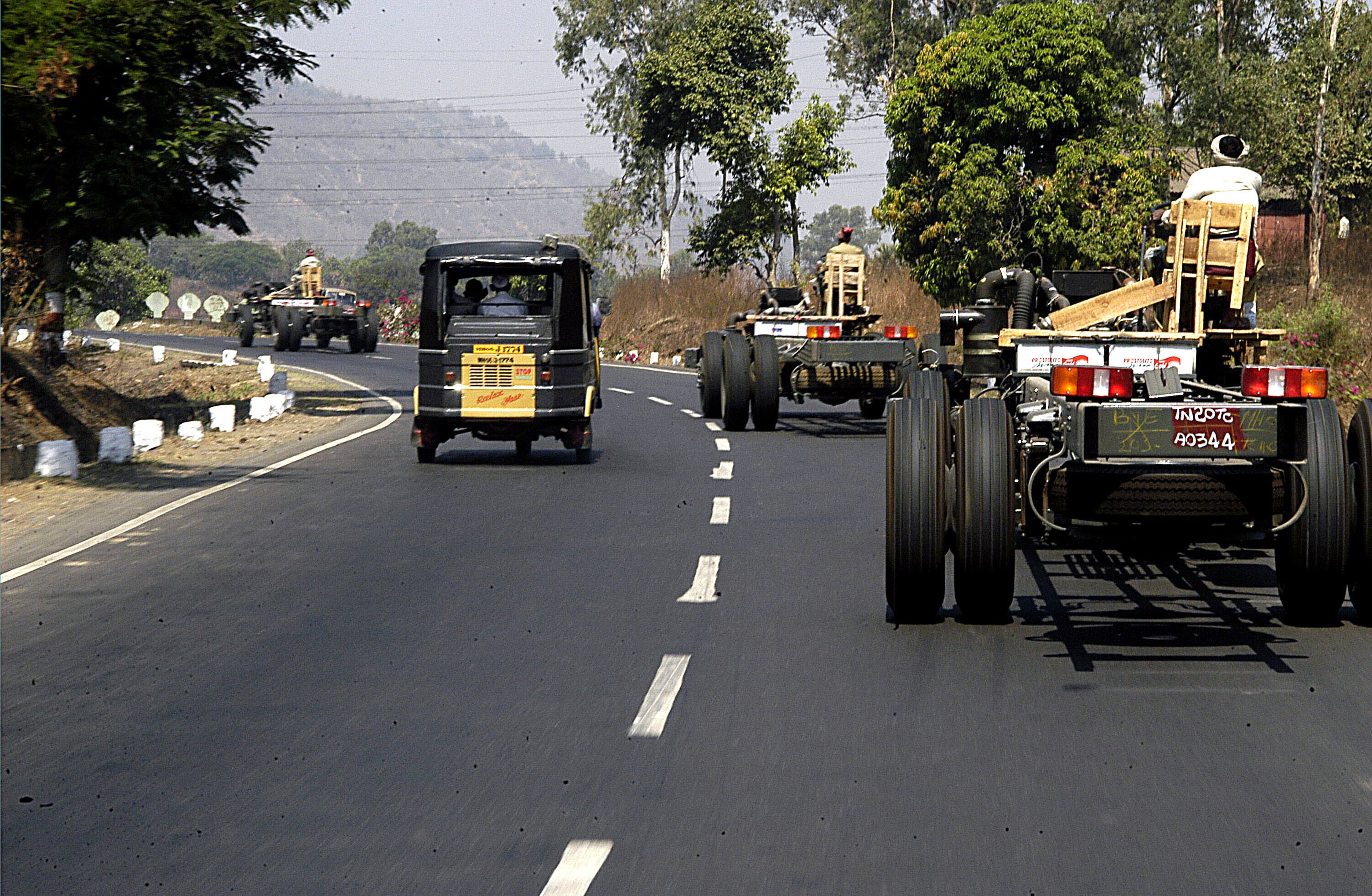
The transition to a higher and more stringent emission norms from April 1 has provided the Indian commercial vehicle manufacturers much needed fillip in the month of February. The sector had been ailing since November after the government's demonetisation move threw sales out of gear.
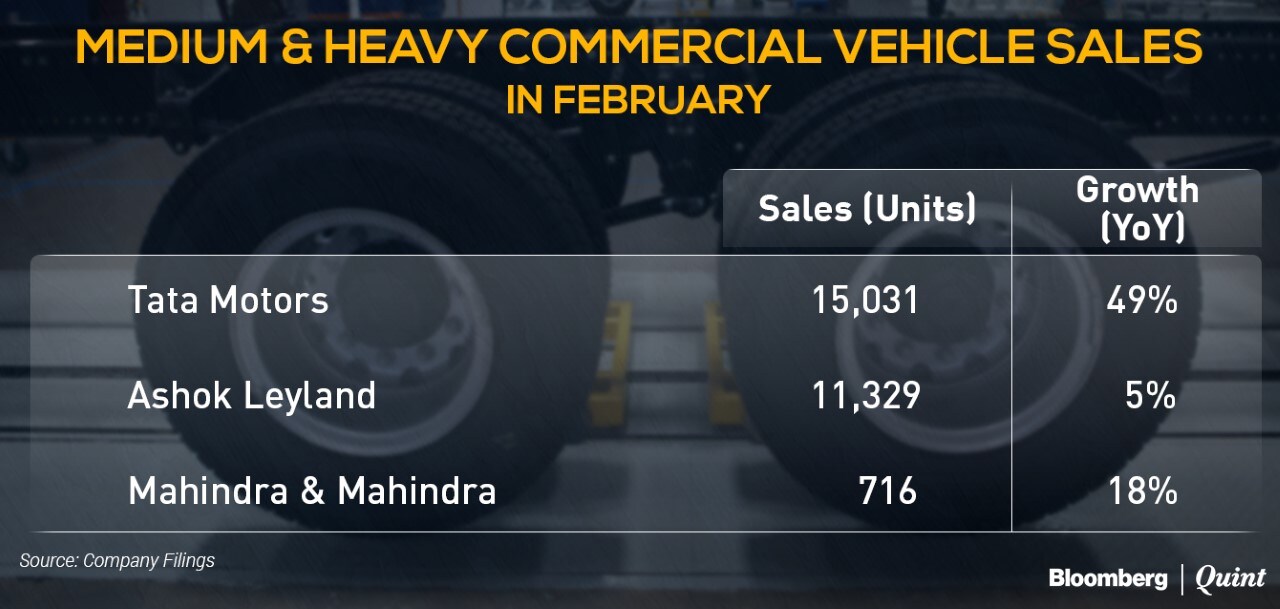
India's largest commercial vehicle manufacturer Tata Motors Ltd. registered its first sales growth in the medium and heavy commercial vehicle (MHCV) segment in the last three months. The management attributed this to a sudden spike in buying as fleet operators expected prices to rise once the new emission norms are implemented in April this year.
The company sold 15,031 MHCVs in February, a percent higher than last year. The bus segment extended support with a 30 percent sales growth. Overall commercial vehicle sales fell 1 percent though, as the small commercial vehicle sales continue to reel from the cash crunch in the system.
Also Read | Layoffs Are Rising In Tech, But These Skills Are Helping People Unlock Better Pay
Its closest rival in the segment Ashok Leyland Ltd. too reported a 5 percent increase in sales at 14,067 units in the previous month. Its MHCV segment grew 5 percent to 11,329 units, while light commercial vehicle sales stood at 2,738 units.
Mahindra and Mahindra Ltd., another big commercial vehicle manufacturer in India, registered a 18 percent increase in sales in that particular segment. And it was the MHCV segment which grew by 49 percent, year-on-year to 716 units.
India is moving towards tougher emission norms for commercial vehicles, commonly known as the Bharat Stage -IV norms. While this calls for cleaner and more efficient engines, it is also expected to push up vehicle prices.
Also Read: Proposed Scrappage Policy May Come To The Commercial Vehicle Market's Rescue
Had it not been for the buying ahead of the new emission regime commercial vehicles sales would have not seen growth, says Ashwin Patil, a senior analyst at LKP Securities. He adds that most companies have already factored in sluggish growth this month and the environment is far from the pre-demonetisation scenario.
The impact of pre-buying will be offset by the slowdown in the economy post demonetisation.Ashwin Patil, Senior Analyst, LKP Securities
Passenger Vehicles
Its was a mixed performance for car makers in February.
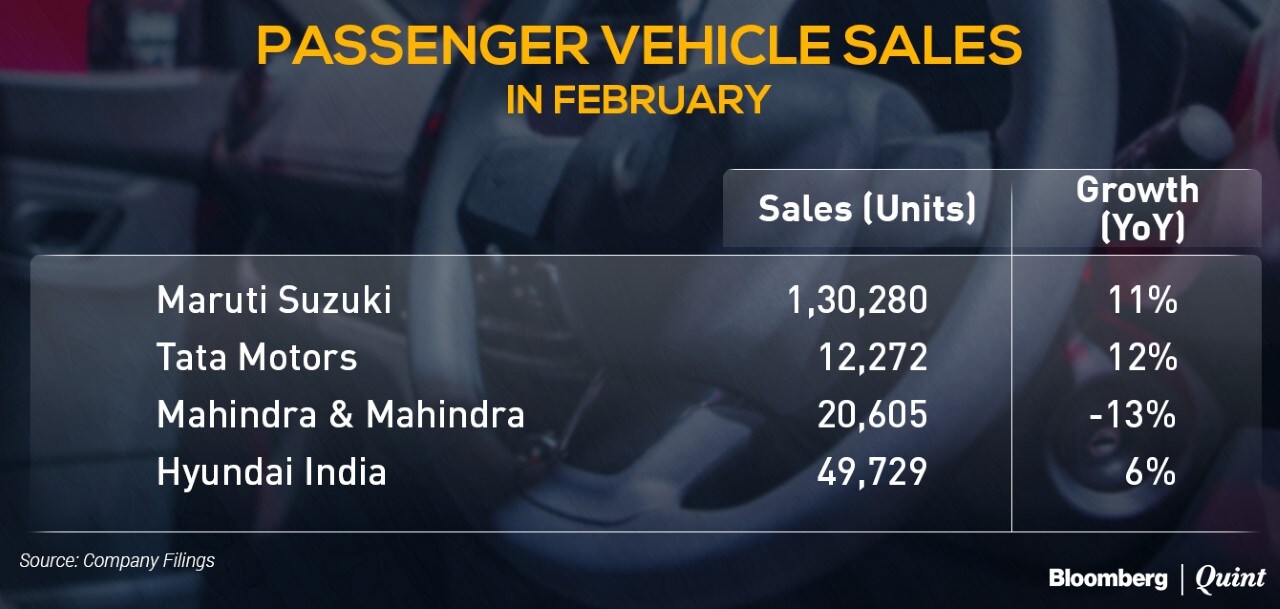
The country's largest passenger vehicle manufacturer -- Maruti Suzuki Ltd. saw sales jump 11 percent to 1.3 lakh vehices due to a robust performance in its utility vehicles segment which includes the Ertiga, S-Cross and Vitara Brezza and the Gypsy. Sales grew 110 percent to 17,863 units in this segment.
What weighed on Maruti's total sales numbers was the super-compact sedan Swift Dzire Tour, which registered a 26.9 percent sales decline last month. The mini segment that includes the WagonR and Alto hatchbacks also sold 6.8 percent fewer vehicles.
Read: Maruti Suzuki Sales Jump 11% In February, Driven By Utility Vehicles
Tata Motors Ltd. too sold more cars last month, with its latest hatchback the Tiago continuing to see strong demand. The carmaker sold 12,272 cars in February, 12 percent more than the same month last year.
The country's second largest carmaker, Hyundai Motor India Ltd.'s sales also grew by 6 percent, year-on-year, in February, aided by a 15.5 percent jump in exports and highest ever monthly sales of the its sports utility vehicle, CRETA in India.
There was no such luck for M&M's passenger vehicles division though, with the company selling only 20,605 units in February, 13 percent lower than the same month last year.
Two-Wheelers
The two-wheeler segment is yet to recover from the adverse impact of demonetisation, with most of the companies feeling the heat, at least in the domestic market.
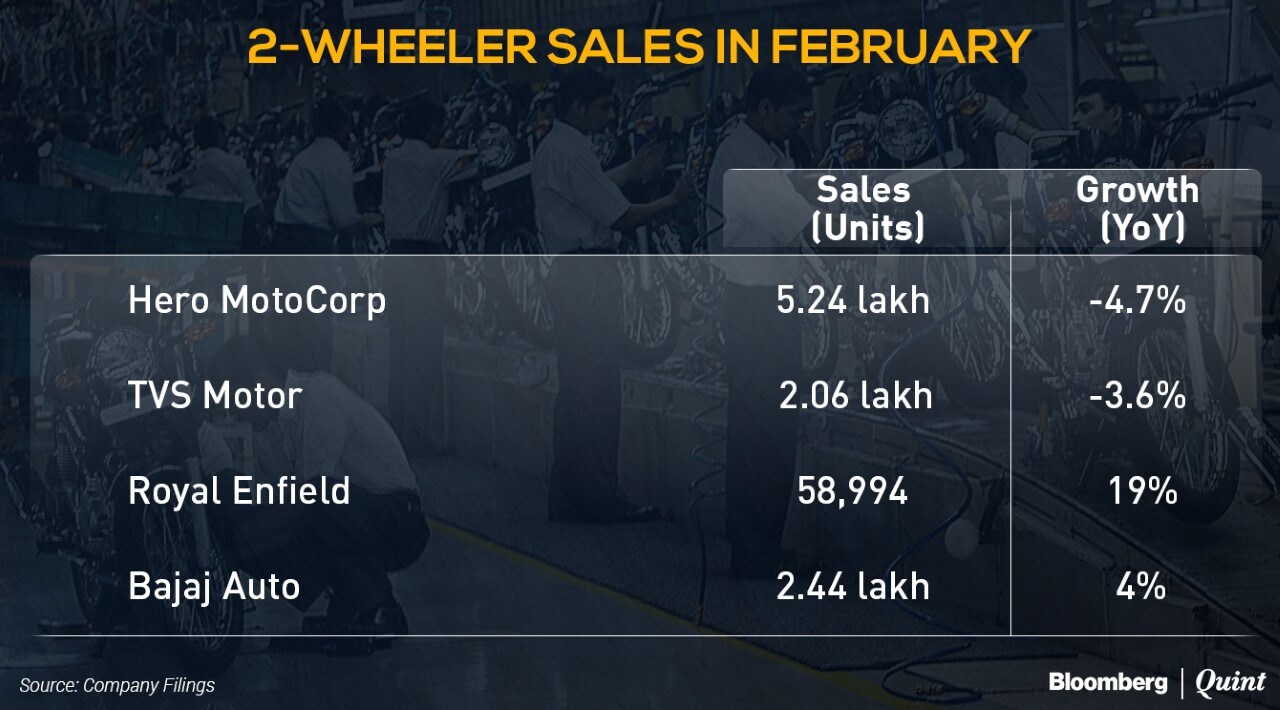
India's largest two-wheeler manufacturer Hero MotoCorp Ltd. witnessed a 4.7 percent year-on-year decline in sales. The company sold 5.24 lakh two-wheelers in February 2017, compared to the 5.5 lakh units it sold in the corresponding month last year. This was the fourth successive month of sales degrowth for Hero MotoCorp since October 2016 when it recorded sales over 6 lakh units.
TVS Motor Company Ltd. reported a 3.6 percent fall in two-wheeler sales to 2.06 lakh units in February. It sold 1.72 lakh units in India, while 33,636 units were shipped abroad. The motorcycle segment witnessed a slowdown as sales fell 23.4 percent to 58,994 units. Scooter sales grew 2.9 percent to 69,020 units.
Bajaj Auto Ltd. and Royal Enfield have managed to post a growth in total sales last month. While Bajaj posted its first monthly sales growth in six months, aided by a 16 percent jump in exports, year-on-year, last month, domestic sales remained muted, falling 8 percent, versus the same month last year.
The only two-wheeler manufacturer which continues to register a growth in monthly sales is Royal Enfield, with its sales growing 19 percent, year-on-year, at 58,439 units in February. Exports grew by 7 percent to 1,702 units.
Tractors and Three Wheelers
M&M's farm equipment sector sold 15,007 tractor units in February 2017. This was 22 percent higher than 12,702 tractors sold in February 2016. Exports grew 35 percent to 1,173 units while domestic sales grew 9 percent to 13,834 units.
Escorts Ltd.'s agri machinery segment sold 4,247 tractor units in February, growing 29.5 percent from last year. Exports surged 59 percent to 143 units.
M&M's three wheelers registered a 9 percent fall in sales to 3,426 units. For TVS, three-wheeler sales slipped 37.2 percent to 5,223 units.
Essential Business Intelligence, Sharp Market Insights, Practical Personal Finance Advice, Daily Fuel, Gold and Silver Prices and Latest Stories — On NDTV Profit.