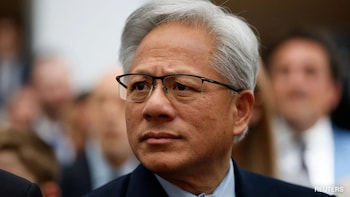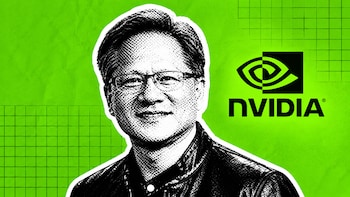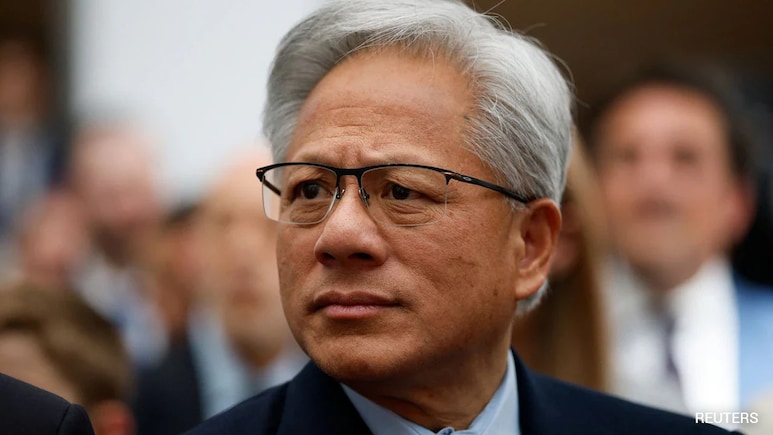
- Nvidia lost $470 billion in market value after CEO Jensen Huang's affair was revealed
- A former OpenAI researcher found Nvidia Blackwell hardware signatures in Chinese AI models
- Megaspeed, a Singapore firm, rose from $33M to $3B amid US allegations of chip diversion
On November 12, the day Nvidia announced Jensen Huang's resignation, a former OpenAI researcher reported that he had made 445 rows of numbers from a Chinese AI model reappear, bit for bit. He'd entered a nine-digit seed into software running on an Nvidia Blackwell B300. When he tried the same thing on an older Hopper H100, he got zero matches.
Will DePue had found his clue in a file DeepSeek had published for anyone to download. It pointed to the kind of Nvidia hardware Washington had been trying to keep out of China.
Alice Huang, Megaspeed and the $470 billion sell-off
Also Read | Layoffs Are Rising In Tech, But These Skills Are Helping People Unlock Better Pay
Three days earlier, on the first trading day after Jensen Huang admitted to an affair, Nvidia lost about $192 billion in market value. Its shares closed 4.3% lower at $178.67. Every other stock in the Philadelphia Semiconductor Index rose. By Tuesday, Nvidia was trading around $166, and Reuters reported it was on course to lose more than $470 billion over two sessions. A wider sell-off after the US midterms had already put the stock under pressure.
The allegations involving Alice Huang led to Megaspeed, a Singapore company whose assets rose from $33 million to $3 billion in a year. Reporting citing US officials, surveillance and corporate records raised allegations of intelligence gathering and diversion of mostly H100 and H200 chips. China, Megaspeed and Nvidia denied the allegations. The US Justice Department is investigating. No charges have been reported. Separately, an investor sued Nvidia and Jensen Huang in California, alleging they concealed the affair and misrepresented Nvidia's relationship with Megaspeed.
Megaspeed's trail ran through Singapore. Blackwell's ran through six models
Before training starts, software fills a model with random numbers. How it lays them out depends on the hardware. Training overwrites most of those numbers. The rows it leaves alone can give away the machine that put them there.
DePue searched roughly six trillion combinations. He found Blackwell signatures in six models from DeepSeek, Moonshot AI, MiniMax and Ant Group. Two shared a seed, leaving five independent starting points. He called the DeepSeek-V4-Flash result conclusive in his report. His code and logs have yet to be released.
The surviving rows point to the hardware that generated the starting weights. A lab could have rented that machine abroad and trained the model elsewhere. In February, a US official told Reuters that DeepSeek had trained on Blackwell, probably at a data centre in Inner Mongolia. DePue's results leave the machine's location open. No published evidence links it to Alice Huang or Megaspeed.
On November 17, interim CEO Colette Kress faces investors on Nvidia's earnings call. A closed-door House briefing originally sought from Jensen Huang could follow the next day. The Megaspeed inquiry is following shipments.
The Blackwell trail raises a question that could outlast both hearings: how did the labs get access to the machines in the first place?
Essential Business Intelligence, Sharp Market Insights, Practical Personal Finance Advice, Daily Fuel, Gold and Silver Prices and Latest Stories — On NDTV Profit.