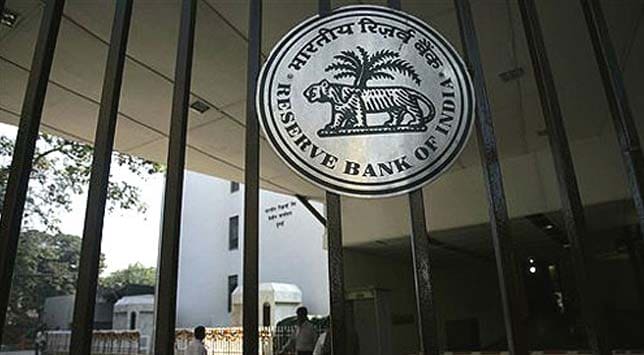
The Reserve Bank of India left key interest rates untouched on Tuesday but cut cash reserve ratio or CRR by 0.5 per cent to 5.5 per cent.
The repo rate (the rate at which the RBI lends funds to banks) stays at 8.5 per cent and reverse repo rate (at which the RBI borrows money from banks) remains unchanged at 7.5 per cent.
The cash reserve ratio (CRR) was cut 0.5 per cent at 5.5 per cent. This is the percentage of deposits banks have to maintain with RBI.
The central bank announced the third quarter (quarter to December 2011) review of the monetary policy on Tuesday.
"Growth in India has also moderated. In particular, investment activity has decelerated sharply, reflecting heightened global uncertainty and domestic fiscal, monetary, political and administrative conditions," D Subbarao, RBI governor said on Tuesday.
RBI hiked rates 13 times since March, 2010 in a bid to fight inflation. India's headline inflation, measured by the wholesale price index, for the month of December 2011, eased to 7.47 per cent, the lowest in two years against 9.11 per cent in November 2011 against 9.73 per cent in October.
The stock market reacted positively with the BSE sensex and NSE Nifty trading jumping sharply by nearly one per cent. The Indian rupee was trading at 50 to the USD after opening strong.
Here are key points highlighted by RBI governor D Subbarao:
* The GDP growth forecast for 2011-12 revised to 7.0 per cent from 7.6 per cent. The agricultural prospects look buoyant, industrial production has decelerated. The slowdown in industrial production will also impact service sector growth. Further, weaker global growth will also have an adverse impact.
* Liquidity conditions remained tight which made lending tough to fuel growth. The reduction in the policy rate will be conditioned by signs of sustainable moderation in inflation. However, the persistence of tight liquidity conditions could disrupt credit flow and further exacerbate growth risks. In this context, the CRR is the most effective instrument for permanent liquidity injections over a sustained period of time. The reduction can also be viewed as a reinforcement of the guidance that future rate actions will be towards lowering them.
* Inflation remains a key challenge. Although primary food inflation declined sharply reflecting seasonal fall in vegetable prices and high base, high protein inflation continues due to structural demand-supply imbalances. The decline in food inflation is expected to be short-lived as a result. Inflation in non-food manufactured products remains persistently high, reflecting input cost pressures, partly resulting from the rupee depreciation that has offset the impact of softer global prices of some commodities.
* The fiscal deficit of the government has remained elevated since 2008-09. If the increase in government borrowing already announced is an indication, the gross fiscal deficit for 2011-12 will overshoot the budget estimate substantially. At the current juncture when there is a need to boost private investment, the increase in fiscal deficit could potentially crowd out credit to the private sector. Moreover, slippage in the fiscal deficit has been adding to inflationary pressures and it continues to be a risk for inflation.
* Strong signs of fiscal consolidation, which will shift the balance of aggregate demand from public to private and from consumption to capital formation, are critical to create the space for lowering the policy rate without the imminent risk of resurgent inflation. In the absence of credible fiscal consolidation, the Reserve Bank will be constrained from lowering the policy rate in response to decelerating private consumption and investment spending. The forthcoming Union Budget must exploit the opportunity to begin this process in a credible and sustainable way.
Essential Business Intelligence, Continuous LIVE TV, Sharp Market Insights, Practical Personal Finance Advice and Latest Stories — On NDTV Profit.