(Bloomberg Businessweek) -- In certain ways, Meta Platforms Inc. is a complicated company. It runs an ever-growing collection of social media apps—Facebook, Instagram, WhatsApp, Messenger, Threads—and the virtual-reality app Horizon Worlds. It sells gaming headsets, smart sunglasses and business productivity software. It also operates advanced research labs developing next-generation artificial intelligence and new types of computer interfaces. But when it comes to how Meta actually pays for all this, the story is a lot simpler. Almost all the company's revenue—98.4% in the most recent quarter—comes from a single source: personalized advertising.
Targeted advertising revolutionized the media business, made Meta one of the most valuable companies in the world and gave co-founder Mark Zuckerberg the kind of disposable income (net worth, according to the Bloomberg Billionaires Index: about $120 billion) that's allowed him to fashion himself into a leading philanthropist and part-time cage fighter. Users regularly complain that this type of advertising is creepy and distracting and that the data-hungry operations supporting it come with some downsides. Ad tracking causes users to disclose private information, often without realizing it, and the content recommendation algorithms that keep everyone scrolling through ads tend to also leave them angry and misinformed in the process. And so, for pretty much as long as there's been social media, a steady stream of criticism has argued the entire system would work better if people could pay for the services they use instead of agreeing to tracking and targeting.
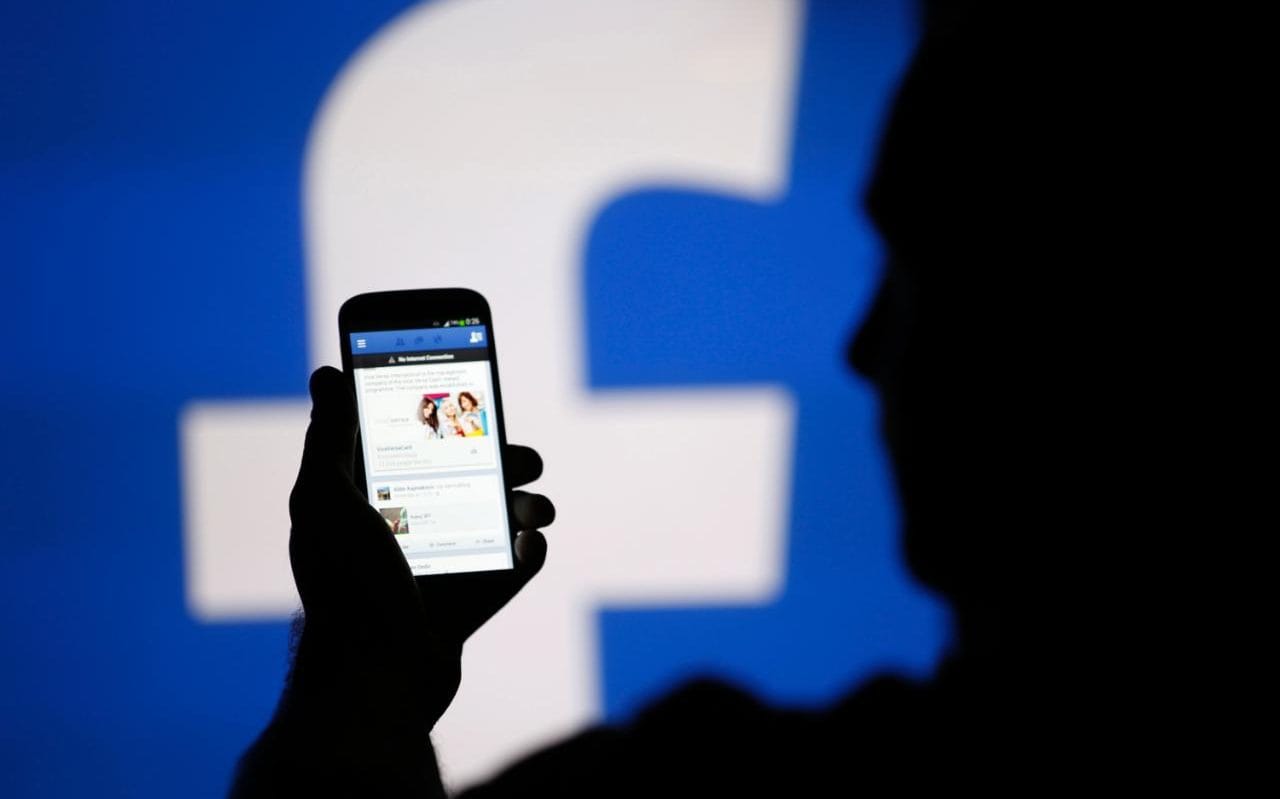
Meta has never taken this argument seriously—and why would it, when the system the company built has worked so fantastically? Now the company is being forced to, as a result of a court ruling in Europe this summer requiring it to obtain consent before showing users personalized ads. According to the , Meta has told European Union regulators that within months it plans to charge EU users around €13 ($14) per month for access to an ad-free version of Facebook on their phones and €6 for Instagram.
Competitors are working on similar offerings. Both TikTok and Snapchat are testing ad-free versions of their services. And Elon Musk, owner of X (aka Twitter), teased “a higher priced subscription that allows zero ads” in a post earlier this year. That would probably cost substantially more than X's current premium plan, which starts at $11 per month when purchased on a phone and cuts the number of ads in half. At a meeting with the company's bankers on Oct. 5, Chief Executive Officer Linda Yaccarino suggested X would create three different tiers of service, with prices going up as fewer ads are shown.
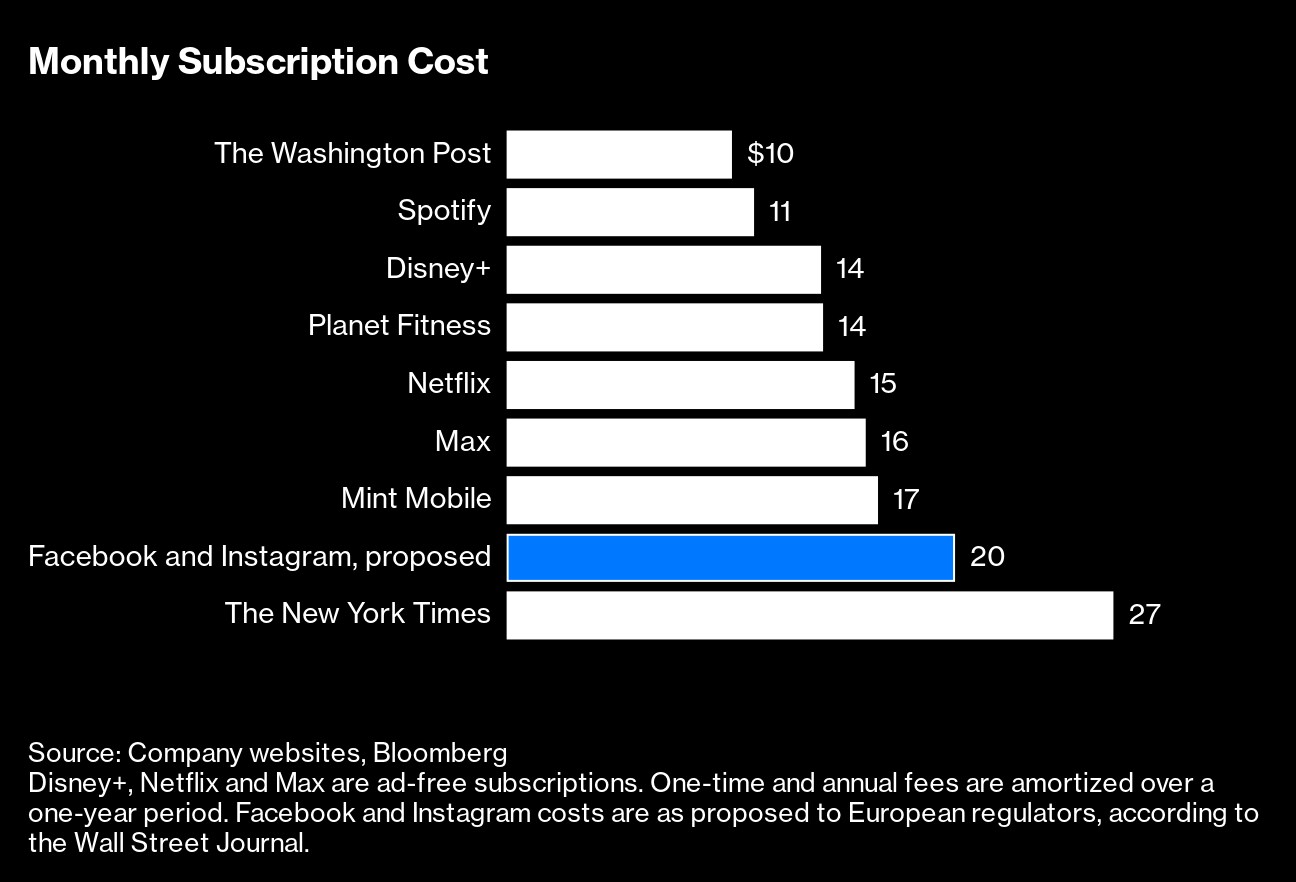
Will ad-free social media take off? Probably not. If Meta's no-ads option were offered in the US, the European pricing would translate to roughly $240 per year, making Facebook and Instagram more expensive than some cellphone plans, newspaper subscriptions and gym memberships. They'd also cost about twice as much as X's current premium tier, which has attracted only a tiny percentage of the company's user base.
It might be possible to persuade users to try a more reasonably priced ad-free service, but it's unlikely that companies would be willing to drop their prices far enough to find out, says Jonathan Zittrain, a Harvard Law School professor and co-director of the Institute for Rebooting Social Media at Harvard's Berkman Klein Center for Internet & Society. “The revenues for the targeted-advertising-based online platforms are staggering,” he says. In 2022, Meta took in roughly $117 billion in revenue, and it collects about $220 per user per year in the US and Canada by selling ads, according to analyst estimates compiled by Bloomberg. Says Zittrain: “It'll be hard to substitute subscription fees for it, especially when people are used to not paying.”
Meta has signaled that the new ad-free service is more about placating regulators than attracting users. When Zittrain interviewed him at a 2019 Harvard event, Zuckerberg said “all the data that I've seen suggests the vast, vast, vast majority of people want a free service,” adding that he believed Facebook users preferred seeing ads to browsing the site without them. “People like being able to get information from local businesses,” he said.
Meta reiterated this view when asked to comment on the new European service. The company “believes in the value of free services which are supported by personalized ads,” it said in a statement. “However, we continue to explore options to ensure we comply with evolving regulatory requirements.”
Zuckerberg may resign himself to offering an expensive ad-free version of Facebook that only a few people will use; what he's unwilling to give up on is the kind of detailed tracking and personalization that's made his apps so profitable. Today, Meta's software is embedded in most big websites (and lots of small ones), and it monitors users to try to figure out what topics they're interested in and which products they've browsed. The company combines this information with the data it already collects on each user's behavior within Facebook and Instagram to build detailed profiles, which advertisers can then essentially rent out to serve hyperpersonalized ads to prospective customers. (It's possible to opt out of some of this personalization, but Meta doesn't make it very easy.)
Privacy advocates have complained that users don't really understand how much information they're giving up when they come into contact with Meta's products. That's partly why in 2018 the EU required many companies there to ask customers to agree before they start getting served with personalized ads.
But personalization is at the core of Meta's business model—and the reason the company can command advertising rates that are far greater than those of most websites. “Being able to track behaviors across the internet is what gives companies like Meta the power,” says Alessandro Acquisti, a Carnegie Mellon University professor who studies public policy and social media.
According to Acquisti, a more consumer-friendly policy would be to offer a middle tier of services that allows customers to opt out of all tracking and targeting without necessarily opting out of ads. Meta's choice to ignore this possibility is “disingenuous,” he says, adding that the company “may be trying to reframe as an ‘advertising/no advertising' problem what is actually a ‘tracking users without their consent' problem.”
Streaming video services such as YouTube and Hulu already offer ad-free subscription tiers. Completely ad-free social media services already exist, too. Mastodon, for instance, relies on donations and a Wikipedia-esque network of volunteers. But it's minuscule compared with mainstream services, and its founder isn't on track to become a centibillionaire.
One argument against tiered subscriptions is that they create a situation in which wealthier people could opt out of digital tracking and personalized ads, while poorer people have no choice but to submit. Zuckerberg himself alluded to this in the 2019 interview with Zittrain, saying he believed that it might be OK to charge customers for an ad-free experience but that charging them for enhanced privacy “feels wrong.”
On the other hand, if ad-free social networks did somehow take off—either because customers proved more willing to pay up or because social media companies were compelled to accept lower profits—the internet would arguably be a lot healthier. The need of social media companies to keep users inside their apps looking at their ads for as much time as possible has hurt news publishers, which have seen traffic referrals from social media collapse in recent years, and led to algorithms that seem to favor rage bait over all else. A Facebook with a paid version would have less incentive to keep us away from more productive uses of our time—so long as it's useful enough to keep us paying the bill each month. —
More stories like this are available on bloomberg.com
©2023 Bloomberg L.P.
Essential Business Intelligence, Continuous LIVE TV, Sharp Market Insights, Practical Personal Finance Advice and Latest Stories — On NDTV Profit.