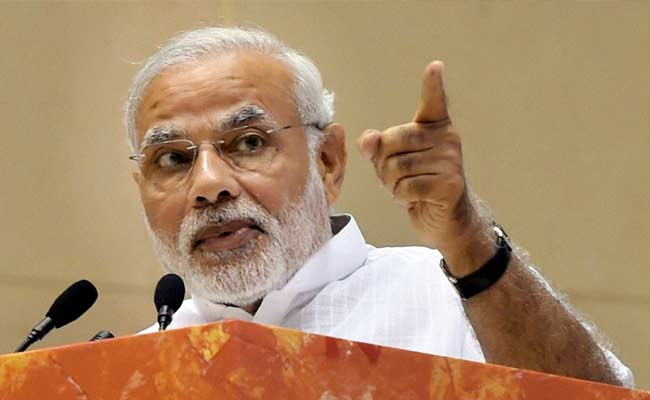
Taxes are anything but certain for Indian Prime Minister Narendra Modi. Faced with a slump in demand after his shock clampdown on cash, he's expected to lower taxes in the Feb. 1 budget to spur consumption. The risk is that a cut will rob PM Modi of a short-term revenue spurt, which his administration had been touting as proof of success of the currency policy change.
"Economic growth is unlikely to accelerate in the near term on its own so the situation for the government is such that in order to improve their own credibility, the government will have to improve demand for goods and services," said Nihal Kothari, executive director at tax firm Khaitan and Co. in Mumbai. "So the personal income tax slabs or rate may be reduced in the budget to give higher purchasing power to consumers."
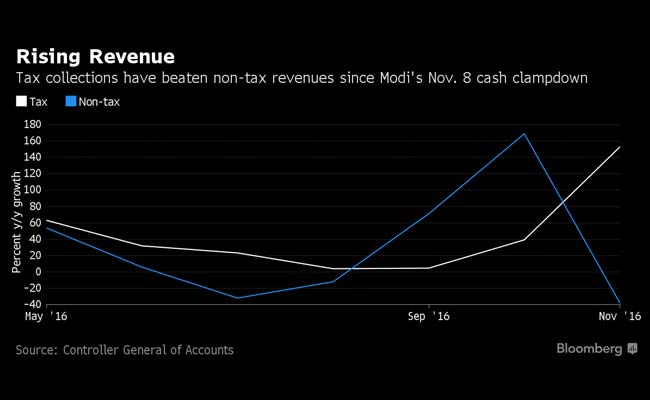
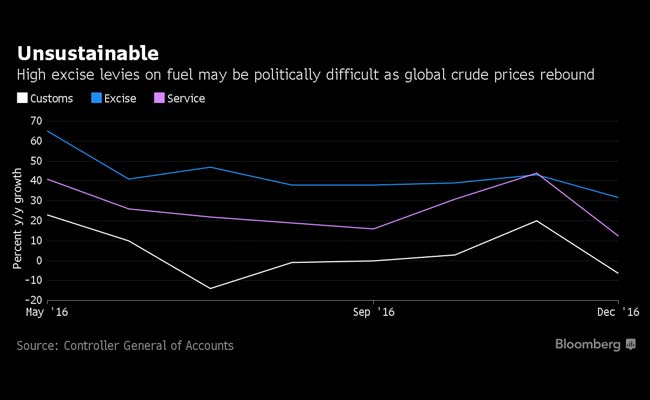
- "For instance, net indirect tax collection through November 2016 grew 26.2 percent due to higher tax rates and other special measures and just 8 percent after you strip out these effects
- Service tax numbers too are flattered by an increase in the rate to about 15 percent last year from 12.4 percent in April 2015
- Customs collections may dip as PM Modi's cash ban crimps demand for gold, one of India's biggest imports
- Lobby group Associated Chambers of Commerce in India has sought cuts in customs duty rates on aluminum and iron to boost local production of machinery while raising the levy on basic electronic goods such as microwave ovens and air conditioners
- Assuming the government doesn't announce special measures, growth in tax collections will settle between 12 percent to 14 percent compared with about 17 percent to 18 percent in the past years, according to Edelweiss Financial Services Ltd.
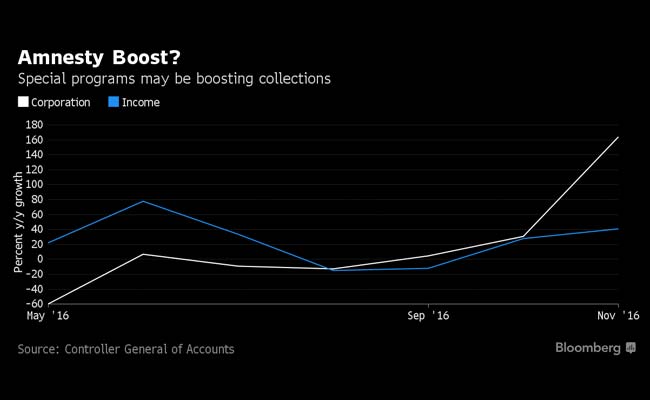
- From the budget, Assocham's seeking a road map for the government's promised reduction in corporate tax rates to 25 percent from about 30 percent
- Tax breaks may be offered to those who invest in funds that contribute to building crucial roads, ports and highways
- Lowering the personal income tax rate would boost compliance and since less than 1 percent of the population pays this tax, revenue losses would be limited, according to Kotak Securities Ltd., which calls for a cut. Currently individuals earning more than 1 million rupees a year pay the top rate of 30 percent tax plus surcharges
- There's also speculation that the government may raise the threshold before income tax is charged to as high as 500,000 rupees from 250,000 rupees
Essential Business Intelligence, Continuous LIVE TV, Sharp Market Insights, Practical Personal Finance Advice and Latest Stories — On NDTV Profit.