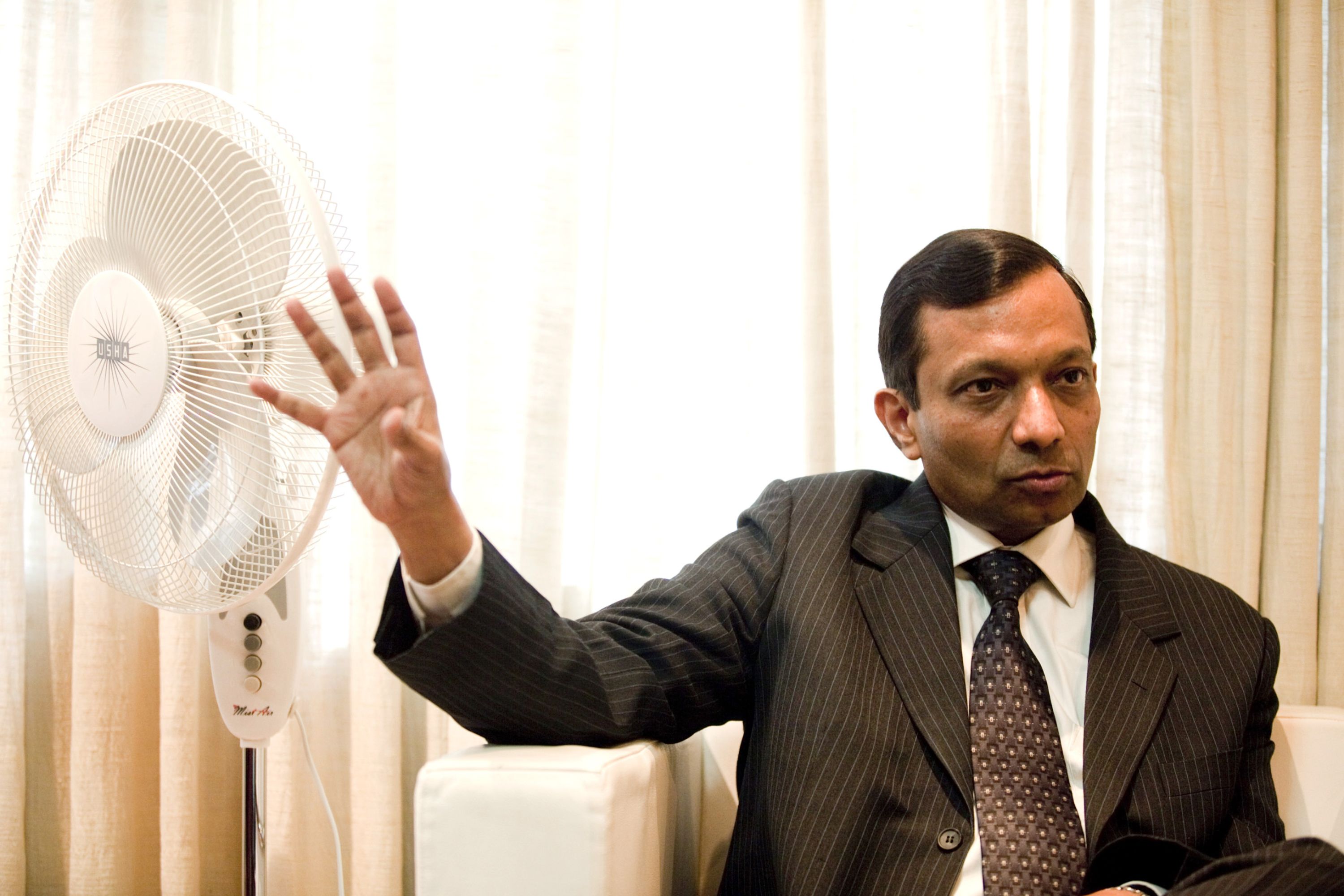
Indians use too big car by size for moving a single person, and the fate met by Tata Nano was unfortunate, Mahindra & Mahindra Ltd. Managing Director Pawan Goenka said.
He also conceded that the automobile industry does add to pollution, and pitched for adopting all the means to reduce it.

-
 Indian Markets Turning Corner After Two Tough Years, Says Sandeep Tandon
-
 NDTV Profit Ignite 2026: Experts See Opportunity In Equities, Stay Bullish For Long-Term
-
 Buy Right, Sit Tight Does Not Work for Individual Stocks, Says Dinshaw Irani
-
 'Worst Is Behind': Quant MF Sees Market Bottom, Flags 'Extreme Euphoria' In Midcaps
-
 India's Mutual Fund Industry Could Become A $1 Trillion Opportunity, Say Fund Managers
-
 'Foreign Investors Are Baraatis': Raamdeo Agrawal's Take On LTCG Tax
-
 Stay Invested Through Market Cycles: Raamdeo Agrawal at NDTV Profit Ignite
-
 Ramesh Damani Remains Bullish On India For Next 20-30 Years, Sees Bargains Amid Market Weakness
-
 CAS Came After A Long Consultation Process: SEBI Chairman Tuhin Kanta Pandey AT NDTV PROFIT IGNITE
-
 Aim To Cut FPI Onboarding Time From Mth To Five Days: SEBI Chairman Tuhin Kanta Pandey AT NDTV PROFI
It can be noted that the Tatas have discontinued Nano after poor response to the 600-cc Rs 1 lakh car. Many experts have blamed the product's utilitarian product pitch in a country where owning a car is seen as a lifestyle necessity as a reason for the failure.
Also Read | Layoffs Are Rising In Tech, But These Skills Are Helping People Unlock Better Pay
"It is very unfortunate that nano didn't do very well," Goenka said, speaking at an alumni event organised by his alma mater IIT-Kanpur here.
He said Indians weighing 65-70 kg use an entire 1,500 kg car to travel individually, hinting at the wastage of resources that go into making the big car move.
"We need to have personal transport that is more tuned to moving a single person," he said.
Keeping the same requirement in mind, Goenka said his company has launched a smaller car, which should be hitting the market soon.
He also acknowledged that automobiles at present contribute 7 percent of the carbon dioxide and a fifth of particulate matter PM 2.5, and every effort should be made to reduce the impact rather than mounting efforts to say that it is only this much of an impact.
India can lead the race on the connected car front due to its prowess on the information technology front, Goenka said.
There is a lot of work happening on the electric vehicles as well, with startups dedicated to niche areas like batteries, charging, two-wheelers and three-wheelers mushrooming, he said.
India is at present five years behind China when it comes to EVs, but can lead the world on a research and development as well as production front, he noted.
At present, India is trailing the world as a consumer of EVs, he said, adding that only 1,400 cars were bought in 2019, which is a very small percentage of the world demand.
The auto sector will have to play a crucial role in the overall economic development of the country, he said.
Goenka said the manufacturing sector has to contribute $1 trillion if the economy were to be a $5 trillion GDP and the auto sector will have to grow at a compounded annual growth rate of 14 percent for five years.
Essential Business Intelligence, Sharp Market Insights, Practical Personal Finance Advice, Daily Fuel, Gold and Silver Prices and Latest Stories — On NDTV Profit.