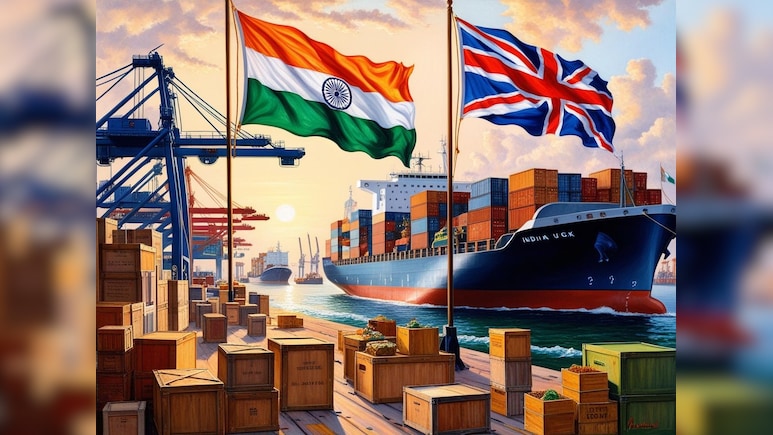
With India's free trade pact with the United Kingdom set to take effect from July 15, economic think tank the Global Trade Research Initiative has cautioned that tariff concessions alone will not be enough to lift exports, unless Indian industry moves quickly to shore up certification systems, testing infrastructure, logistics and buyer networks.
GTRI founder Ajay Srivastava told PTI, food exporters would need to improve traceability and align with British food-safety norms, while automobile and machinery firms would require better certification and stronger technology and buyer linkages to capitalise on the deal.
"The agreement opens the door; India must now convert access into exports," Srivastava said.
According to the think tank, the biggest gains are likely to emerge where India already has strong production capacity, the UK has sizeable demand, and the agreement removes a genuine tariff disadvantage.
That combination points most clearly towards garments, textiles, leather, footwear, processed foods, seafood and select agricultural products, GTRI said.
In 2025, Britain imported goods worth $928.9 billion globally, of which India supplied just $15.2 billion, giving Indian goods only a 1.6% share of the UK import basket.
The think tank reportedly noted India's automobile exporters currently hold a negligible foothold in the UK market despite a $25.1 billion global export base, and will need to meet rules-of-origin and technical requirements to benefit meaningfully from the pact.
ALSO READ: INS Mahendragiri Commissioned: Everything To Know About India's New Warship
Pharmaceuticals present a similar story: India exported $25.8 billion worth of medicines worldwide but captured only about 3.2% of Britain's import demand, with regulatory approvals rather than tariffs seen as the bigger constraint.
GTRI cautioned that sectors such as iron and steel could see limited upside despite tariff relief, given the UK's existing safeguard measures and quota restrictions, PTI reported. Alcohol and wine exports, meanwhile, remain a fraction of India's global sales, reflecting weak scale and brand recognition rather than tariff barriers, the think tank said.
"The biggest gains are likely where three conditions come together: India has strong export capacity, the UK has substantial demand and CETA removes a meaningful tariff disadvantage. That points most clearly to garments, textiles, leather, footwear, processed foods, seafood and selected farm products," Srivastava said, according to the agency.
(With PTI inputs)
ALSO READ: India-New Zealand's 10 Strategic Deals Explained: From Defence To Trade, Here's What Was Signed
Essential Business Intelligence, Sharp Market Insights, Practical Personal Finance Advice, Daily Fuel, Gold and Silver Prices and Latest Stories — On NDTV Profit.