(Bloomberg) -- Halting methane releases is one of the most effective ways for the oil and gas industry to combat climate change. An International Energy Agency report released Tuesday also suggests it's one of the cheapest.
If the industry spent $75 billion — roughly equivalent to 2% of 2022 net income — to curb releases of methane through 2030, that would keep the sector on a pathway to achieve net zero emissions by midcentury, according to the International Energy Agency.
“The oil and gas industry must lead efforts to tackle methane emissions by adopting a zero-tolerance approach” to leaks and intentional releases of the potent greenhouse gas, the Paris-based organization said in a report released Tuesday. “Methane abatement in the oil and gas industry is one of the cheapest options to reduce GHG emissions anywhere in the economy.”
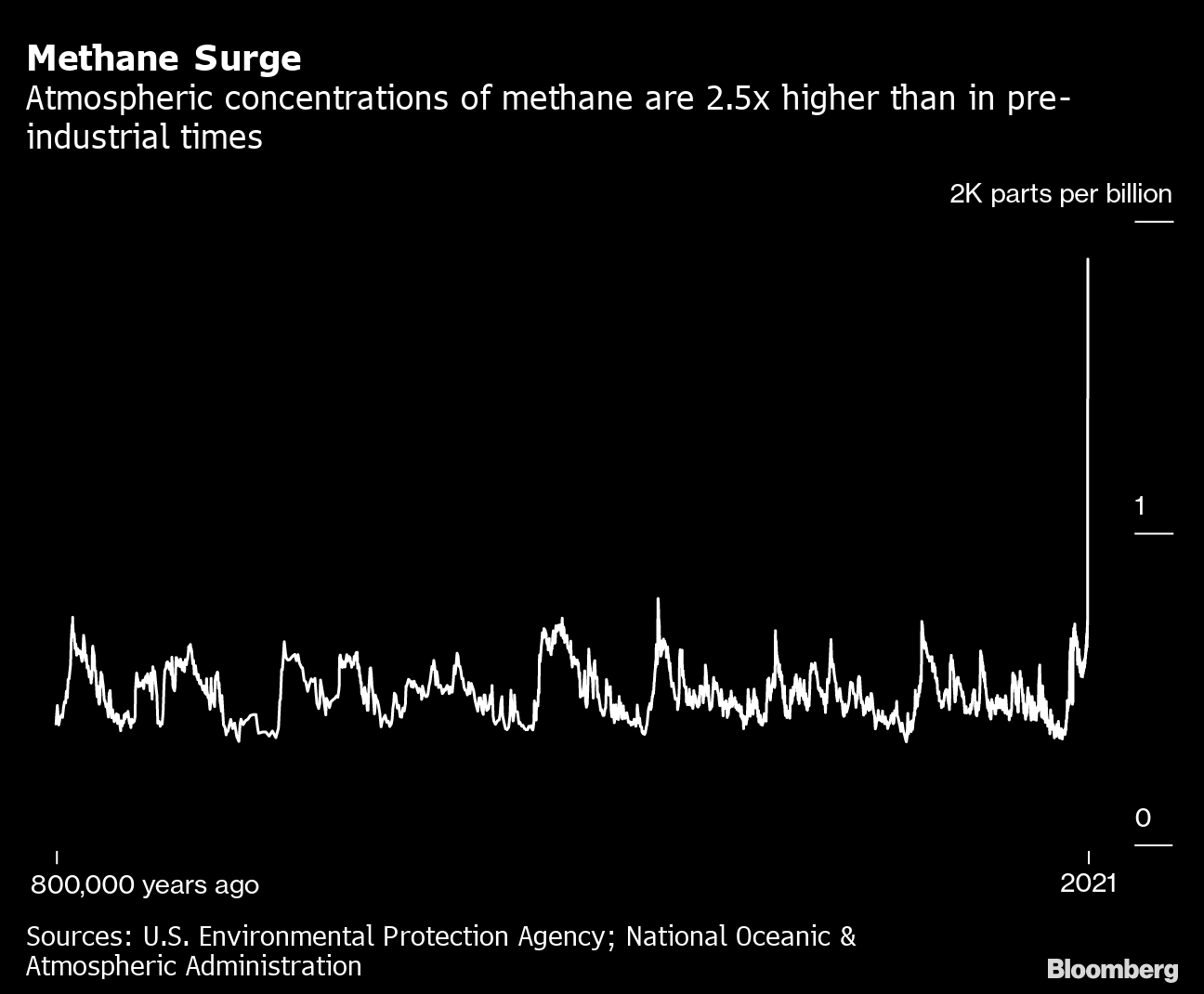
Although governments increasingly support slashing methane releases from the energy sector, the report found that “overall progress has been much too slow, despite the record profits that the oil and gas industry saw in 2022.”
Total energy-related methane emissions including from coal mining must drop around 75% by 2030, in the agency's Net Zero by 2050 (NZE) Scenario, with two-thirds of those cuts coming from the oil and gas sector.
Read more: A Cheap Fix to Global Warming Is Finally Gaining Support
The United Nations COP28 climate conference in Dubai later this year will be an opportunity for operators to commit to significant cuts by the end of this decade, according to the report.
That would involve replacing pneumatics and pumps, installing recovery systems and implementing leak detection and repair programs, much of which can be funded by the industry. The IEA estimates that an additional $15 billion to $20 billion is needed to do the same in low- and middle-income countries— a gap which can be filled by governments, industry and philanthropy.
More stories like this are available on bloomberg.com
©2023 Bloomberg L.P.
Essential Business Intelligence, Sharp Market Insights, Practical Personal Finance Advice, Daily Fuel, Gold and Silver Prices and Latest Stories — On NDTV Profit.