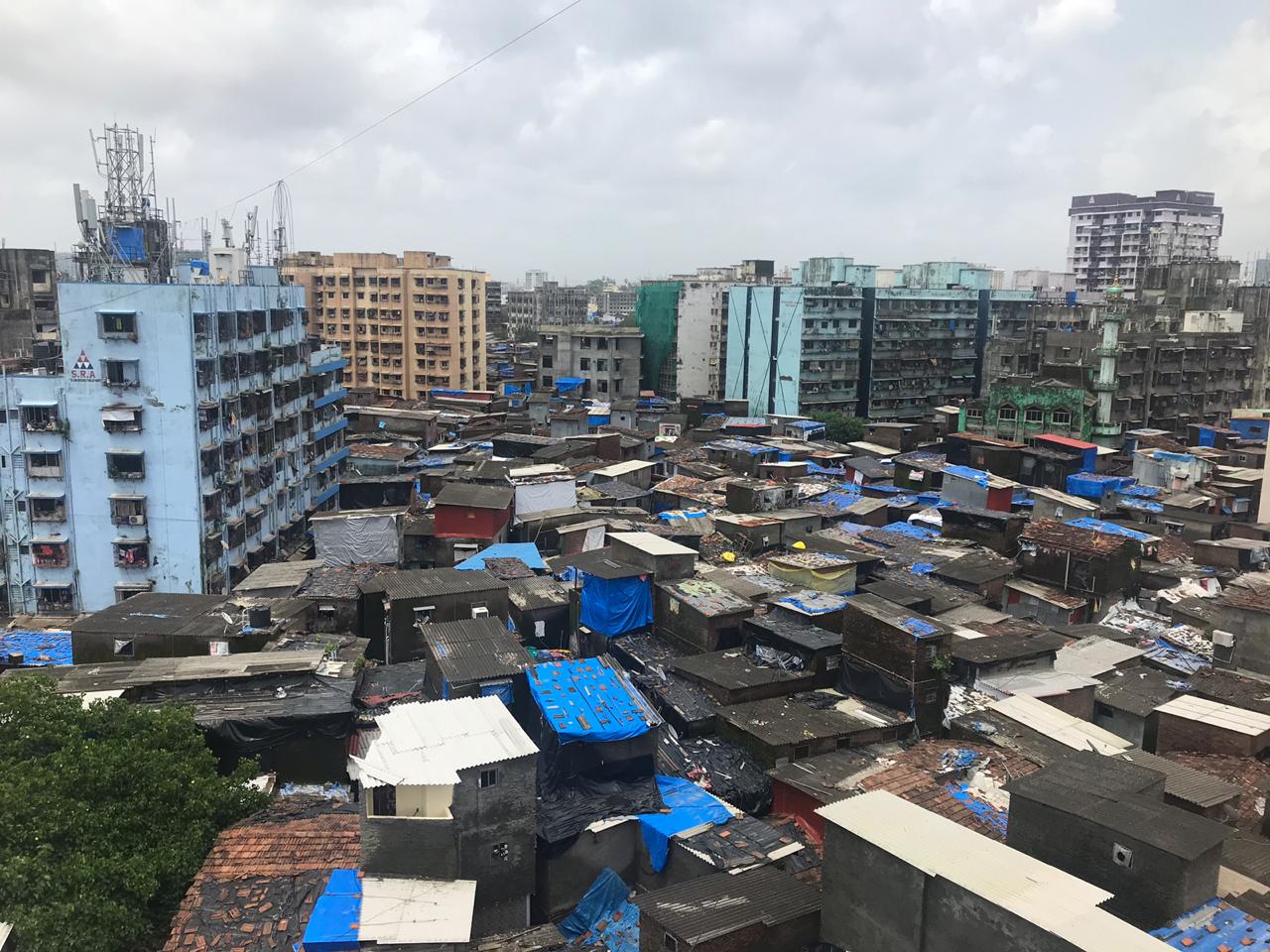
About a fortnight back, the Maharashtra government approved Adani Group's proposal to redevelop Mumbai's 590-acre Dharavi locality, home to about a million people. With a proposed $3-billion investment, this will be one of the largest urban redevelopment and resettlement projects worldwide. At the time, Gautam Adani had famously said that this initiative will produce millionaires and not slumdogs, alluding to the runaway Oscar-winning movie, 'Slumdog Millionaire'.
In business history, Dharavi is famous for another reason too. The urban slum was the focus of research and study of late Professor Coimbatore Krishna (CK) Prahalad. Partly based on this study, Prahalad had written the best-selling book, 'Fortune at the Bottom of the Pyramid', in 2004 where he argued that multinational corporations can profit by focusing on the lower rungs of the socio-economic consumption ladder. At that time, this theory and practice had inspired a number of leading MNCs in India like Hindustan Unilever Ltd. and Nestle Ltd.
The changing vision of Dharavi from Prahalad to Adani is emblematic of two significant developments in the country in recent years: growing ‘rurbanisation' (rural-urban) and the further strengthening of India's middle class. This is corroborated by a recent report titled, 'The Rise of India's Middle Class' by the market research firm People Research on India's Consumer Economy or Price. The report finds that the biggest segment of the population (61%) will be the middle class of about a billion people by 2047 when it will be 100 years of the country's independence.
In 2020-21, it was estimated that the middle class of about 432 million was 31% of the population. A significant proportion of the middle class in the coming years will be in the rural-urban centres. A redeveloped Dharavi and Dharavi-like localities across the country would fall in this segment when they are no longer at Prahalad's bottom of the pyramid. Says Rajesh Shukla, founder-director and CEO, Price, “The consumption-led growth story for India has a long runway. Between now and 2031, about 100 million households will be added to the middle and rich class. The metros, boom towns and developed rural areas will steadily increase their share of India's income and consumption.”
Adds Rahul Mishra, Professor of Strategy, IILM University, “For companies, it is not that the urban market is saturated, but that these new middle-class consumers will shift from being bottom of the pyramid to value for money consumers.”
What then are the implications for companies from this changing phenomenon?
Premiumisation: Many fast-moving consumer goods companies over the last decade and more had focused on the bottom of the pyramid. With the middle class being an aspirer group, these organisations will necessarily move more towards the higher bracket of the product ladder. Says Nikhil Prasad Ohja, partner, Bain & Company, “It is not just the quantity but there will be a change in the quality of consumption too.”
Adds Shiv Shivakumar, former CEO, Nokia and Pepsi India and currently operating partner, Advent International, “40% of the FMCG market is still in sachets. A number of (multinational) companies enter India and say that we will put out sachets and will win. A very good example is the drinking chocolate business. Companies introduced Rs 10 and Rs 15 sachets, but some of them failed miserably. Sachets do not work for everybody. India is increasingly an aspiration market. I think many people get it wrong when they think that India is a price-led market.”
Shift To The Organised Market: Traditionally, India had a significant level of the unorganised and unbranded market. With the middle class which is conscious of brands increasing, there will be a greater shift towards the organised market. An implication of this for companies is that they will have to pump up their investments in manufacturing capacities. One of the major drivers of the shift to the organised branded market is regulation around the packing commodity and maximum retail price.
E-Commerce Buying: The large Indian conglomerates like the Tatas, Reliance and the Aditya Birla group have put their marketing and sales muscle behind e-commerce. A good part of the sales through e-commerce will come from the burgeoning middle class for whom convenience and speed is a necessity. Both Shivakumar and Ohja argue that we are on the cusp of a major e-commerce revolution that is fueled by the growing middle class.
Having noted the above implications for companies, Shivakumar perhaps has the last word when he says, “Indians tend to take to brands slowly but also give up brands very slowly. For example, if you look at a brand like Hamam; every brand manager of Hamam has tried to kill it with no success. Coco-cola has tried to kill Thums Up over the years with no success. Once a brand gains acceptance, it is very difficult for consumers to give it up. It is a triangle of aspiration, quality and price. You have to get all three elements in the right direction to make change work.”
Truly, Indian companies have their work cut out.
George Skaria is the former Editor of Indian Management and Asian Management Review.
The views expressed here are those of the author and do not necessarily represent the views of BQ Prime or its editorial team.
Disclaimer: AMG Media Networks Ltd., a subsidiary of Adani Enterprises Ltd., holds 49% stake in Quintillion Business Media Ltd., the owner of BQ Prime.
Essential Business Intelligence, Continuous LIVE TV, Sharp Market Insights, Practical Personal Finance Advice and Latest Stories — On NDTV Profit.