Decision-Day Guide: Seeking Clarity On The Cash Clampdown
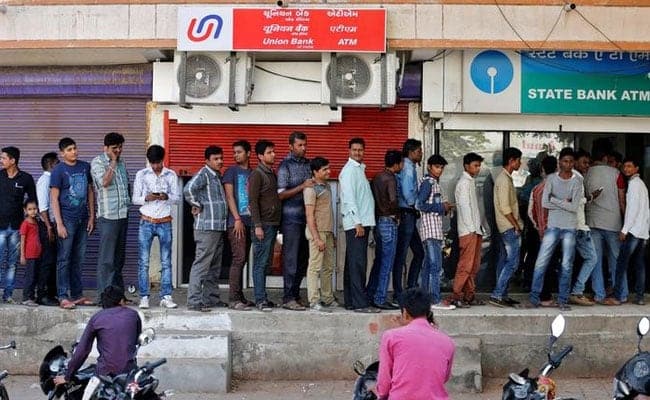
Investors have one big question for India's central bank at Wednesday's policy review: will Prime Minister Narendra Modi's clampdown on cash hurt economic growth and how deep will the pain go?
Private analysts predict that India will lose its status as the world's fastest-growing big economy this quarter, as the government's shock decision last month to ban 86 percent of currency in circulation dents demand. While Modi's administration last week said it's too early to assess the impact of the move, indicators since then point to a downturn.
That warrants a cut in the benchmark repurchase rate to 6 percent from 6.25 percent, according to 31 of 44 economists in a Bloomberg survey. Five predict a reduction to 5.75 percent and eight see no change.
"It is possible that the central bank could decide to front load rate cuts if it perceives the negative impact on growth to be severe and long," Kaushik Das, Mumbai-based economist at Deutsche Bank AG, said in an e-mail. "We see risks to growth biased to the downside."
Governor Urjit Patel is joined by two Reserve Bank officials and three academics on the monetary policy committee. Here's what to look for in the policy statement, which is scheduled for release at 2:30 p.m. in Mumbai followed by a press conference 15 minutes later.
Clear-Eyed Assessment
Patel -- who's been criticized for staying low amid the cash chaos -- told BloombergQuint last month that the Reserve Bank of India is assessing the impact of Modi's Nov. 8 decision and would list its observations at the monetary review.
Recent indications are bleak. Economists slashed their forecasts for October-December growth to 6.5 percent from 7.8 percent, lower than the 6.7 percent analysts project for China. Private gauges published over the past week signal a contraction in the key services sector that contributes about 60 percent to gross domestic product.
The slump in demand is expected to slow inflation, pushing the consumer price index down from a 14-month low hit in October.
Fed Decision
Patel and his rate panel will also have to factor in an expected increase in interest rates when the Federal Reserve meets next week. Investors, in anticipation, have started pulling money out of emerging markets such as India, roiling the rupee that sank to a record low in November.
India's currency had its worst November in five years as overseas investors withdrew a net $2.6 billion from local shares and foreign holdings of the nation's sovereign and corporate bonds dropped by $2.1 billion.
A steeper-than-expected cut in India's policy rate would undermine the rupee, Gao Qi, Singapore-based foreign-exchange strategist at Scotiabank, wrote in a report on Tuesday.
Liquidity Juggle
The most immediate concern for Patel, however, would be a surge in banking liquidity as citizens rush to exchange their defunct currency notes. With money-market rates tumbling, the central bank resorted to extraordinary measures to protect India's financial stability.
On the streets, Indians are concerned about a lack of cash as the nation's mints struggle to replace the more than 23 billion bills sucked out by Modi's move. While the crucial pay day period has passed, the festival and wedding season continues through March, keeping demand for money high.
"The Reserve Bank of India is likely to outline measures to manage the systemic liquidity, which would be of interest to the banks, and provide some timeframe by which cash liquidity would increase, that would be of significance to the public," said Naresh Takkar, managing director at ICRA Ltd., the local unit of Moody's Investors Service.
© 2016 Bloomberg L.P
(Except for the headline, this story has not been edited by NDTV staff and is published from a syndicated feed.)

-
Indians Are Travelling, But Not Every Journey Is A Holiday | The Week In Whys

Pilgrims, patients and working women are the real travellers, and the system hasn't quite caught up with them.
-
Getting To Work Costs Women More | The Reason Why
It is not just about women paying more than men. It is about women paying much more in cities than in villages.
-
AI Bias In Investing Cannot Be Eliminated, But It Can Be Governed
Framing is a particularly important example as identical financial information presented in terms of gains rather than losses can lead an LLM to reach a different assessment.
-
Joining The Dots | Dark Skies, Steady Diya: Why Hope Holds This Diwali
With war, a weak rupee and foreign outflows weighing on sentiment, policymakers at the NDTV World Summit and market veterans at NDTV Profit Ignite: Diwali Edition offered the same advice: stay invested and filter out the noise.
-
The Curious Case of Equitas Small Finance Bank And A CEO Who Quit For Stock
PN Vasudevan believes persistent investor concerns over a perceived conflict of interest had become a governance overhang on Equitas Small Finance Bank's stock, even as the lender improved profitability and asset quality.
-
Talking Points This Week: AI Cash Burn, A Tiger Comeback And An India That Still Finds Its Own Path
India is not immune to higher oil or tighter global liquidity, yet its earnings base is broader, its domestic policy levers are still available.
-
Foreign Investors Own Half Of HDFC Bank and ICICI Bank. An LTCG Cut Could Matter Most Here
Foreign portfolio investors have US$115 billion parked in HDFC Bank, ICICI Bank. If the government cuts long-term capital gains tax, Jefferies says returning foreign money could land here first.
-
'Never Seen This Level Of Negativity': Sandeep Tandon Says The Next Rally May Be Closer Than You Think
Veteran investor Sandeep Tandon says foreign selling is easing, large-caps are due a comeback and mid-caps are crowded, while he turns positive on gold, power and pharma this Diwali.
-
Indians Stay With Family, Not In Hotels | The Reason Why
India still lacks enough clean, reliable and affordable hotels for budget-conscious travellers.
-
The Economic Imperative: Analysing The Material Driving Force Behind India-Canada Strategic Reset
This economic complementarity is further reinforced by deep institutional investment ties and talent mobility, which form the bedrock of the bilateral framework.










