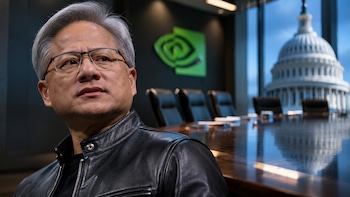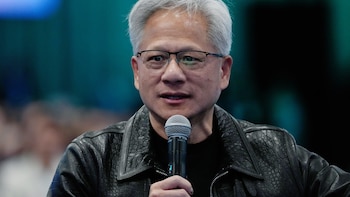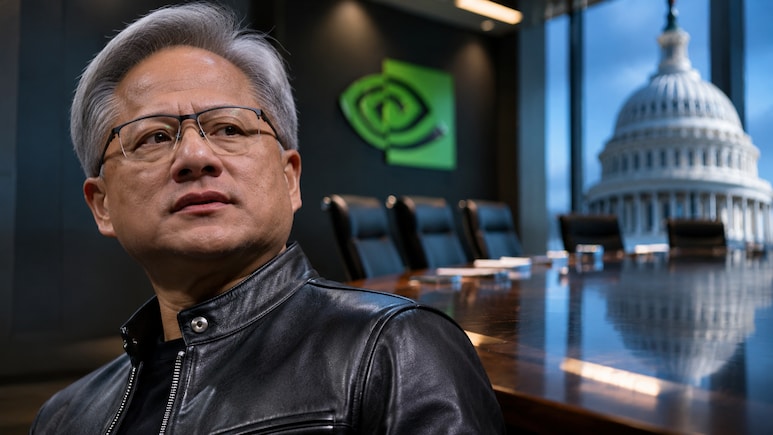
Nvidia Corp. CEO Jensen Huang has said he will continue to lead the company as its board investigates reports that he was targeted by a foreign intelligence operation. The inquiry raises questions about his future at the world's most valuable chipmaker, even as the board has expressed confidence in his leadership. Whether Huang stays or leaves will depend on what investigators establish about his conduct, the possibility of sensitive information being compromised and the company's exposure to national security risks.
The Nvidia board announced on Sunday that an independent committee, assisted by external legal counsel, would examine reports that Huang had been the target of a foreign intelligence effort. The board said it had no reason to believe that US national security or Nvidia's trade secrets had been compromised.

-
 Indian Markets Turning Corner After Two Tough Years, Says Sandeep Tandon
-
 NDTV Profit Ignite 2026: Experts See Opportunity In Equities, Stay Bullish For Long-Term
-
 Buy Right, Sit Tight Does Not Work for Individual Stocks, Says Dinshaw Irani
-
 'Worst Is Behind': Quant MF Sees Market Bottom, Flags 'Extreme Euphoria' In Midcaps
-
 India's Mutual Fund Industry Could Become A $1 Trillion Opportunity, Say Fund Managers
-
 'Foreign Investors Are Baraatis': Raamdeo Agrawal's Take On LTCG Tax
-
 Stay Invested Through Market Cycles: Raamdeo Agrawal at NDTV Profit Ignite
-
 Ramesh Damani Remains Bullish On India For Next 20-30 Years, Sees Bargains Amid Market Weakness
-
 CAS Came After A Long Consultation Process: SEBI Chairman Tuhin Kanta Pandey AT NDTV PROFIT IGNITE
-
 Aim To Cut FPI Onboarding Time From Mth To Five Days: SEBI Chairman Tuhin Kanta Pandey AT NDTV PROFI
Huang has pledged to cooperate with the investigation. In a message to employees, he admitted that he had been unfaithful to his wife and apologised to his family, colleagues and shareholders. He also said he remained committed to leading Nvidia.
Also Read | Layoffs Are Rising In Tech, But These Skills Are Helping People Unlock Better Pay
The investigation follows reports about Huang's alleged relationship with Alice Huang, a former executive at Singapore-based Megaspeed. US intelligence officials reportedly suspected that she had links to China's Ministry of State Security. Megaspeed has also faced scrutiny over concerns that it helped restricted Nvidia chips reach China.
Three Republican committee chairs in the US House of Representatives have separately asked Huang to brief lawmakers behind closed doors on November 18 about his interactions with Alice Huang and Nvidia's security procedures.
The developments leave the board with several questions. Can Huang continue to lead Nvidia if investigators find that he was targeted by a foreign intelligence operation? Would evidence of poor judgement be enough to force a leadership change? And what happens if the inquiry finds that company information was compromised?
ALSO READ | Who Is Alice Huang? The Woman Linked to Nvidia CEO Jensen Huang's Affair and a $4.8 Billion Chip Mystery
Here are five possible scenarios that could determine his future:
1. Huang Is Cleared And Continues As CEO
The first possibility is that the investigation finds no evidence that Huang shared sensitive information, compromised company secrets or acted against Nvidia's interests.
Being targeted by a foreign intelligence operation does not, by itself, establish wrongdoing by the person targeted. If investigators find that Huang did not knowingly assist an intelligence operation and that Nvidia's information remained secure, the board could allow him to continue without a change in leadership.
The board's November 8 statement offers an early indication of its position. It said it had no reason to believe that national security or Nvidia secrets had been compromised and expressed confidence in Huang and his leadership team.
2. Huang Remains CEO But Faces Greater Oversight
The board could find weaknesses in Nvidia's internal controls without establishing that Huang knowingly shared sensitive information.
In that case, it could retain him while strengthening oversight of customer relationships, information security and dealings with companies operating in markets subject to US export restrictions.
Nvidia could also review how executives handle sensitive information when dealing with customers and business partners.
This would allow the company to address concerns raised by the investigation without immediately changing its leadership.
ALSO READ | Trump Backs Nvidia's Jensen Huang Amid 'Chinese Spy' Row, Says He Has 'Done An Incredible Job'
3. The Board Asks Huang To Step Down
A more serious outcome would emerge if investigators find that Huang withheld material information from the board, misled directors or failed to disclose conduct that created a significant conflict of interest.
The board could then decide that he should leave, even if investigators do not establish a criminal offence.
US companies have removed CEOs over violations of internal policies and failures to disclose information during investigations.
Intel CEO Brian Krzanich resigned in June 2018 after an internal investigation found that a past consensual relationship with an employee violated the company's non-fraternisation policy. Intel said the policy applied to all managers.
The board accepted his resignation and appointed Chief Financial Officer Robert Swan as interim CEO while it searched for a replacement.
Nvidia's circumstances differ. The reported relationship involves an executive at an external business, rather than an employee. Whether the relationship created a conflict of interest or breached any company policy remains to be established.
4. The Investigation Finds Wider Governance Or Security Failures
The allegations could also lead to scrutiny beyond Huang's personal conduct.
If investigators find that sensitive Nvidia information reached unauthorised parties, or that company procedures failed to protect restricted technology, the matter could draw further attention from US lawmakers and government agencies.
The House committees seeking a briefing from Huang have already raised questions about China's access to sensitive US technology and information.
The US has imposed restrictions on exports of advanced AI chips to China since 2022. Any evidence that Nvidia's products or information were improperly made available could increase scrutiny of the company's dealings with customers and distributors.
Such findings would not automatically remove Huang. However, they could increase pressure on the board to demonstrate that it has addressed any failures and protected the company's interests.
5. Huang Leaves And Nvidia Begins A Succession Process
Huang could also leave voluntarily, even if the investigation does not establish misconduct.
The board may consider a leadership transition if it believes the controversy has affected investor confidence, relations with government officials or the company's ability to operate without distraction.
However, succession could be a challenge for Nvidia.
Huang co-founded the company in 1993 and has led it for more than three decades. He has played a central role in its technology strategy, product development and relationships with major customers.
Bloomberg has reported that Nvidia has no public succession plan and no obvious successor ready to take over his responsibilities.
A departure would therefore raise questions about who could take charge of the company and whether a new CEO could maintain its existing strategy.
ALSO READ | Jensen Huang Promised Lori Mills He'd Be CEO by 30. After 41 Years of Marriage, He Admits an Affair
What Past CEO Exits Tell Us
The experiences of Intel and McDonald's show that US boards can remove CEOs over personal conduct when it breaches company policy or raises questions about their judgement.
In November 2019, McDonald's dismissed CEO Steve Easterbrook after finding that he had engaged in a consensual relationship with an employee in violation of company policy.
The company later discovered that Easterbrook had withheld information about other relationships during its investigation. The US Securities and Exchange Commission subsequently charged him with misleading investors about the circumstances of his departure.
Easterbrook agreed to a five-year ban on serving as an officer or director of a public company and paid a $400,000 penalty, without admitting or denying the SEC's findings.
The cases offer a lesson for Nvidia's board. The question is not limited to whether an executive had a personal relationship. It also concerns whether the executive disclosed relevant information, followed company policies and protected the company's interests.
There is, however, an important difference between those cases and Nvidia. The Intel and McDonald's investigations established violations of company policy involving relationships with employees. No such finding has been made against Huang.
Can Nvidia's Board Remove Its Founder?
Huang's position as Nvidia's co-founder does not, by itself, protect him from a board decision to replace him as CEO.
The board oversees the company's management and can make decisions on the appointment and removal of its chief executive, subject to the company's governing documents and applicable law. A separate process would apply to any question about his position as a director.
The board will also have to consider the company's dependence on Huang. His role in Nvidia's rise has made him closely associated with its technology strategy and growth. A sudden departure could raise questions about leadership continuity at a time when demand for AI infrastructure remains a major driver of the company's business.
For now, Nvidia has said it has confidence in Huang and that he will cooperate with the investigation. The November 18 congressional briefing will provide another test of how the controversy develops.
The board's findings, rather than the affair alone, are likely to determine whether Huang remains at the helm of Nvidia.
Essential Business Intelligence, Sharp Market Insights, Practical Personal Finance Advice, Daily Fuel, Gold and Silver Prices and Latest Stories — On NDTV Profit.